News
General
3 views
From Tehran to Wall Street: How oil sanctions, Bitcoin panic, and the Fed’s frozen hand are unraveling markets
Jun 25, 2026
📍 Philadelphia, PA, USA
# AI Boom, Oil Prices, and Bitcoin Sell-Off Raise Fresh Concerns Over Global Market Stability
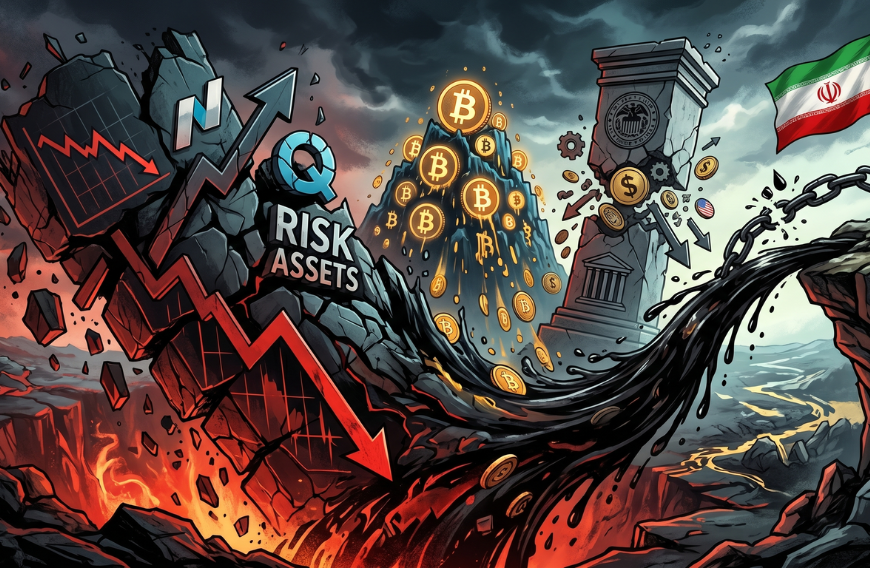
Rising geopolitical tensions, elevated oil prices, and uncertainty surrounding artificial intelligence investments are combining to create new risks for global financial markets, with analysts increasingly warning that Bitcoin and technology stocks may be more closely connected than many investors realize.
Market observers say recent weakness in cryptocurrencies and major technology shares reflects a broader shift in investor sentiment as concerns over inflation, interest rates, and excessive leverage continue to weigh on risk assets.
The discussion has intensified following renewed volatility across global markets, where Bitcoin, high-growth technology stocks, and AI-related companies have experienced simultaneous declines.
Analysts argue that the common factor is not the assets themselves but the investors holding them.
READ: The illusion of infinite returns: Why the AI bubble mandates extreme caution (May 21, 2026)
The chain of events begins with higher global oil prices.
Following renewed tensions involving Iran earlier this year, crude oil prices remained elevated for an extended period, increasing transportation, manufacturing, and energy costs throughout the global economy.
Persistently high energy prices have complicated efforts to bring inflation under control, making it more difficult for the U.S. Federal Reserve to begin reducing interest rates.
Instead of the expected monetary easing, investors have increasingly priced in the possibility that interest rates may remain elevated for longer than previously anticipated.
Higher borrowing costs generally reduce demand for speculative investments, particularly technology companies and cryptocurrencies that benefited significantly from years of inexpensive capital.
Bitcoin has become one of the largest casualties of this shift.
Once promoted as a hedge against inflation and a digital alternative to gold, Bitcoin has increasingly traded in line with major technology stocks.
Recent market data show a strong correlation between Bitcoin and the Nasdaq-100 Index, suggesting that both asset classes now respond similarly to changes in investor appetite for risk.
READ: The greatest con in American financial history has a ticker symbol: SPCX (June 24, 2026)
Since reaching record highs in late 2025, Bitcoin has surrendered a substantial portion of its gains while many leading AI and semiconductor companies have also experienced increased volatility.
Financial analysts say leveraged trading has amplified the decline.
When Bitcoin prices fall sharply, investors using borrowed funds often receive margin calls requiring them to raise cash quickly.
To meet those obligations, many institutional investors reportedly sell highly liquid technology stocks alongside cryptocurrency holdings, creating additional downward pressure across multiple markets.
The process can trigger a self-reinforcing cycle in which falling prices force additional selling, leading to even greater market volatility.
Companies with significant Bitcoin exposure have also come under increased pressure.
Some investors remain concerned that businesses holding large cryptocurrency positions on their balance sheets could experience significant financial stress if digital asset prices continue falling.
At the same time, massive capital requirements for artificial intelligence infrastructure are competing for investor attention.
Technology companies worldwide continue investing hundreds of billions of dollars into AI chips, cloud computing, and data center construction, while new fundraising efforts across the sector compete for increasingly limited investment capital.
READ: The plan that was made before the oath (June 13, 2026)
Market analysts say these developments are occurring against the backdrop of tighter monetary policy and slowing liquidity, making investors increasingly selective about where they allocate capital.
Some economists also point to continuing uncertainty surrounding future Federal Reserve policy, noting that sustained inflation linked to higher energy prices could delay any meaningful reduction in interest rates.
Until inflation moderates and monetary conditions become more accommodative, many believe high-growth technology stocks, cryptocurrencies, and other speculative investments will remain vulnerable to further periods of volatility.
While artificial intelligence continues to reshape the global economy, financial markets are increasingly demonstrating that geopolitical events, energy prices, monetary policy, and investor leverage remain deeply interconnected.
For investors, the recent market turbulence serves as a reminder that movements in one asset class can rapidly spread across the broader financial system, especially during periods of heightened uncertainty.
Rising geopolitical tensions, elevated oil prices, and uncertainty surrounding artificial intelligence investments are combining to create new risks for global financial markets, with analysts increasingly warning that Bitcoin and technology stocks may be more closely connected than many investors realize.
Market observers say recent weakness in cryptocurrencies and major technology shares reflects a broader shift in investor sentiment as concerns over inflation, interest rates, and excessive leverage continue to weigh on risk assets.
The discussion has intensified following renewed volatility across global markets, where Bitcoin, high-growth technology stocks, and AI-related companies have experienced simultaneous declines.
Analysts argue that the common factor is not the assets themselves but the investors holding them.
READ: The illusion of infinite returns: Why the AI bubble mandates extreme caution (May 21, 2026)
The chain of events begins with higher global oil prices.
Following renewed tensions involving Iran earlier this year, crude oil prices remained elevated for an extended period, increasing transportation, manufacturing, and energy costs throughout the global economy.
Persistently high energy prices have complicated efforts to bring inflation under control, making it more difficult for the U.S. Federal Reserve to begin reducing interest rates.
Instead of the expected monetary easing, investors have increasingly priced in the possibility that interest rates may remain elevated for longer than previously anticipated.
Higher borrowing costs generally reduce demand for speculative investments, particularly technology companies and cryptocurrencies that benefited significantly from years of inexpensive capital.
Bitcoin has become one of the largest casualties of this shift.
Once promoted as a hedge against inflation and a digital alternative to gold, Bitcoin has increasingly traded in line with major technology stocks.
Recent market data show a strong correlation between Bitcoin and the Nasdaq-100 Index, suggesting that both asset classes now respond similarly to changes in investor appetite for risk.
READ: The greatest con in American financial history has a ticker symbol: SPCX (June 24, 2026)
Since reaching record highs in late 2025, Bitcoin has surrendered a substantial portion of its gains while many leading AI and semiconductor companies have also experienced increased volatility.
Financial analysts say leveraged trading has amplified the decline.
When Bitcoin prices fall sharply, investors using borrowed funds often receive margin calls requiring them to raise cash quickly.
To meet those obligations, many institutional investors reportedly sell highly liquid technology stocks alongside cryptocurrency holdings, creating additional downward pressure across multiple markets.
The process can trigger a self-reinforcing cycle in which falling prices force additional selling, leading to even greater market volatility.
Companies with significant Bitcoin exposure have also come under increased pressure.
Some investors remain concerned that businesses holding large cryptocurrency positions on their balance sheets could experience significant financial stress if digital asset prices continue falling.
At the same time, massive capital requirements for artificial intelligence infrastructure are competing for investor attention.
Technology companies worldwide continue investing hundreds of billions of dollars into AI chips, cloud computing, and data center construction, while new fundraising efforts across the sector compete for increasingly limited investment capital.
READ: The plan that was made before the oath (June 13, 2026)
Market analysts say these developments are occurring against the backdrop of tighter monetary policy and slowing liquidity, making investors increasingly selective about where they allocate capital.
Some economists also point to continuing uncertainty surrounding future Federal Reserve policy, noting that sustained inflation linked to higher energy prices could delay any meaningful reduction in interest rates.
Until inflation moderates and monetary conditions become more accommodative, many believe high-growth technology stocks, cryptocurrencies, and other speculative investments will remain vulnerable to further periods of volatility.
While artificial intelligence continues to reshape the global economy, financial markets are increasingly demonstrating that geopolitical events, energy prices, monetary policy, and investor leverage remain deeply interconnected.
For investors, the recent market turbulence serves as a reminder that movements in one asset class can rapidly spread across the broader financial system, especially during periods of heightened uncertainty.
Tags
news
Comments (0)
Login to post comments
No comments yet
Be the first to share your thoughts about this post.