News
General
207 views
Sri Aurobindo’s Integral Yoga: A path to transforming life itself
Jun 22, 2026
📍 Philadelphia, PA, USA
**International Yoga Day: Sri Aurobindo’s Vision of Yoga as a Path to Transform Humanity**
As the world marks International Yoga Day on June 21, millions of people celebrate one of India's oldest spiritual traditions through meditation, breathing exercises, and physical postures. Yet beyond these widely recognized practices lies a deeper philosophical vision of yoga that continues to influence spiritual seekers around the world.
Among the thinkers who reshaped the understanding of yoga, Sri Aurobindo Ghosh occupies a unique place. Philosopher, poet, freedom fighter, and spiritual master, Sri Aurobindo developed what he called **Integral Yoga**—a path that extends beyond personal enlightenment toward the transformation of human consciousness and society itself.
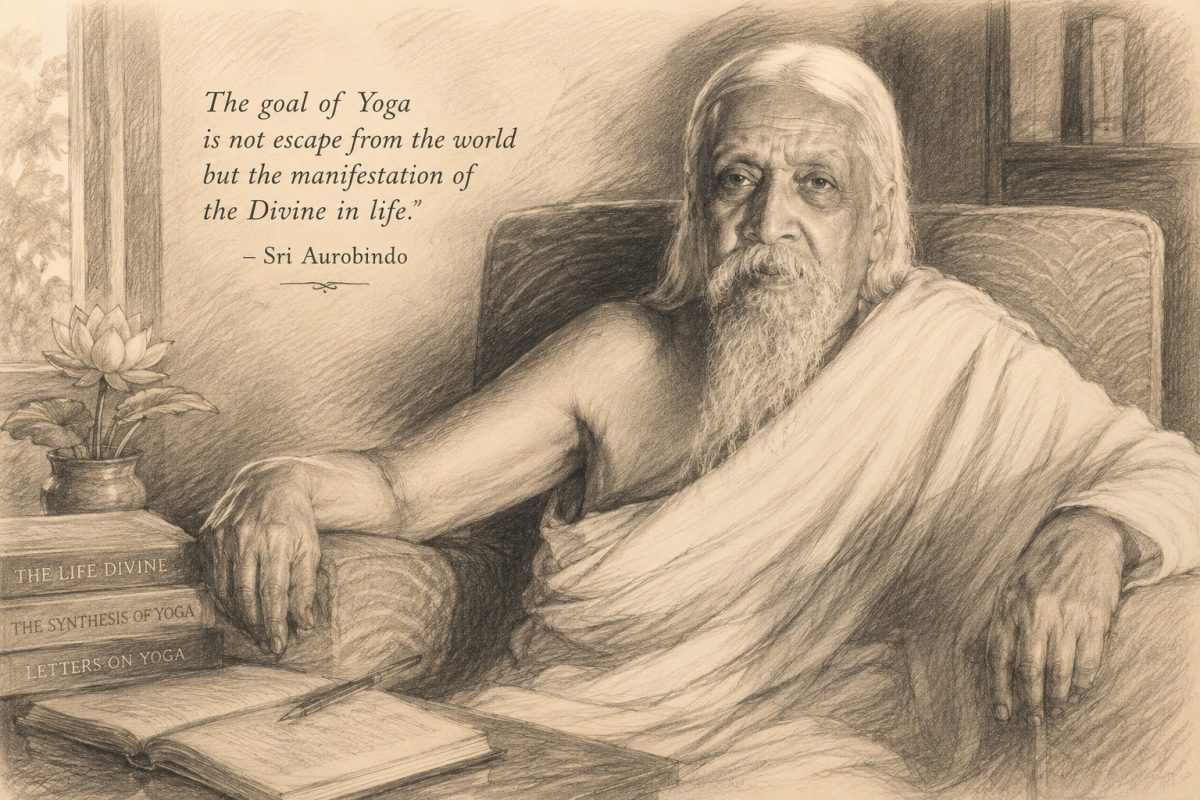
Unlike many classical schools of yoga that emphasize liberation from worldly existence, Sri Aurobindo believed spiritual realization should lead to the transformation of life on Earth. Rather than escaping the material world, he argued that human beings should strive to bring higher consciousness into everyday living.
Sri Aurobindo's own journey reflected this philosophy. Educated in England and initially active in India's freedom movement, he later settled in Puducherry, where years of meditation and spiritual practice shaped his vision of human evolution and consciousness.
At the heart of Integral Yoga is the belief that every dimension of human nature—including the mind, emotions, body, and life energy—must evolve together. Instead of following a single path such as knowledge, devotion, meditation, or action, Sri Aurobindo proposed integrating all aspects into one comprehensive spiritual discipline.
His philosophy also introduced the idea that consciousness itself continues to evolve. Just as life emerged from matter and intelligence developed from life, he believed humanity is destined to progress toward what he described as a higher "Supramental Consciousness" capable of transcending the limitations of ordinary thought.
Integral Yoga places strong emphasis on inner transformation rather than external rituals. Sri Aurobindo described three essential movements: aspiration for spiritual growth, rejection of negative habits and ego-driven impulses, and complete surrender to the Divine Will.
Another central concept is the awakening of the "psychic being," the inner soul that guides an individual toward truth, compassion, peace, and spiritual awareness. According to Sri Aurobindo, lasting spiritual progress begins when this deeper consciousness takes leadership over the mind and emotions.
Unlike traditions that encourage withdrawal from society, Integral Yoga encourages active participation in daily life. Work, education, relationships, public service, and ordinary responsibilities can all become forms of spiritual practice when performed with sincerity, selflessness, and awareness.
Sri Aurobindo's collaborator, Mirra Alfassa—known simply as **The Mother**—played a crucial role in developing and spreading Integral Yoga. Together they established the Sri Aurobindo Ashram in Puducherry, creating a community where spirituality, education, physical development, and daily life were integrated into a single philosophy.
Their teachings continue to influence schools, educational institutions, and spiritual centers across India and abroad, promoting the idea that personal development and social progress are inseparable.
Supporters of Sri Aurobindo's philosophy believe his ideas remain especially relevant in today's world, where societies face challenges ranging from technological disruption and environmental crises to social conflict and mental health concerns.
Rather than relying solely on political or economic reforms, Sri Aurobindo argued that meaningful and lasting change begins with the evolution of human consciousness itself.
His writings also sought to bridge science and spirituality, suggesting that future progress would emerge through a deeper understanding of consciousness alongside scientific advancement.
As International Yoga Day continues to expand its global reach, Sri Aurobindo's Integral Yoga offers an alternative perspective—one that views yoga not simply as physical exercise or personal meditation, but as a lifelong journey toward transforming both the individual and the world.
For many followers, his message remains clear: yoga is not an escape from life, but a means of elevating life itself through inner growth, conscious action, and the realization of humanity's highest potential.
As the world marks International Yoga Day on June 21, millions of people celebrate one of India's oldest spiritual traditions through meditation, breathing exercises, and physical postures. Yet beyond these widely recognized practices lies a deeper philosophical vision of yoga that continues to influence spiritual seekers around the world.
Among the thinkers who reshaped the understanding of yoga, Sri Aurobindo Ghosh occupies a unique place. Philosopher, poet, freedom fighter, and spiritual master, Sri Aurobindo developed what he called **Integral Yoga**—a path that extends beyond personal enlightenment toward the transformation of human consciousness and society itself.
Unlike many classical schools of yoga that emphasize liberation from worldly existence, Sri Aurobindo believed spiritual realization should lead to the transformation of life on Earth. Rather than escaping the material world, he argued that human beings should strive to bring higher consciousness into everyday living.
Sri Aurobindo's own journey reflected this philosophy. Educated in England and initially active in India's freedom movement, he later settled in Puducherry, where years of meditation and spiritual practice shaped his vision of human evolution and consciousness.
At the heart of Integral Yoga is the belief that every dimension of human nature—including the mind, emotions, body, and life energy—must evolve together. Instead of following a single path such as knowledge, devotion, meditation, or action, Sri Aurobindo proposed integrating all aspects into one comprehensive spiritual discipline.
His philosophy also introduced the idea that consciousness itself continues to evolve. Just as life emerged from matter and intelligence developed from life, he believed humanity is destined to progress toward what he described as a higher "Supramental Consciousness" capable of transcending the limitations of ordinary thought.
Integral Yoga places strong emphasis on inner transformation rather than external rituals. Sri Aurobindo described three essential movements: aspiration for spiritual growth, rejection of negative habits and ego-driven impulses, and complete surrender to the Divine Will.
Another central concept is the awakening of the "psychic being," the inner soul that guides an individual toward truth, compassion, peace, and spiritual awareness. According to Sri Aurobindo, lasting spiritual progress begins when this deeper consciousness takes leadership over the mind and emotions.
Unlike traditions that encourage withdrawal from society, Integral Yoga encourages active participation in daily life. Work, education, relationships, public service, and ordinary responsibilities can all become forms of spiritual practice when performed with sincerity, selflessness, and awareness.
Sri Aurobindo's collaborator, Mirra Alfassa—known simply as **The Mother**—played a crucial role in developing and spreading Integral Yoga. Together they established the Sri Aurobindo Ashram in Puducherry, creating a community where spirituality, education, physical development, and daily life were integrated into a single philosophy.
Their teachings continue to influence schools, educational institutions, and spiritual centers across India and abroad, promoting the idea that personal development and social progress are inseparable.
Supporters of Sri Aurobindo's philosophy believe his ideas remain especially relevant in today's world, where societies face challenges ranging from technological disruption and environmental crises to social conflict and mental health concerns.
Rather than relying solely on political or economic reforms, Sri Aurobindo argued that meaningful and lasting change begins with the evolution of human consciousness itself.
His writings also sought to bridge science and spirituality, suggesting that future progress would emerge through a deeper understanding of consciousness alongside scientific advancement.
As International Yoga Day continues to expand its global reach, Sri Aurobindo's Integral Yoga offers an alternative perspective—one that views yoga not simply as physical exercise or personal meditation, but as a lifelong journey toward transforming both the individual and the world.
For many followers, his message remains clear: yoga is not an escape from life, but a means of elevating life itself through inner growth, conscious action, and the realization of humanity's highest potential.
Tags
news
Comments (0)
Login to post comments
No comments yet
Be the first to share your thoughts about this post.