News
General
27 views
The new triangle of trust in medicine: Dr. Chatbot enters the exam room
Jun 19, 2026
📍 Philadelphia, PA, USA
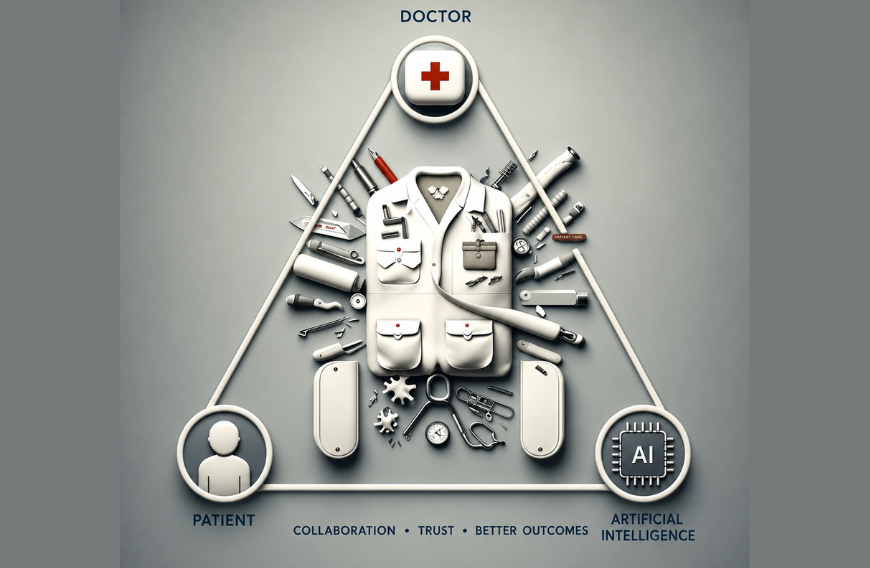
🤖🏥 Artificial intelligence is transforming healthcare, but its greatest value may not be replacing doctors—it may be strengthening the partnership between physicians and patients. As AI tools like ChatGPT become common sources of medical information, patients increasingly arrive at appointments with potential diagnoses, treatment ideas, and technical vocabulary that once belonged only to healthcare professionals. This shift is changing the traditional doctor-patient relationship, creating a new era where both sides have access to similar information but must work together to interpret it wisely.
For decades, physicians earned trust not simply because they possessed knowledge, but because they could apply experience, clinical judgment, and context to complex medical decisions. AI can now summarize research, analyze symptoms, review medical literature, and assist with pattern recognition across specialties such as radiology, pathology, dermatology, and ophthalmology. At the same time, it can reduce administrative burdens by handling documentation, coding, prior authorizations, and other repetitive tasks, allowing physicians to spend more time caring for patients.
However, access to information is not the same as understanding. AI can generate long lists of possible diagnoses, including rare conditions that may unnecessarily alarm patients, while experienced physicians know how to distinguish likely causes from unlikely possibilities. Medicine is about far more than symptoms—it also involves understanding culture, family responsibilities, financial realities, emotional well-being, personal values, and the unique circumstances that shape every patient's healthcare decisions.
The future of healthcare will likely combine the strengths of both human expertise and artificial intelligence. Smaller, specialized AI models trained on medical evidence may provide more personalized guidance, while future AI systems could help predict how diseases progress and how different treatments may affect individual patients. Yet the responsibility for compassion, accountability, reassurance, and ethical decision-making will continue to rest with physicians.
As AI becomes an increasingly powerful medical assistant, the true measure of success will not be how much information technology can provide, but how effectively it helps doctors and patients achieve better diagnoses, more personalized care, fewer unnecessary procedures, and improved health outcomes. The future of medicine belongs not to a competition between humans and AI, but to a partnership where technology enhances clinical judgment while preserving the trust, empathy, and human connection that remain at the heart of healing. 🌍❤️
For decades, physicians earned trust not simply because they possessed knowledge, but because they could apply experience, clinical judgment, and context to complex medical decisions. AI can now summarize research, analyze symptoms, review medical literature, and assist with pattern recognition across specialties such as radiology, pathology, dermatology, and ophthalmology. At the same time, it can reduce administrative burdens by handling documentation, coding, prior authorizations, and other repetitive tasks, allowing physicians to spend more time caring for patients.
However, access to information is not the same as understanding. AI can generate long lists of possible diagnoses, including rare conditions that may unnecessarily alarm patients, while experienced physicians know how to distinguish likely causes from unlikely possibilities. Medicine is about far more than symptoms—it also involves understanding culture, family responsibilities, financial realities, emotional well-being, personal values, and the unique circumstances that shape every patient's healthcare decisions.
The future of healthcare will likely combine the strengths of both human expertise and artificial intelligence. Smaller, specialized AI models trained on medical evidence may provide more personalized guidance, while future AI systems could help predict how diseases progress and how different treatments may affect individual patients. Yet the responsibility for compassion, accountability, reassurance, and ethical decision-making will continue to rest with physicians.
As AI becomes an increasingly powerful medical assistant, the true measure of success will not be how much information technology can provide, but how effectively it helps doctors and patients achieve better diagnoses, more personalized care, fewer unnecessary procedures, and improved health outcomes. The future of medicine belongs not to a competition between humans and AI, but to a partnership where technology enhances clinical judgment while preserving the trust, empathy, and human connection that remain at the heart of healing. 🌍❤️
Tags
news
Comments (0)
Login to post comments
No comments yet
Be the first to share your thoughts about this post.