News
General
43 views
US restricts foreign access to Anthropic AI models
Jun 15, 2026
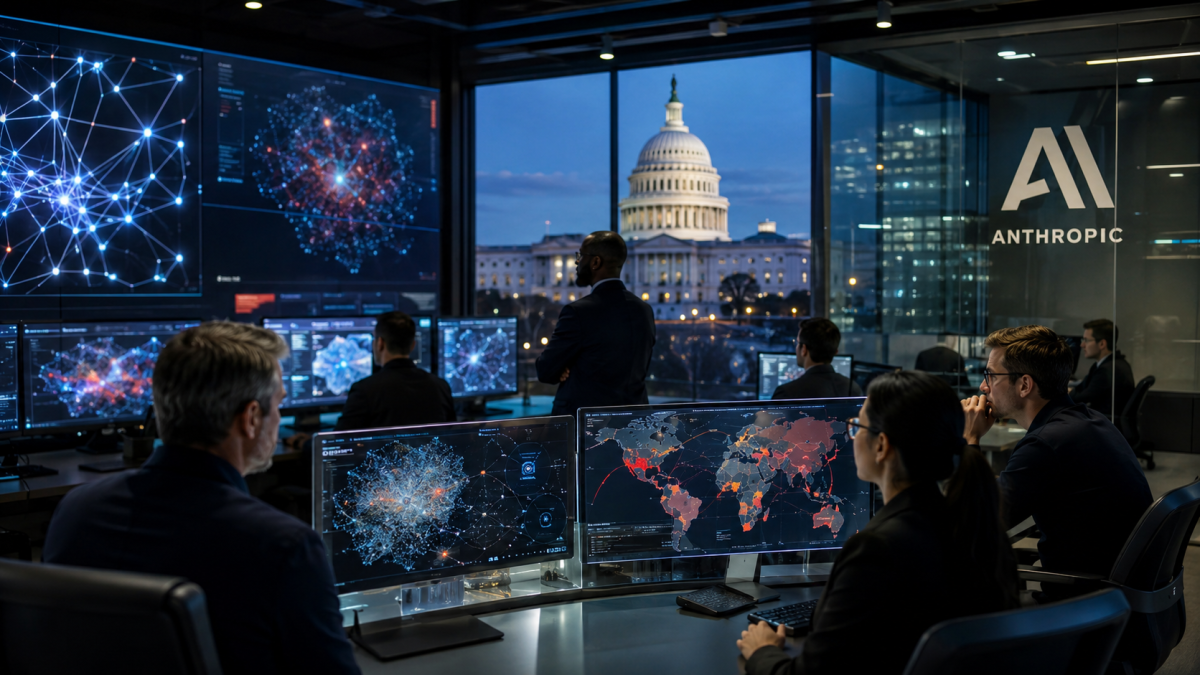
🤖🇺🇸 The Trump administration has taken a dramatic step in the global AI race by restricting foreign access to Anthropic’s most advanced artificial intelligence models, signaling that frontier AI technology is increasingly being treated as a strategic national security asset rather than just a commercial product.
The restrictions target Anthropic’s powerful **Fable 5** and **Mythos 5** models, which the U.S. government has reportedly placed under new export controls. As a result, Anthropic was instructed to suspend access for foreign nationals, including some individuals located inside the United States, while the company works to comply with federal requirements. The move reflects growing concerns that highly capable AI systems could potentially be exploited to identify software vulnerabilities, enhance cyberattacks, or support other sensitive activities.
The decision represents a major shift in how governments view artificial intelligence. Until recently, U.S. export restrictions primarily focused on advanced semiconductors, chips, and computing hardware. Now, policymakers are beginning to regulate access to AI models themselves, recognizing their growing strategic value in cybersecurity, defense, research, and economic competitiveness.
The restrictions could have significant consequences for international researchers, developers, businesses, and governments that rely on cutting-edge AI tools for software engineering, analytics, and innovation. European officials and global technology leaders are already examining how the policy may affect access to frontier AI capabilities worldwide.
The development also highlights the increasingly complex relationship between AI companies and national governments. As artificial intelligence becomes more powerful, decisions about who can access the technology may be driven as much by national security concerns as by market demand. The Anthropic case may ultimately become a landmark moment in defining how advanced AI systems are governed in the years ahead.
As the global AI race accelerates, the debate is no longer just about building the most powerful models—it is also about who gets to use them, under what conditions, and how governments balance innovation with security. 🌍⚡
The restrictions target Anthropic’s powerful **Fable 5** and **Mythos 5** models, which the U.S. government has reportedly placed under new export controls. As a result, Anthropic was instructed to suspend access for foreign nationals, including some individuals located inside the United States, while the company works to comply with federal requirements. The move reflects growing concerns that highly capable AI systems could potentially be exploited to identify software vulnerabilities, enhance cyberattacks, or support other sensitive activities.
The decision represents a major shift in how governments view artificial intelligence. Until recently, U.S. export restrictions primarily focused on advanced semiconductors, chips, and computing hardware. Now, policymakers are beginning to regulate access to AI models themselves, recognizing their growing strategic value in cybersecurity, defense, research, and economic competitiveness.
The restrictions could have significant consequences for international researchers, developers, businesses, and governments that rely on cutting-edge AI tools for software engineering, analytics, and innovation. European officials and global technology leaders are already examining how the policy may affect access to frontier AI capabilities worldwide.
The development also highlights the increasingly complex relationship between AI companies and national governments. As artificial intelligence becomes more powerful, decisions about who can access the technology may be driven as much by national security concerns as by market demand. The Anthropic case may ultimately become a landmark moment in defining how advanced AI systems are governed in the years ahead.
As the global AI race accelerates, the debate is no longer just about building the most powerful models—it is also about who gets to use them, under what conditions, and how governments balance innovation with security. 🌍⚡
Tags
news
Comments (0)
Login to post comments
No comments yet
Be the first to share your thoughts about this post.