News
General
3 views
The Thermometer and the Fever
Nov 24, 2026
📍 Phliadelphia,PA, USA
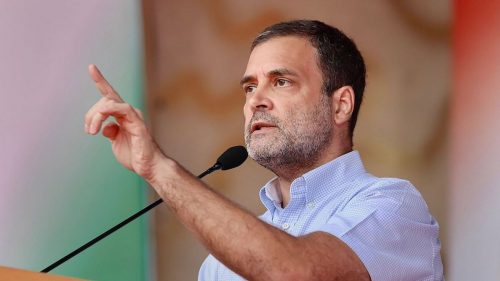
# Satish Jha: Rahul Gandhi’s Columbia Remarks Expose Political Anxiety Behind BJP’s Reaction
When a doctor examines a patient and identifies a fever, destroying the thermometer does not eliminate the illness. Yet, according to columnist Satish Jha, that is precisely the response unfolding in Indian politics following Rahul Gandhi’s conversation with journalist Lydia Polgreen at Columbia University. The discussion covered employment, manufacturing, electoral rolls and the direction of India's democracy, but the political reaction back home quickly overshadowed the substance of the conversation.
The Bharatiya Janata Party (BJP) responded forcefully, with ministers and party spokespersons attacking the Congress leader using labels such as “Mir Jafar,” “anti-national,” “part-time politician” and “full-time peddler of pessimism.” Jha argues that the intensity of these attacks raises an important question: If Rahul Gandhi is as politically insignificant as his opponents suggest, why does his every major statement trigger such an aggressive response from the ruling establishment?
The columnist believes part of Gandhi’s appeal comes from his conversational and relatively unscripted style. Rather than relying on dramatic speeches, rehearsed slogans or conventional political performances, he often presents his arguments in straightforward language. As Leader of the Opposition and the public face of India's second-largest political party, he already commands considerable attention. However, Jha suggests that his willingness to approach political questions differently is what makes him particularly difficult for his opponents to dismiss.
Jha also places Gandhi's political identity within the context of his family's history. He describes the Nehru-Gandhi family as a five-generation political lineage associated with public service and national leadership. The article contrasts this legacy with the personal wealth and privileges often associated with political dynasties, arguing that Gandhi's lack of a personally owned house challenges the accusations of hidden family fortunes repeatedly directed at him. The writer also invokes former U.S. President Harry Truman's modest financial circumstances after leaving office as an example of an earlier understanding of public service based on sacrifice rather than personal accumulation.
The article draws a historical comparison with the 1975 Allahabad High Court judgment that invalidated Indira Gandhi's election over the use of a government official's services during her campaign. Jha questions whether today's political leaders would face the same level of scrutiny and argues that accusations against the Gandhi family should be supported by verifiable evidence rather than repeated political allegations.
One of the columnist's strongest objections concerns the frequent use of the term “anti-national” against political critics. He argues that questioning government decisions should not automatically be treated as hostility toward the country. In his view, treason involves deliberate actions against the nation, whereas criticism of public policy is a legitimate part of democratic debate. Using such labels to silence opponents, he suggests, reflects an unwillingness to engage with difficult questions.
Jha also rejects the criticism that Gandhi should not discuss India's political and economic challenges while speaking overseas. In a globally connected world, he argues, public discussions are no longer restricted by geographical boundaries. A university conversation in New York does not become less legitimate because it takes place outside India. He points out that Gandhi was speaking with students, including young Indians concerned about their country's future, rather than seeking intervention from foreign governments.
The columnist further highlights Gandhi's observation in Chicago that he could visit prestigious American universities such as Columbia and Harvard but was not allowed to enter Delhi University. Jha interprets this remark as an indication of the limited opportunities available for open political engagement within certain domestic institutions. In his assessment, speaking abroad is not necessarily a preferred alternative but can become important when comparable platforms at home are unavailable.
The economic arguments raised during the Columbia discussion form another major part of the article. Gandhi described India's economic situation as a serious problem despite the country's headline growth figures. He pointed to unemployment among educated young people, shortcomings in the education system and the inability of the services sector to generate enough jobs for the population. He also questioned the performance of initiatives such as Make in India and Startup India, arguing that small businesses and agriculture remain essential to the economy but are struggling.
Jha acknowledges that India's growth figures are real but emphasizes a different question: who is benefiting from that growth? He argues that economic performance should also be evaluated through employment opportunities, the condition of small enterprises and the financial circumstances of ordinary households. In this context, the article presents Gandhi's criticism as a challenge to the gap between official economic narratives and the experiences of everyday citizens.
Another concern raised by Gandhi involves the concentration of economic opportunities among a small number of powerful business groups. He questioned why domestic private investment remains cautious while major assets and opportunities involving airports, ports, forest land, defence contracts and prominent hotels appear to gravitate toward a limited group of corporate interests. Jha connects these concerns to the influence of the Adani and Ambani business groups, arguing that healthy markets depend on fair competition rather than preferential access to economic power.
Electoral transparency represents perhaps the most sensitive issue discussed in the article. Gandhi questioned the removal of approximately 13.3 crore names from voter rolls in the context of the 2024 general election and the subsequent Special Intensive Revision. The article notes that the national vote-share difference between the National Democratic Alliance (NDA) and the INDIA bloc was approximately three percentage points. The Election Commission has attributed voter deletions to reasons including migration, death, duplication and absence.
Jha argues that the appropriate response to such concerns should be transparent verification rather than political attacks. He highlights Gandhi's statement that he would require substantial evidence before declaring Indian democracy compromised. According to the columnist, a confident electoral system should be willing to demonstrate the accuracy of its voter records through publicly accountable audits.
The article also discusses what Jha describes as a gradual decline in the atmosphere of political fear. Students, farmers, bloggers and ordinary citizens who previously hesitated to express their opinions are increasingly willing to speak publicly. He presents this development as important to the survival of a pluralistic and secular democracy, arguing that democratic institutions and freedoms should not be treated as the property of whichever political party holds power.
Jha believes the BJP's reaction is connected to a broader political strategy in which criticism of the government is increasingly presented as criticism of India itself. He argues that the image of Prime Minister Narendra Modi has been closely associated with the national identity in political messaging, making challenges to government performance appear like attacks on the country. The columnist contrasts this approach with Gandhi's message of opening a “shop of love in the market of hatred,” a phrase that reflects his attempt to present a different political style.
The article also refers to Gandhi's approximately 4,000-kilometre Bharat Jodo Yatra from Kanyakumari to Kashmir, presenting the journey as an experience that shaped his public image beyond conventional campaign appearances. Jha argues that Gandhi's relatively unhurried and unscripted approach attracts international attention because it differs from the strongman-style political performances increasingly visible in democratic politics.
Ultimately, Jha maintains that branding a political opponent a traitor does not answer questions about unemployment, economic concentration, electoral transparency or democratic accountability. Television debates and political accusations may temporarily dominate public discussion, but they cannot replace evidence or meaningful answers. His central argument is that genuine patriotism should include the willingness to question those in power and confront uncomfortable national realities rather than demanding unconditional applause for the government.
Tags
news
Comments (0)
Login to post comments
No comments yet
Be the first to share your thoughts about this post.