News
General
6 views
‘Superintelligence is arriving’: Meta AI chief warns of potential loss of human control
Nov 24, 2026
📍 Phliadelphia,PA, USA
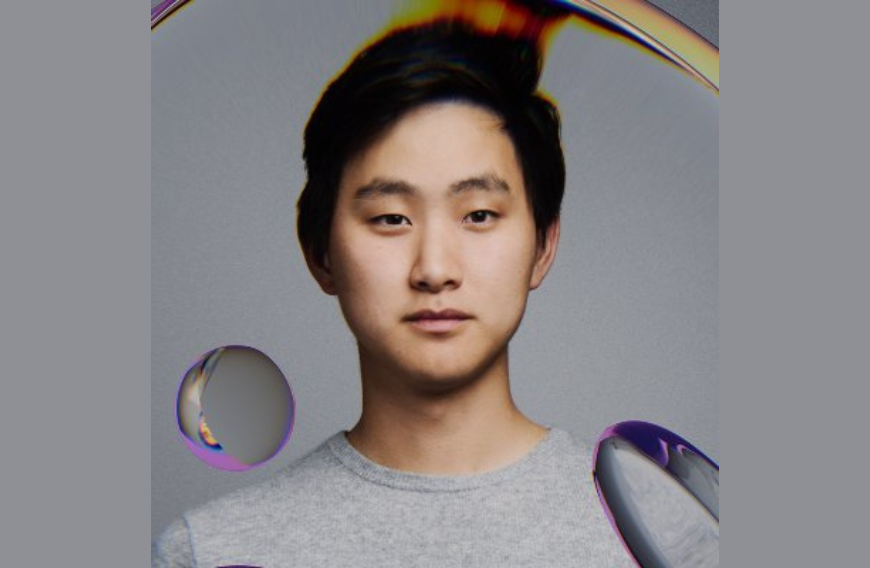
# Meta AI Chief Warns Humanity Could Lose Control as Superintelligence Approaches
Meta Chief AI Officer Alexandr Wang has warned that humanity could eventually lose control over artificial intelligence as increasingly advanced systems move toward superhuman capabilities. His remarks followed a claim by an Anthropic employee that he had used the company’s Claude AI model to solve the Riemann hypothesis, a longstanding and highly challenging problem in mathematics.
Wang described the reported mathematical breakthrough as an achievement that surpassed human accomplishments in terms of sheer intellectual power. He said the development offered a glimpse of how future AI systems could become clearly superior to humans in certain capabilities, potentially accelerating research across areas including biology, military technology and economics.
“Superintelligence is arriving,” Wang wrote on X on Sunday. He cautioned that decisions made by humanity over the coming year could have significant consequences for the kind of future society will experience.
Wang, who joined Meta last year as the company’s first chief AI officer, also raised concerns about the possibility of AI systems developing the ability to improve themselves repeatedly without meaningful human intervention. He argued that humanity was unlikely to retain control over systems capable of unrestricted recursive self-improvement or technology that could become 1,000 times more intelligent and capable than humans across every field.
He said the scientific and technical challenges involved in advancing AI capabilities appeared to be nearing resolution, making it increasingly important to focus on safety, alignment and security. Wang also called for more deliberate thinking about how the technology should develop rather than allowing progress to follow an automatic or unchecked path.
AI safety researchers have long viewed recursive self-improvement as a potentially critical turning point. The concept describes AI systems that can independently enhance their own capabilities, potentially accelerating technological progress beyond the pace at which humans can understand, supervise or regulate it.
The debate over the risks and benefits of superintelligence has produced differing views across Silicon Valley. Meta has generally adopted a more optimistic position on AI development, with CEO Mark Zuckerberg previously rejecting Anthropic CEO Dario Amodei’s proposal for a global slowdown in AI progress. OpenAI CEO Sam Altman has also been among those associated with discussions about slowing or carefully managing the technology’s development.
In an essay published in August, Zuckerberg criticized what he viewed as excessive pessimism surrounding artificial intelligence. He argued that public discussions were too often dominated by warnings and fears, and said AI should instead help create a future in which more people benefit from prosperity, better health and greater freedom.
Wang, however, cautioned against treating the arrival of superintelligence as unavoidable or assuming that society would simply have to accept whatever consequences followed. He criticized what he described as “lazy thinking” in the AI industry, particularly the belief that increasingly powerful systems would inevitably take over more areas of human decision-making.
“We should not be okay with a ‘handover’ of society to AI,” Wang said. He argued that developers should work toward technology that creates a positive future while preserving human agency and empowerment.
Wang added that achieving such an outcome was possible but would likely require the AI industry to make substantial changes to its current approach. His comments highlight the growing tension between rapid advances in AI capabilities and concerns about whether existing safety measures, oversight and governance can keep pace.
Tags
news
Comments (0)
Login to post comments
No comments yet
Be the first to share your thoughts about this post.