News
General
6 views
Ro Khanna eyes 2028 presidential run; opposes Trump’s $100,000 H-1B fee
Nov 19, 2026
📍 Phliadelphia,PA, USA
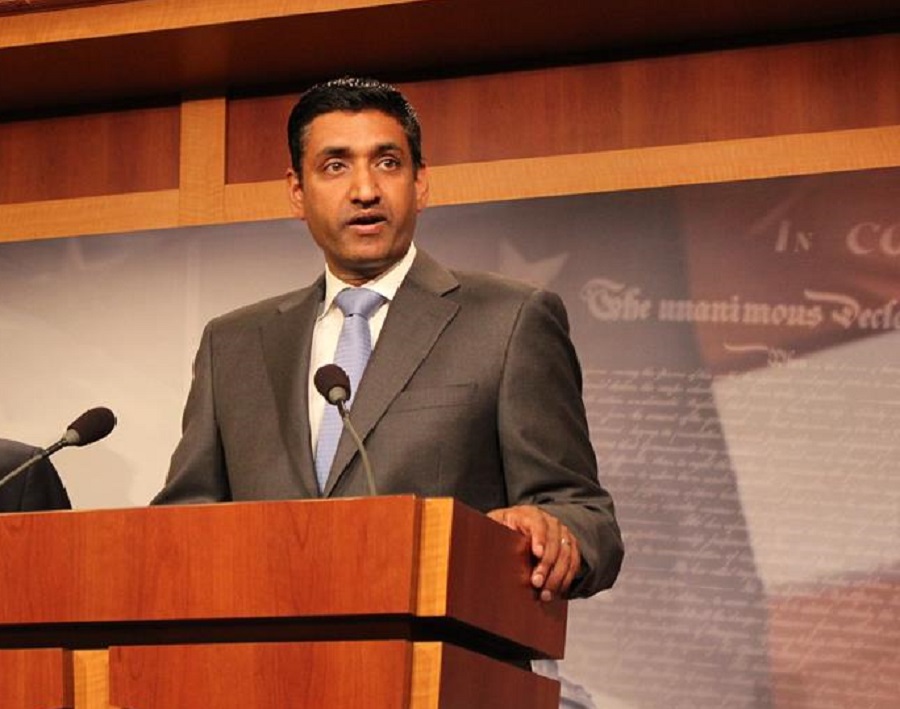
# Ro Khanna Considers 2028 Presidential Bid, Outlines Economic Vision and Immigration Reforms
Indian American Congressman Ro Khanna has indicated that he is considering a run for president in 2028, saying he wants to take his economic agenda to voters across the United States and build an economy that delivers broader opportunities for ordinary Americans.
In an exclusive interview with *USA Today*, the California Democrat described his proposed platform as “economic patriotism,” an approach he believes could help distribute the benefits of economic growth beyond wealthy investors and major technology companies. His comments come as supporters have launched a draft presidential committee called “Ro Run Ro,” just two days after the midterm elections, further fueling speculation about his political future.
Asked whether he would enter the 2028 presidential contest, Khanna confirmed that he was weighing the possibility and described his economic agenda as a new version of the New Deal.
“I said I’m considering it. I’m considering it because I have a clear economic vision for America. I call it economic patriotism. America’s next New Deal,” he told *USA Today*.
Khanna argued that the country's economic success has not benefited all Americans equally. Pointing to the enormous concentration of wealth and economic activity in Silicon Valley, the congressional district he represents, he said the prosperity generated by the technology industry should reach workers and communities across the country.
“You cannot have a country which has $25 trillion in my district where the economy is only working for a few billionaires and is not working for the people I grew up with in Pennsylvania,” he said.
The congressman also emphasized his experience with technology and artificial intelligence, saying he understands how these industries could shape the future economy. However, he believes technological progress should translate into better opportunities and living standards for working Americans rather than primarily benefiting major corporations and wealthy individuals.
“I understand the future economy. I understand AI and technology. I want this economy working for ordinary people that I grew up with. I want economic success across this country. And I’m going around the country trying to offer that economic vision,” Khanna added.
**Economic patriotism and the next New Deal**
Khanna's proposed economic framework centers on making the benefits of national growth more widely accessible. Rather than measuring success mainly through corporate profits, billionaire wealth or technological advancement, his approach emphasizes economic opportunities for working-class communities.
Artificial intelligence and technological innovation are central to this vision. As AI transforms industries and employment, Khanna argues that the resulting economic gains should extend beyond the companies developing these technologies and the investors financing them.
**Khanna renews call to replace ICE with a different immigration system**
Immigration policy was another major issue discussed during the interview. Khanna described the subject as personal and reiterated his position that Immigration and Customs Enforcement (ICE) should be abolished and replaced with an enforcement structure focused on serious criminal activity.
He proposed establishing a system modeled on the former Immigration and Naturalization Service (INS), which operated before its responsibilities were transferred to the Department of Homeland Security in 2003.
“Well, I would replace it with a version of the INS, the Immigration National Services that we had from the New Deal until George W. Bush,” Khanna said.
He argued that immigration enforcement should concentrate on serious offenses, including drug trafficking and sex trafficking, rather than targeting undocumented immigrants working in industries such as restaurants, construction, agriculture and childcare.
**H-1B wage protections and green card backlog**
Khanna also addressed concerns about the H-1B visa program, acknowledging that some employers use the system to recruit foreign professionals at wages below prevailing market rates. While opposing President Donald Trump's proposed $100,000 H-1B fee, he called for stronger enforcement of wage requirements to prevent companies from undercutting American workers.
“I believe they should be paid a market wage. I think there are a lot of these companies that are paying the low market wages and that they are using the H-1B system in a way that is bringing people without some special skills just to undercut the market,” he said.
He called for greater transparency regarding the qualifications of foreign professionals and clearer standards to ensure employers offer competitive compensation.
The congressman also defended his record on immigration-related restrictions and the green card backlog affecting Indian professionals. During the interview, the journalist raised concerns about companies including Microsoft and Adobe suspending green card sponsorship following action by Vice President JD Vance, leaving some Indian engineers facing greater uncertainty over their permanent residency applications.
Khanna rejected the suggestion that he had remained silent, criticizing the Trump administration's approach toward Indian Americans and arguing that it had failed to address the longstanding backlog.
“Well, we’ve been pushing. I’m not silent. I just know that Trump and Vance aren’t going to do anything. They have been the most anti-Indian American administration in decades and they have done nothing to address the backlog,” he said.
He further argued that granting green cards to eligible foreign professionals would improve their ability to change employers, negotiate higher salaries and pursue better career opportunities. In his view, greater employment mobility would also prevent companies from using workers' immigration status to hold down wages.
“Of course, we should have these folks get a green card. That would increase their mobility. It would increase their ability to get a higher wage. It would make sure that they weren’t being suppressing the wages down in America. But Vance and Trump have done nothing,” Khanna added.
Khanna's comments bring together several issues likely to feature in his political ambitions: economic inequality, artificial intelligence, immigration enforcement and employment-based immigration reform. Although he has not announced a formal presidential campaign, the draft committee launched by his supporters and his latest remarks have placed a possible 2028 bid increasingly in public discussion.
Tags
news
Comments (0)
Login to post comments
No comments yet
Be the first to share your thoughts about this post.