News
General
8 views
Humanoid robotics startup Foundation Future Industries misses payroll amid cash crisis
Nov 16, 2026
📍 Phliadelphia,PA, USA
# Eric Trump-Backed Robotics Startup Foundation Misses Payroll Amid $4.6 Million CEO Loan Controversy
Foundation Future Industries, a San Francisco-based humanoid robotics startup backed by Eric Trump, is facing growing financial and management concerns after reportedly failing to pay employees on time. The company missed its October 30 payroll deadline as it struggled with cash-flow shortages, according to a CNBC report. The situation has drawn attention to the startup's financial stability and corporate governance, particularly after reports that its co-founder and chief executive officer, Sankaet Pathak, borrowed $4.6 million from the company to purchase a luxury property in California.
Public records indicate that an LLC identifying Pathak as its sole principal purchased a $4.6 million property in Sausalito, California, in October 2025. According to people familiar with the company's finances cited by CNBC, Pathak characterized the transaction as a short-term loan. Existing investors were reportedly aware of the arrangement through financial disclosures. However, the company's current payroll difficulties have intensified scrutiny over how its funds were managed and whether sufficient financial controls were in place.
The missed October payroll was not the company's first reported payment delay. Foundation also experienced a shortage in August, when employees reportedly received their salaries approximately two days late. The situation was resolved after an existing investor provided a temporary bridge loan to help the company meet its obligations. In a recent internal memo to employees, Pathak said he was working to secure additional funds to clear the outstanding salary payments, according to CNBC.
Concerns have also emerged over the company's corporate governance structure. Pathak reportedly serves as Foundation's sole board member and holds a majority ownership stake. This arrangement has raised questions among prospective investors because it gives him considerable control over the company's financial and strategic decisions. According to people familiar with the matter, the structure also allowed him to obtain the $4.6 million loan without requiring approval from a separate board.
Foundation has been attempting to raise hundreds of millions of dollars at a proposed valuation of approximately $3 billion since at least January. However, the company's ongoing financial difficulties could complicate its fundraising efforts. People familiar with the situation told CNBC that some insiders are concerned the startup could face the possibility of collapse if it fails to secure fresh investment. The company must now address its immediate payroll obligations while convincing investors that it can maintain operations and deliver on its long-term robotics ambitions.
Founded in April 2024, Foundation was established by Pathak, Tribe Capital chief executive Arjun Sethi and Mike LeBlanc, co-founder of robotics company Cobalt Robotics. The startup quickly expanded its technical workforce, recruiting dozens of robotics engineers and artificial intelligence specialists. Its employees reportedly included professionals with experience at major technology and autonomous vehicle companies such as Tesla and Zoox. The company has positioned itself as a developer of advanced humanoid robots for industrial, commercial and defense applications.
Foundation attracted wider public attention in April when Eric Trump, the son of President Donald Trump, was introduced as an investor and the company's chief strategy adviser. The amount of his investment has not been publicly disclosed. His involvement brought additional visibility to the startup, particularly as it promoted its humanoid robotics technology for potential military and battlefield applications.
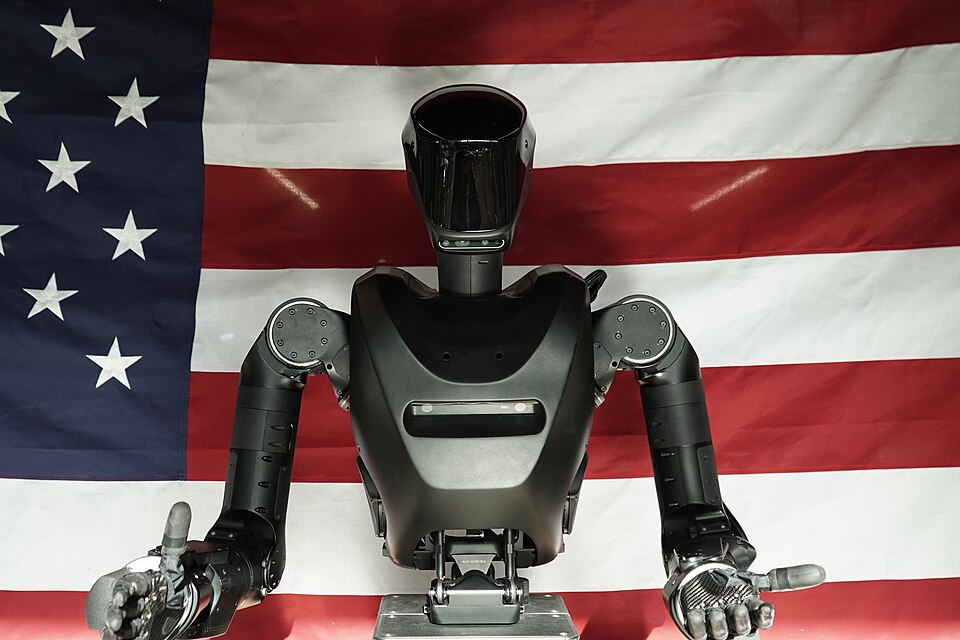
The company's defense ambitions have also generated political scrutiny because of reports concerning government contracts worth approximately $24 million. However, CNBC's reporting highlights an important distinction regarding those agreements. The government research contracts were originally associated with Boardwalk Robotics, a Florida-based company that Foundation acquired in late 2024, rather than being contracts directly secured by Foundation. The acquisition also provided the technological foundation for the company's first humanoid robot, the Phantom MK-1.
Eric Trump's involvement prompted Senator Elizabeth Warren of Massachusetts to question whether political connections had influenced the company's government business. A spokesperson for Trump previously told the Financial Times that he was not involved in Foundation's management, daily operations, strategic decisions or government contracting activities. The questions surrounding the company's political connections have added another layer of attention to its business activities and future prospects.
The latest financial difficulties have also brought renewed attention to Pathak's previous business venture, Synapse, a financial technology company that connected fintech businesses with community banks to provide services such as savings accounts and credit cards. Synapse collapsed in 2024, creating significant problems for customers whose money was held through partner banking institutions. More than 100,000 Americans were reportedly affected, with approximately $265 million in deposits caught up in the resulting disruption.
The bankruptcy proceedings revealed discrepancies in customer account records and raised questions about the location of some deposited funds. Former Federal Deposit Insurance Corporation Chair Jelena McWilliams, who served as the bankruptcy trustee, estimated that as much as $96 million in customer funds could not be accounted for. Pathak blamed banking partner Evolve Bank & Trust for the discrepancies, while Evolve attributed responsibility to Synapse. The collapse became a major case highlighting the risks associated with fintech companies relying on multiple banking partners and complex financial arrangements.
Foundation's current situation is different from the Synapse collapse, but the earlier episode has added to scrutiny of Pathak's leadership and financial management. The robotics startup now faces the immediate challenge of paying employees, stabilizing its cash position and securing additional investment. Its ability to address these problems could determine whether it can continue developing its Phantom humanoid robots and pursue opportunities in the defense and commercial robotics markets. With a proposed $3 billion valuation and ambitious fundraising goals, the company must demonstrate that its financial structure is capable of supporting its technological ambitions.
Tags
news
Comments (0)
Login to post comments
No comments yet
Be the first to share your thoughts about this post.