News
General
13 views
Anthropic CEO predicts AI could help cure major diseases within 10 years
Nov 13, 2026
📍 Phliadelphia,PA, USA
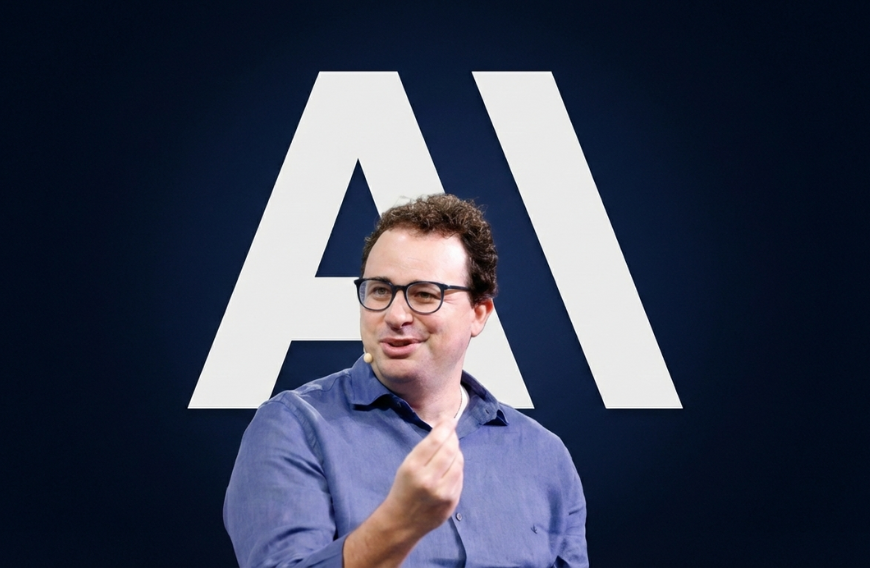
# Anthropic CEO Dario Amodei Predicts AI Could Make Major Diseases a Thing of the Past Within a Decade
Anthropic chief executive officer Dario Amodei believes artificial intelligence could bring major advances in medicine over the next decade, potentially transforming the treatment of diseases such as cancer, Alzheimer's, heart disease and mental illness. Speaking in a 42-minute investor roadshow video released on November 10, Amodei outlined how increasingly advanced AI systems could accelerate scientific research and help address some of humanity's most difficult medical challenges. He suggested that several diseases currently responsible for widespread illness could become relics of the past within less than ten years.
“Cancer, Alzheimer’s, heart disease, mental illness — these will be relics of the past in, I think, less than a decade,” Amodei said during the presentation. He also described the possibility of an “age of miracles,” in which advances in artificial intelligence could help researchers solve scientific and medical problems that have remained unresolved for generations. His remarks reflect growing optimism among technology leaders about AI's potential to change how scientists understand diseases and develop treatments.
Amodei's predictions come as Anthropic expands its involvement in biological research and pharmaceutical development. In an October 27 company update, the organization said it had established research partnerships with six groups working on medicine development and had also started its own drug discovery programs. Some of these initiatives focus on rare childhood conditions, including forms of muscular dystrophy. The company believes advanced AI tools could help researchers analyze complex biological information and identify promising approaches to developing new treatments.
However, Anthropic has acknowledged that much of its medical research remains in the preclinical stage. This means that potential treatments are generally still being studied before they can progress to human testing. Identifying a promising biological target or developing an experimental compound does not automatically establish that a medicine will be safe or effective in patients. Additional research and clinical trials are necessary before any treatment can receive regulatory approval.
Amodei's optimism is part of a wider discussion among technology executives about whether AI can dramatically shorten the time required to develop new medicines. Google DeepMind CEO Demis Hassabis has also highlighted the possibility of using artificial intelligence to accelerate pharmaceutical research. During a fireside chat at the Indian Institute of Science, Hassabis discussed how the development of a new drug, which typically takes around 10 years, could potentially be reduced to months or even weeks with the help of advanced AI technologies.
Hassabis pointed to AlphaFold, DeepMind's protein structure prediction system, as an important example of how artificial intelligence can contribute to scientific research. The system has generated predictions for more than 200 million protein structures, giving scientists access to information that can support the study of biological processes and potential drug targets. Understanding protein structures is an important part of biomedical research because proteins perform many essential functions in the human body and are involved in numerous diseases.
Despite its scientific contribution, AlphaFold addresses only one part of the drug development process. Researchers must still determine whether a potential medicine interacts with its intended biological target, performs effectively in living systems and avoids harmful side effects. A predicted protein structure does not prove that a treatment will work in humans. Laboratory experiments, animal studies where appropriate, clinical trials and regulatory assessments remain necessary to establish the safety and effectiveness of new medicines.
The pharmaceutical industry has therefore approached some of the more ambitious AI predictions with caution. Jeff Leiden, executive chairman of Vertex Pharmaceuticals, has questioned claims that artificial intelligence can independently generate effective medicines at the speed suggested by some technology leaders. Speaking to The Wall Street Journal, Leiden said Vertex had evaluated approximately 50 AI companies using a database of 10,000 drug compounds, but none had independently produced a working drug.
Leiden also strongly criticized predictions that AI could cure 90% of human diseases within seven years, describing such claims as unrealistic. His comments highlight the difference between using AI to improve specific research tasks and demonstrating that the technology can independently deliver successful medicines. Pharmaceutical development involves multiple stages, and progress in computational research does not necessarily translate into successful clinical outcomes.
Artificial intelligence could nevertheless offer researchers valuable tools for identifying promising drug targets, examining large biological datasets, predicting molecular interactions and improving the efficiency of early-stage discovery. These capabilities may help scientists explore more possibilities and reduce the time spent on certain research activities. AI systems could also support researchers in analyzing experimental results and prioritizing compounds for further investigation.
However, the development of effective medicines remains a complex process involving biological uncertainty, laboratory testing and extensive human studies. Even compounds that show promise in early research can fail during clinical trials because of limited effectiveness, unexpected side effects or other safety concerns. The technology's ability to assist with research should therefore be distinguished from the much larger challenge of eliminating diseases.
For Anthropic, the growing interest in biological research represents an opportunity to demonstrate how its AI technology can contribute beyond conventional software and business applications. Its partnerships and internal drug discovery efforts suggest that the company is exploring ways to apply advanced models to scientific problems. The results of these programs will be important in determining how much practical value AI can deliver to the medical field.
Amodei's prediction presents an ambitious vision of the future, but it is not an established medical timeline or a guarantee that major diseases will disappear within a decade. Whether AI can help produce such transformative breakthroughs will depend on continued scientific research, successful clinical testing and the development of treatments that can be safely used by patients. For now, the technology offers significant research possibilities, while the medical industry continues to evaluate how those advances can translate into real-world benefits.
Tags
news
Comments (0)
Login to post comments
No comments yet
Be the first to share your thoughts about this post.