News
General
4 views
No Kings, No Blank Check: What Voters Told Washington
Nov 05, 2026
📍 Phliadelphia,PA, USA
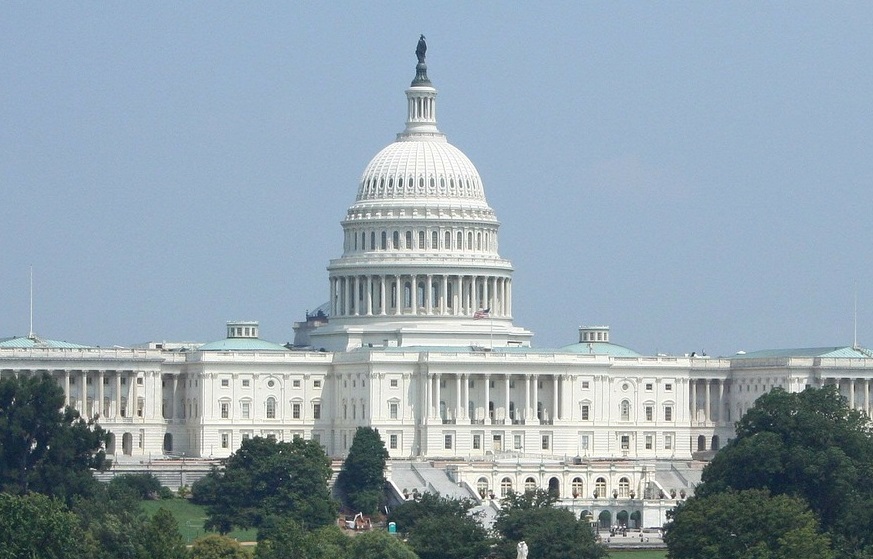
Donald Trump repeatedly maintained that he was not personally contesting the midterm elections, but his strong involvement in the final days of campaigning made the vote appear closely tied to his presidency. He urged Americans to support Republican candidates, effectively treating the elections as a judgment on his leadership. By Wednesday morning, however, Democrats had secured control of both the Senate and the House of Representatives, delivering a major political setback to the president.
The outcome suggests that voters were not necessarily seeking political unity but wanted stronger checks on presidential power. By handing both chambers to Democrats, Americans signaled that even a president with a loyal political base should face institutional accountability.
### An Unexpected Political Shift
The results represented a significant change from the political situation before Election Day. Republicans entered the elections with a 53–45 advantage in the Senate, alongside two independents, while their majority in the House stood at a narrow 218–214. The Senate election map was also considered favorable to Republicans because Democrats were defending more seats.
Despite those challenges, Democrats managed to secure control of both chambers. The Associated Press called the Senate race for Democrats late Tuesday after Josh Turek defeated Republican Rep. Ashley Hinson in Iowa. The party also gained enough seats to take over the House.
By Wednesday, Associated Press figures showed Democrats winning 54 Senate seats, 228 House seats and 28 governorships. These numbers remained subject to change as election officials continued counting outstanding ballots.
Several closely watched contests reinforced the scale of the Democratic gains. Jon Ossoff secured another term in Georgia, Roy Cooper flipped a Senate seat in North Carolina, and Republican Sen. Susan Collins conceded defeat in Maine after five terms in office. Together, these victories indicated a broader political shift rather than a handful of isolated electoral surprises.
### A Public Judgment on Trump's Leadership
The election can largely be viewed as a referendum on the direction of the Trump administration. Republicans may point to local issues, individual candidates and the absence of Trump's name from the ballot as reasons for their losses. Those factors may have influenced voting patterns, but the president's own explanation highlighted the importance of his personal political influence.
Trump suggested that Republican candidates perform better when he is directly on the ballot. However, the results showed that voters could use other candidates and races to express their opinions about his administration.
Public dissatisfaction may also have extended beyond domestic political disagreements. Concerns surrounding the possibility of military conflict with Iran, international energy pressures and the aggressive approach associated with immigration enforcement under Immigration and Customs Enforcement may have contributed to the broader mood among voters.
Although the precise influence of individual issues will become clearer through exit polls and subsequent surveys, the results across states with different political and demographic backgrounds point toward widespread dissatisfaction.
### Michigan Election Carries Historic Significance
One of the most closely watched contests took place in Michigan, where physician and former state public health director Abdul El-Sayed won the Senate race, according to the Associated Press. His victory is historic because he is set to become the first Muslim senator from Michigan.
The campaign was marked by intense political attacks. Trump described El-Sayed using terms such as “Radical Left Socialist” and “Communist Loser,” questioned his loyalty to the United States and referred to the September 11 attacks while discussing the election. Vice President JD Vance also sharply criticized him, calling him “evil” and later describing him as a “psychopath.”
Republicans defended their criticism by pointing to El-Sayed's political positions and associations, including previous comments and his support for a controversial online personality. El-Sayed had apologized for some of those remarks. Democrats and other observers, meanwhile, argued that the attacks crossed into Islamophobic rhetoric and targeted his Muslim faith and Egyptian heritage.
Regardless of the competing political interpretations, El-Sayed's victory carries considerable symbolic importance. A Muslim candidate who faced criticism from the highest levels of the federal government succeeded in a closely contested statewide election.
His victory should not automatically be interpreted as evidence that voters supported him specifically because of his religion. Electoral decisions are influenced by a combination of party loyalty, public policy, economic concerns and individual candidates. Nevertheless, the result demonstrates the growing possibilities for political representation in American public life.
### Has America Become Less Divided?
The election does not mean that political divisions in the United States have disappeared. Millions of Americans continued to support Republican candidates, while the hostility surrounding the Michigan campaign demonstrated how deeply political disagreements remain rooted.
However, the results challenge the belief that American voters are permanently divided into two political groups that cannot be persuaded to change their positions. Democrats managed to win important contests, flip seats and attract support across different parts of the country.
The peaceful electoral process also demonstrated that political disagreements can be addressed through democratic institutions. Trump has said that he will accept the election results, adding another important dimension to the outcome.
Rather than ending political divisions, the elections showed that voters still have the ability to influence the direction of government and demand accountability from elected leaders.
### A Message for the International Community
The Democratic victories also carry implications beyond America's borders. Governments and international observers that have adjusted their policies based on assumptions about Trump's political strength may now need to reconsider their calculations.
The results demonstrate that American foreign and domestic policies are not necessarily determined by one president or one administration. Although the president has considerable influence over national decisions, voters and Congress retain the ability to shape the country's political direction.
For South Asian communities and Muslims living in the United States and abroad, the outcome may also carry a message about representation and inclusion. Political rhetoric questioning the belonging of minority communities did not prevent Democrats from winning control of Congress, nor did it stop El-Sayed from securing his historic victory in Michigan.
### Democrats Face Their Own Test
Despite the scale of their success, Democrats now face the responsibility of delivering meaningful results. Control of both chambers gives the party greater influence over legislation, congressional investigations and the national political agenda.
Their performance will be closely monitored by the same voters who helped bring about the Republican losses. If Democrats adopt the same confrontational approach they criticized during the campaign, their victory may fail to produce lasting political change.
Issues such as rising energy costs, immigration enforcement and tensions in the Middle East could become important tests for the new congressional majority. Addressing these concerns effectively may help rebuild public confidence in American institutions.
The midterm elections did not eliminate disagreements or bring an end to political polarization. Instead, they demonstrated that voters can use democratic processes to establish limits on political power. The responsibility now rests with the newly elected representatives to respect that message and govern with accountability.
Tags
news
Comments (0)
Login to post comments
No comments yet
Be the first to share your thoughts about this post.