News
General
4 views
The Ramayana: We celebrate the spectacle, but have we forgotten the lessons?
Nov 02, 2026
📍 Phliadelphia,PA, USA
# The Ramayana’s Greatest Lessons Go Beyond the Spectacle
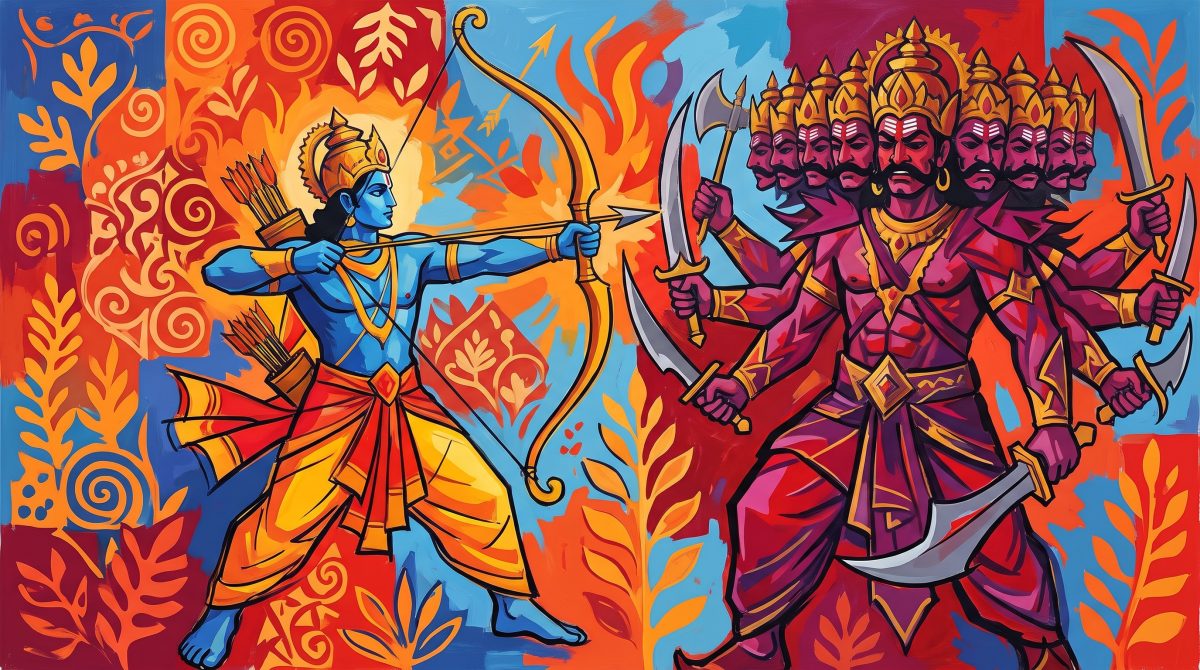
The release of a blockbuster film this week has reignited public enthusiasm for the Ramayana, bringing its legendary characters, dramatic battles, elaborate visuals and powerful music to audiences on a grand scale. The story of Rama’s exile, Sita’s abduction, Lakshmana’s loyalty, Hanuman’s devotion and Ravana’s eventual defeat is once again inspiring cultural pride and renewed interest in one of India’s most enduring epics.
For the Indian community, this renewed attention offers an opportunity to reconnect with a narrative that has shaped generations. Yet, amid the excitement surrounding its cinematic presentation, an important question remains: Are we paying enough attention to the values that make the Ramayana meaningful?
The epic was never simply a story about good triumphing over evil. It explores human character, moral choices, personal responsibility and the virtues that shape our lives. Its lasting significance lies not only in the grandeur of its battles but also in the lessons we can apply to our relationships, decisions and responsibilities. This is especially important when considering the values we pass on to younger generations.
## Rama: Responsibility Beyond Entitlement
Rama’s exile from Ayodhya is one of the defining moments of the epic. Beyond the circumstances of his departure, however, the episode offers a lesson in responsibility, humility and remaining committed to one’s principles during difficult times.
Rama does not define his worth through his royal position or his claim to the throne. He accepts a painful situation and places his father’s word and his own sense of duty above personal ambition. His response raises an important question for modern society: Can we teach our children that character is revealed not by what they receive, but by how they respond when life does not go according to their expectations?
In a culture where entitlement, personal recognition and grievances can dominate public conversation, this lesson deserves greater attention. Accepting disappointment without abandoning one’s principles is not a sign of weakness. It can be an expression of integrity.
Rama’s experience in exile also reminds us of the importance of gratitude. His life away from the palace is not defined entirely by what he has lost. His relationships, experiences and ability to find meaning in unfamiliar circumstances illustrate that gratitude does not depend on wealth or comfort.
Modern society often measures success through possessions, professional titles and social standing. We encourage children to compete, achieve and pursue ambitious goals, but how frequently do we teach them to appreciate what they already have, acknowledge the people who helped them succeed and understand that privilege brings responsibility? Even the simple habits of saying “please” and “thank you” can sometimes be overlooked.
## Sita: Resilience, Dignity and Difficult Questions
Sita’s abduction is among the most dramatic episodes in the Ramayana. Yet reducing her story to victimhood overlooks the depth and complexity of her character. Her experiences invite reflection on resilience, dignity, identity and the ability to retain one’s sense of self in challenging circumstances.
Her story also provides an opportunity to discuss trust, judgment, vulnerability and the expectations society places on women. These are subjects that deserve thoughtful engagement rather than automatic acceptance of familiar interpretations.
Sharing an epic with younger generations need not mean presenting every episode as a sequence of unquestionable events. A living civilization is strengthened not only by preserving its stories but also by encouraging people to examine their meaning, understand their complexities and consider how their lessons apply to changing social circumstances.
## Lakshmana: Loyalty With Independent Judgment
Lakshmana’s decision to accompany Rama into exile represents loyalty expressed through action rather than personal gain or recognition. He chooses to stand beside his brother when circumstances become difficult, demonstrating the importance of commitment and support.
At the same time, his example can inspire a broader conversation about the distinction between loyalty and unquestioning obedience. Healthy relationships require people who can remain committed to one another while retaining the ability to think independently, ask difficult questions and consider the wider consequences of their actions.
True loyalty need not require the abandonment of judgment. It can coexist with honesty, thoughtful disagreement and the willingness to help others see a broader perspective.
## Hanuman: Greatness Through Service
Hanuman stands among the epic’s most compelling representations of humility, courage, intelligence and devotion. His extraordinary abilities are consistently directed toward a purpose greater than personal recognition. His achievements matter because of how he uses his strength and knowledge in the service of others.
This offers a valuable contrast with a modern culture in which visibility can be mistaken for value and personal branding is often treated as a measure of achievement. Hanuman’s example encourages us to reconsider what greatness means.
Is it the attention we attract, the recognition we receive or the positive difference we make with the abilities we possess? His story suggests that capability becomes truly meaningful when it is guided by purpose, humility and service.
## Ravana: When Intelligence Loses Its Moral Direction
Ravana’s character deserves a similarly thoughtful examination. His knowledge, scholarship, power and accomplishments make his downfall particularly instructive. His story illustrates how intelligence and capability, when separated from humility, objectivity and respect for others, can become destructive.
Ravana’s tragedy is not merely that he represents evil. It is also a reminder that knowledge does not automatically produce wisdom, and success does not necessarily build good character. A person may possess remarkable intellectual abilities and still make decisions shaped by arrogance, desire or an unwillingness to recognize personal limitations.
For a generation that often associates wealth, influence and intelligence with achievement, this distinction is especially relevant. Accomplishment alone cannot determine the moral value of a person’s choices.
## The Battles Within Us
The battles between Rama and his opponents can also be understood as reflections of the struggles within human beings. Arrogance, dishonesty, jealousy, greed, insecurity and the refusal to acknowledge our own shortcomings are not merely elements of mythology. They appear in families, workplaces, institutions and communities.
Some of our most difficult battles are not against external enemies but against the explanations we create to justify our own conduct. We may recognize dishonesty in others while excusing it in ourselves, demand accountability from others while avoiding it personally, or defend our beliefs without seriously considering contrary evidence.
The Ramayana offers a framework for examining these tendencies and understanding how personal choices shape relationships and society.
Gratitude helps us recognize what we have received. Objectivity allows us to view circumstances without distorting them to suit our interests. Open-mindedness encourages us to consider perspectives different from our own. Honesty requires us to confront uncomfortable truths. Humility reminds us that achievement does not make us infallible. Willingness helps us accept difficult responsibilities, while accountability requires us to acknowledge the consequences of our decisions.
These are not exclusively Indian values; they are universal human virtues. Yet India’s rich cultural inheritance provides a powerful way to introduce these principles to younger generations and encourage them to practise them.
## Preserving the Epic by Practising Its Values
There is an irony in the way we celebrate the Ramayana. We take immense pride in a story that has endured for thousands of years, yet we do not always examine whether the values it represents are reflected in our own behaviour.
Are we demonstrating the virtues we hope to teach?
It is difficult to teach humility while constantly pursuing status and recognition. It is difficult to teach honesty while rationalizing personal compromises. It is difficult to encourage open-mindedness while dismissing opinions that challenge our assumptions. And it is difficult to teach responsibility when assigning blame is easier than accepting accountability.
Children will not necessarily become better human beings simply by watching a film, memorizing verses or participating in cultural celebrations. These experiences can introduce them to meaningful stories, but their deeper impact depends on what children observe in the adults around them. Values become credible when they are demonstrated consistently in everyday life.
This is the larger opportunity before the Indian community: to move beyond cultural preservation as an exercise in nostalgia and embrace it as an opportunity for human development. We can encourage children to question, interpret and discuss the Ramayana, explore its characters beyond their familiar portrayals and connect its lessons to the dilemmas they encounter today.
Such conversations need not diminish the epic’s cultural or spiritual significance. On the contrary, thoughtful engagement can deepen understanding and help ensure that its teachings remain relevant across generations.
Ultimately, the question is not how many times we tell Rama’s story. It is whether, after centuries of retelling it, we have become more willing to practise the virtues its characters represent.
The Ramayana does not need spectacle alone to remain relevant. It needs reflection. Its legacy should not be measured only by the scale of cinematic productions or the number of people who watch them, but also by whether its values influence our daily decisions, relationships, institutions and approach to raising children.
Perhaps the greatest tribute we can pay to the Ramayana is not simply to tell its story once more, but to begin living its lessons.
Tags
news
Comments (0)
Login to post comments
No comments yet
Be the first to share your thoughts about this post.