News
General
2 views
Indian job seekers in US look beyond tech amid H-1B uncertainty
Oct 30, 2026
📍 Phliadelphia,PA, USA
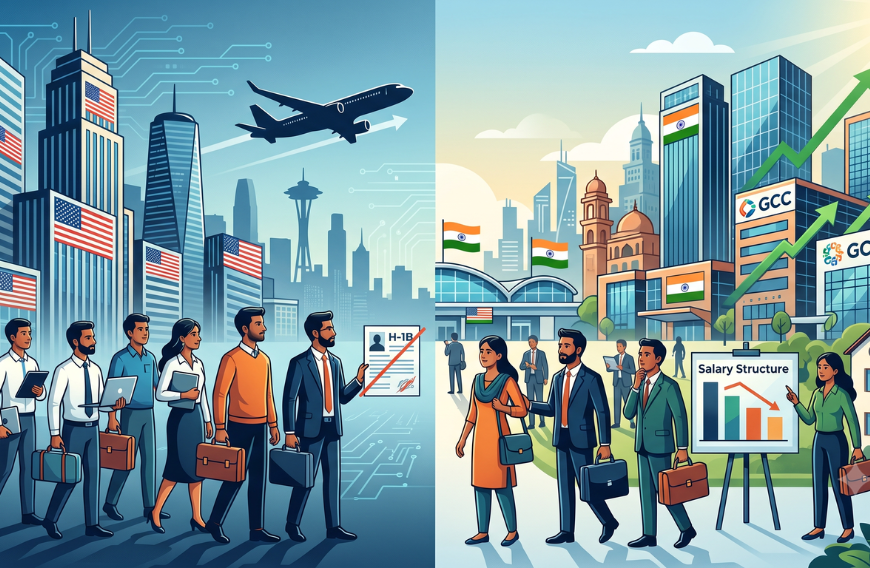
# Indian Job Seekers Explore U.S. Opportunities Beyond Technology, JobLeads Study Finds
Indian professionals looking for employment in the United States are exploring opportunities across a wider range of industries, rather than focusing exclusively on technology jobs, according to a new study by career platform JobLeads.
The analysis found that 41% of Indian users who searched for U.S. jobs clicked on information technology and other technology-related positions between May and September 2026. The remaining 59% interacted with job listings in nontechnology fields, highlighting the breadth of occupational interests among Indian applicants amid continuing uncertainty surrounding the H-1B visa program.
JobLeads examined 133,635 users across 41 countries who searched for U.S. employment, along with 137,691 clicks and applications recorded during the study period. Indian users represented 17.3% of all people who clicked on or applied to U.S. job openings, making India the largest contributing country in the dataset.
The findings come as proposed immigration policy changes have created uncertainty for foreign professionals considering employment in the United States. Although discussions surrounding the H-1B visa program frequently focus on technology workers, the study indicates that international job seekers are also considering opportunities in several other sectors.
## Indian Applicants Show Significant Interest in U.S. Employment
India ranked fifth among the 41 countries in the number of users searching for U.S. jobs. However, it ranked first in the number of people who proceeded to click on or apply to job listings.
According to JobLeads, 53% of Indian users who searched for U.S. positions subsequently interacted with a listing or submitted an application. This was considerably higher than the 20% average across all participating countries. Pakistan recorded a higher conversion rate of 58%.
Indian users conducted an average of 3.4 searches for U.S. jobs during the study period. The comparable figures were 1.9 in the United Kingdom and 4.4 in Pakistan. India, the Philippines, Pakistan and South Africa collectively represented 49% of all users who clicked on or applied to U.S. positions.
These figures reflect activity on the JobLeads platform rather than the total number of Indian professionals interested in working in America. A search or click does not necessarily mean that an individual has formally applied, plans to relocate or meets the requirements for a U.S. work visa.
## Technology Remains Popular, but Other Industries Draw Interest
Technology continued to be the largest individual occupational category among Indian users in the study. India recorded the highest proportion of technology-related interactions, at 41%, followed closely by Poland at 40%. The corresponding shares were 17% in the Philippines and 16% in South Africa.
However, the data also shows that most Indian users who engaged with U.S. job listings explored positions outside technology. Across the 41 countries, management and operations accounted for 34% of interactions with job advertisements. Another 34% involved a broad group of fields, including administrative assistance, science, research, education, hospitality and driving.
Technology and information technology accounted for 27% of overall interactions across the countries studied. Other occupational categories included marketing and media at 18%, engineering at 14%, biological sciences, pharmacology and healthcare at 12%, finance at 11%, sales at 10% and human resources at 9%.
The percentages are not mutually exclusive, as individual users could interact with listings across several occupational categories. The results therefore reflect the variety of fields attracting attention rather than a fixed breakdown of applicants by profession.
This distinction is relevant to the H-1B debate, which is closely associated with technology employment even though international job seekers use recruitment platforms to explore opportunities across a much broader employment landscape.
## H-1B Approvals Continue to Be Concentrated in Technology
U.S. government figures highlight the difference between the occupational interests identified by JobLeads and the employment profile of workers approved under the H-1B program.
Data from U.S. Citizenship and Immigration Services cited by JobLeads shows that computer-related occupations represented 62% of H-1B approvals in fiscal year 2025. Indian-born beneficiaries accounted for approximately 70% of the approvals.
The H-1B program allows U.S. employers to sponsor foreign professionals for specialty occupations that generally require at least a bachelor's degree in a directly related field. The program has annual numerical limits, although certain categories of employers and positions are exempt.
The large share of approvals involving computer-related occupations has kept technology professionals at the center of discussions about skilled immigration. However, the JobLeads study does not establish whether users interested in nontechnology positions would qualify for H-1B sponsorship.
Its findings classify advertised jobs according to occupational fields, not visa eligibility, employer sponsorship policies or the qualifications of individual candidates. Consequently, interest in a particular job category should not be interpreted as evidence that applicants can obtain permission to work in the United States through the H-1B program.
## Employed Professionals Are Also Exploring Job Changes
The analysis identified another important pattern among Indian users: 35% of those who interacted with U.S. job listings were already employed and looking for a new position. This was the highest proportion among the countries included in the study.
The finding suggests that interest in U.S. employment extends beyond unemployed candidates and people entering the workforce. Professionals who already have jobs are also exploring opportunities that could offer a change in role, industry or career direction.
JobLeads reported that employed individuals seeking new positions across the countries studied were more likely than unemployed applicants to click on opportunities in technology, engineering, finance and consulting.
For Indian professionals, changing employers can involve additional considerations when immigration status is tied to an employer-sponsored visa. H-1B workers generally need to meet specific immigration requirements when moving to another employer.
The study does not clarify whether the Indian job switchers were already living in the United States, employed by companies in India or applying from elsewhere. Their registered country was based on the information they provided when creating their JobLeads accounts.
## A Snapshot of International Interest in the U.S. Job Market
The JobLeads analysis offers a snapshot of international job-search activity between May and September 2026, during a period of uncertainty surrounding U.S. immigration policy. It does not establish a long-term shift in applicant preferences or demonstrate that interest in nontechnology jobs has increased because of H-1B restrictions.
The company also noted that its sample includes countries where the platform operates outside the United States and does not represent every international job seeker.
Nevertheless, the results indicate that Indian users are considering employment opportunities across multiple industries, even as technology remains a major part of their U.S. job searches. The findings also underline the difference between the occupations candidates want to pursue and the jobs that may qualify under particular U.S. immigration programs.
As discussions over skilled-worker immigration continue, the study highlights a broader reality: international interest in the American labor market extends well beyond the technology positions that dominate much of the H-1B conversation.
Tags
news
Comments (0)
Login to post comments
No comments yet
Be the first to share your thoughts about this post.