News
General
3 views
Indian AI startups weigh costs of moving to US
Oct 29, 2026
📍 Phliadelphia,PA, USA
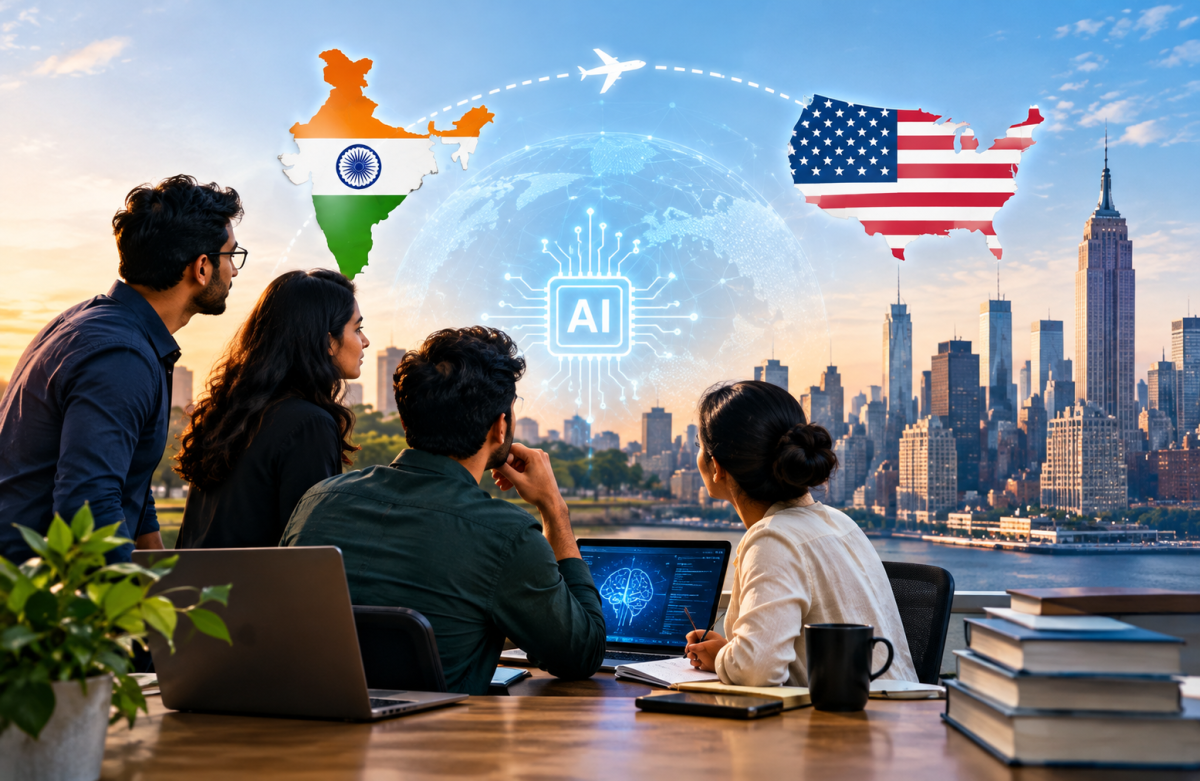
# Indian AI Startups Weigh US Expansion Amid High Costs and Customer Acquisition Challenges
Indian artificial intelligence startups are increasingly considering a move into the United States to gain access to American investors and enterprise customers. However, expensive hiring, visa complications and the difficulty of securing initial clients are forcing founders to carefully assess the costs and benefits of expanding overseas.
Venture capital firms such as Antler India and All In Capital have introduced programmes to help Indian startups establish themselves in the US. According to Business Standard, these initiatives provide support through customer introductions, local business networks and assistance with operational requirements.
While some startups have relocated their headquarters to the US, attracted customers and secured additional funding, others are following a hybrid approach. They are keeping engineering and product development teams in India while establishing sales and business development operations in the American market.
## Winning the First American Customers
Ashish Bhatia, founder and chief executive officer of India Accelerator, identified acquiring the first few US customers as a major obstacle for Indian startups entering the market.
“First, US buyers want references, so the first two or three logos are the hardest to win. Second, security, compliance and architecture expectations are much higher. Third, hiring US sales and business development people is expensive, and visas for founders who travel back and forth add friction,” Bhatia told Business Standard.
Startups must also adapt their products to the expectations of American customers and establish relationships with local investors, employees and business partners. Without an existing network, founders can find it difficult to obtain reliable guidance on pricing, hiring, legal arrangements and investor introductions.
## Venture Capital Firms Support Market Entry
Antler India launched its Embark programme in May 2025 to help startups gain a foothold in the American market. Across four editions, the programme has supported more than 50 startups, including over 15 from India.
Raghav Goyal, director of investments at Antler India, said 75% of participants had secured paying customers or active pilot projects in the US, while more than half had raised their next funding round.
According to Goyal, nearly half of the participants had moved to the US, established their holding companies as American entities and obtained O-1 visas for their founders. Most participants reportedly secured their first US customer within three to four weeks of joining the programme.
Dodge, KuboCare, Nudge and Aina are among the startups that have moved their headquarters to the United States.
All In Capital introduced its Golden Ticket programme in January 2026 to assist Indian startups planning American expansion. The initiative received more than 750 applications within its first 10 days and aimed to select between 20 and 30 companies.
The venture capital firm's portfolio includes Vasuki AI, which develops AI tools for commodity hedging desks, and Tross, which is building data and application programming interface infrastructure for healthcare AI agents. Another portfolio company, Mowito AI, has opened an office in Detroit, launched pilot projects with American customers and raised follow-on funding from a Canadian investor.
These initiatives demonstrate how venture capital firms are extending their role beyond financing by helping founders navigate market entry, establish local connections and pursue early business opportunities.
## Measuring Progress Beyond Relocation
Kushal Bhagia, cofounder and partner at All In Capital, said startups should assess their US expansion by examining the quality of customer discussions, the progress of pilot projects and their ability to demonstrate value within specific business workflows, rather than simply counting users.
Antler India's Embark programme facilitates introductions to American customers and provides practical support during early sales efforts. It also works with service providers such as Deel, Rho, Alma and Inkle to assist startups with visas and the formation of US entities.
Despite these resources, establishing a US headquarters does not automatically mean a company must move its entire workforce abroad.
Jasnoor Gill, director of investments at Antler India, said some startups retain their engineering and product teams in India while expanding their American sales operations. In such cases, relocation is primarily about getting closer to customers and investors rather than abandoning their Indian operations.
Gill also noted that some startups have reversed their relocation decisions after determining that their main customers or teams were better served from India. However, spending time with American customers and investors can also encourage founders to pursue more ambitious US expansion plans.
For Indian AI startups, the decision ultimately involves balancing access to capital and enterprise customers against the cost of operating in the US, immigration requirements and the need to maintain strong product development capabilities in India. Rather than following a single expansion model, companies are evaluating structures that best suit their customers, teams and long-term business goals.
Tags
news
Comments (0)
Login to post comments
No comments yet
Be the first to share your thoughts about this post.