News
General
14 views
JD Vance’s ‘unpronounceable’ countries remark sparks backlash over his Indian immigrant in-laws
Oct 28, 2026
📍 Phliadelphia,PA, USA
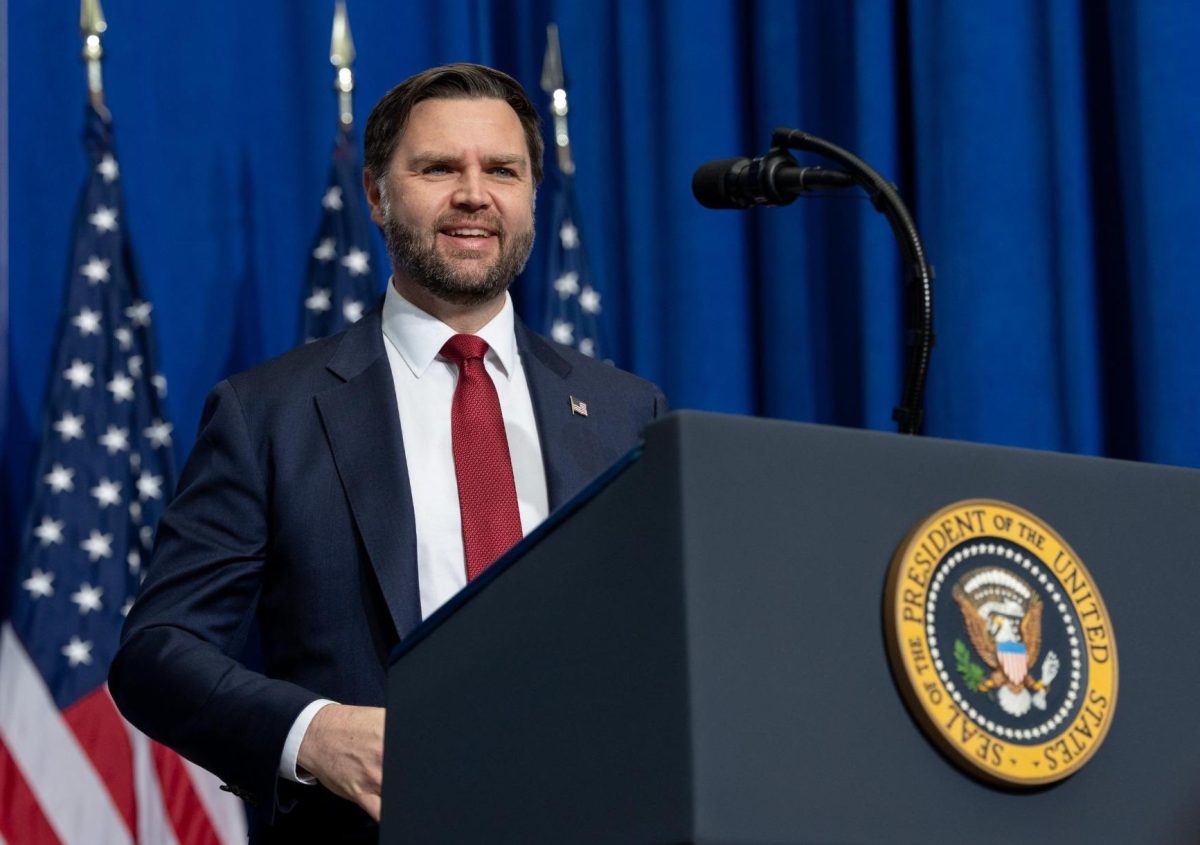
# JD Vance Faces Backlash Over Remarks About Foreign Countries and His Indian Immigrant In-Laws
With the U.S. midterm elections approaching, political leaders are intensifying their campaigns to mobilize voters. Democrats are seeking to regain control of Congress, while Republicans are focusing on retaining their majority. Immigration and border security remain central to the Republican campaign, even as critics accuse some party figures of contributing to anti-Asian sentiment, including hostility toward Indian immigrants.
At a Republican rally on Monday, Vice President JD Vance reflected on the period following the September 11, 2001, terrorist attacks. He connected the resulting fuel shortages and higher prices to countries in a region of the world whose names, he said, Americans found difficult to pronounce.
“I remember driving to a local gas station to wait hours in line for gasoline that was now, of course, more expensive because of a region of the world made up of countries and names that I cannot even pronounce,” Vance said.
Vance went on to argue that ordinary Americans, rather than the children of political leaders, had been sent to fight in the wars that followed the attacks. “In the aftermath of 9/11, it wasn’t the politicians’ kids who went off to fight the war. It was us. It was the people in this room. It was me and my family,” he added.
## Critics Point to Vance’s Family Connections
The comments prompted criticism from journalist Mehdi Hasan, who questioned whether Vance would use similar language in front of his own Indian immigrant in-laws.
In a post on X, Hasan identified Vance’s in-laws as Radhakrishna Chilukuri and Lakshmi Chilukuri and accused the vice president of reserving his remarks for predominantly white Republican audiences. Hasan described the comments as racist and criticized Vance’s treatment of his wife’s family.
Vance is married to Usha Vance, whose parents immigrated to the United States from South India. Usha was born in the United States and became second lady when her husband assumed the vice presidency.
Hasan was not alone in criticizing the remarks. Several social media users accused Vance of applying a different standard when discussing immigrants in political settings than he might in his personal life. One user argued that Vance’s criticism of immigrants at Republican rallies contrasted with the respect owed to his own family.
Another questioned the decision to invoke memories of high fuel prices and military engagements in a discussion that critics viewed as dismissive of people from other countries.
## Immigration Debate Adds to the Controversy
The backlash comes amid ongoing debate over Vance’s criticism of the H-1B visa program, which allows U.S. employers to hire skilled foreign workers. India is a major source of applicants for the program, making the issue particularly relevant to Indian professionals and the broader South Asian community.
The Trump administration has also intensified immigration enforcement through U.S. Immigration and Customs Enforcement, commonly known as ICE. These developments have contributed to wider discussions about immigration policy, foreign workers and the treatment of immigrant communities.
Critics argue that political rhetoric targeting immigrants can reinforce prejudice against people based on their race, ethnicity or national origin. The controversy surrounding Vance’s remarks has therefore extended beyond the immediate question of his comments to a broader debate about how immigration is discussed during election campaigns.
## Report Highlights Anti-South Asian Hate Concerns
Concerns about anti-South Asian hostility have also been reflected in recent research. A September 2026 report from Stop AAPI Hate found that anti-South Asian slurs in the online spaces it monitored increased by 109% between January 2023 and December 2025.
The report also found that 48% of South Asian adults surveyed said they had experienced a hate act because of their race, ethnicity or nationality in 2025.
The findings provide context for the concerns raised by critics, although they do not establish that Vance’s specific remarks caused the reported increase. As the midterm campaign continues, the episode has added another point of debate over immigration, political messaging and the experiences of South Asian Americans.
Tags
news
Comments (0)
Login to post comments
No comments yet
Be the first to share your thoughts about this post.