News
General
17 views
The real vison test is how we see life
Oct 27, 2026
📍 Phliadelphia,PA, USA
# Beyond Eyesight: The Deeper Meaning of Seeing Clearly
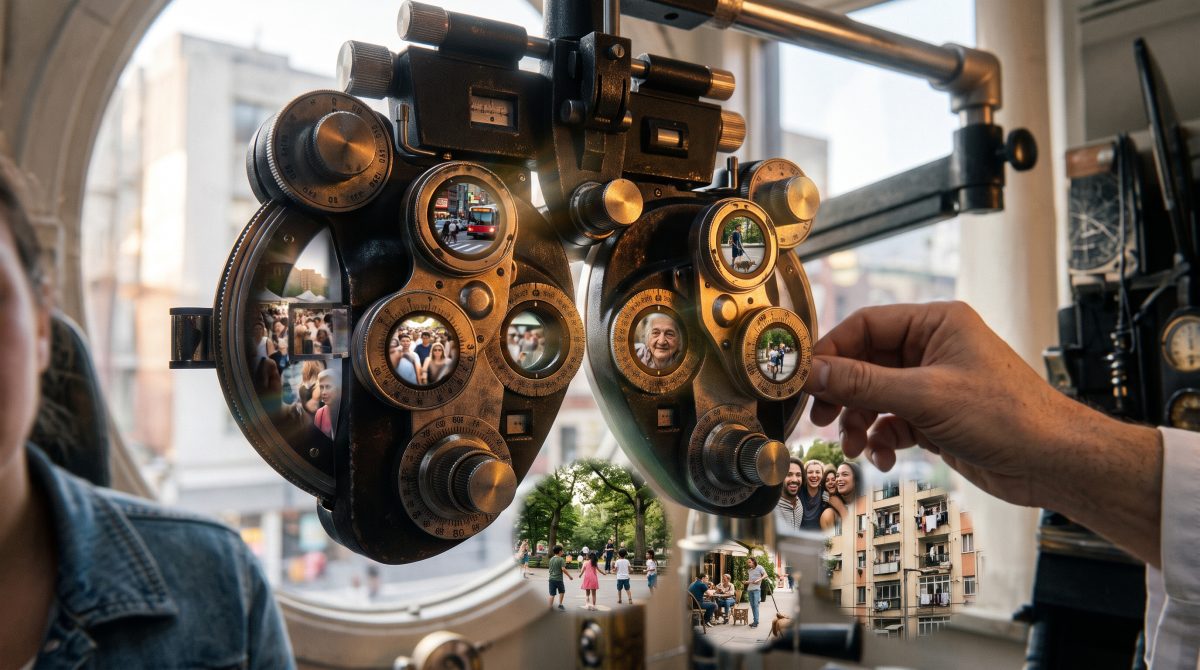
In ophthalmology, vision is commonly measured by determining how clearly a person can recognize letters and objects at different distances. Through visual acuity tests and refraction, specialists identify optical errors and prescribe lenses that help patients see more clearly. Yet the ability to see sharply with our eyes does not necessarily mean we understand the world around us accurately.
Some of life’s most important tests of vision occur far beyond the examination room. They emerge when our assumptions are challenged, our character is tested, and we encounter people or circumstances that force us to reconsider what we believe. In such moments, the real question is not whether we can distinguish objects, but whether we can separate reality from our personal interpretations.
Life continually challenges our perceptions through relationships, disappointments, disagreements and unexpected experiences. These situations reveal the difference between how we see ourselves and how others experience us. They also expose how easily our understanding can be influenced by ego, fear, resentment, prejudice and judgment.
## The Invisible Lenses That Shape Our Perception
Although our eyes receive light, the brain interprets the information using previous experiences, expectations and context. Our understanding of other people works in a similar way. We rarely approach situations without assumptions, and those assumptions can influence what we notice, what we overlook and what we believe to be true.
We may assume we understand someone's intentions after seeing only a small part of their circumstances. Disagreement can appear disrespectful, criticism can feel like hostility, and another person's success can seem threatening. When we become attached to our interpretation, we may struggle to recognize that our perspective is incomplete.
The difficulty is that distorted perceptions often feel entirely convincing. We may defend our judgments because they seem obvious to us, without considering the possibility that our emotions or expectations have shaped them.
Recognizing these limitations is the first step toward developing a clearer understanding of ourselves and others.
## Life's Equivalent of Refraction
In eye care, refraction involves testing different lens powers to determine which provides the clearest vision. The process requires comparison, adjustment and a willingness to reconsider an initial answer. Clarity emerges through examination rather than through defending the first impression.
Life presents a similar opportunity whenever we face a difficult situation. We can ask whether we are responding to the facts or to our fears about what those facts mean. We can consider whether we are judging someone by their entire character or by a single action. We can also examine whether we are defending a meaningful principle or simply protecting our pride.
These questions become especially difficult when we feel hurt or believe we have been treated unfairly. Our natural response may be to reinforce our existing beliefs, seek evidence that supports our position and reject information that challenges it.
However, genuine clarity requires the courage to question ourselves without abandoning our convictions. It involves acknowledging our own role in difficult circumstances, recognizing the limits of our knowledge and remaining willing to learn from perspectives different from our own.
## Gratitude, Humility and Responsibility
Gratitude can help us approach adversity with a broader perspective. It does not mean denying disappointment or pretending that injustice does not exist. Instead, it allows us to recognize that difficult experiences can reveal important truths about our relationships, priorities and values.
Humility reminds us that our understanding is never complete. Honesty helps us distinguish facts from assumptions, while responsibility encourages us to acknowledge the consequences of our actions rather than automatically blaming others.
Together, these qualities can provide a form of clarity that intelligence alone cannot guarantee.
Emotions also deserve an important place in this process. They help us recognize suffering, understand what matters to us and connect with other people. The goal is not to suppress them, but to understand their influence.
Anger may alert us to a perceived injustice, but it does not establish every fact surrounding it. Fear can encourage caution, yet it may also prevent us from recognizing new possibilities. Love can deepen understanding, although attachment can sometimes make uncomfortable truths harder to accept.
The challenge is to remain emotionally aware without allowing any single emotion to determine our entire understanding of reality.
## When Values Are Put to the Test
The most revealing tests of vision often occur when our values become difficult to practice. Forgiveness is easier to discuss before we are hurt. Humility is easier when our reputation is secure. Accepting responsibility is easier when the consequences are small.
The real test comes when our pride has been wounded, our intentions have been misunderstood or events have unfolded differently from what we expected.
These moments reveal whether our values are merely principles we admire or commitments that guide our actions. They challenge us to pause before retaliating, condemning or defending ourselves, giving us an opportunity to understand the larger situation.
We can acknowledge another person's humanity without excusing harmful behavior. We can accept accountability without allowing a mistake to define our entire identity. We can also stand firmly for what is right without allowing disagreement to turn into hatred.
Such responses require more than intellectual understanding. They require the discipline to look beyond immediate reactions and consider the wider human circumstances involved.
## Universal Vision and the Search for Deeper Truth
There is also a deeper dimension to seeing clearly, one that extends beyond eyesight and reasoning. A person can accumulate knowledge and develop sophisticated analytical skills while still struggling to forgive, overcome prejudice or recognize the connections that unite people.
For those who believe in a divine presence, this deeper awareness may be understood as divine grace: the ability to look beyond individual grievances, ambitions and judgments toward something greater than oneself.
This perspective acknowledges that even a strongly held interpretation cannot represent the entirety of reality. It encourages us to recognize the connections between human experiences that may remain hidden when we focus exclusively on our own interests.
Universal vision does not mean knowing everything or accepting every perspective as equally valid. Nor does it require abandoning moral judgment. Instead, it involves recognizing the limitations of our viewpoint while remaining open to a broader understanding.
It allows us to maintain convictions without arrogance, identify wrongdoing without hatred and acknowledge complexity without losing our sense of responsibility. It encourages us to see people not only through the effects of their actions on us, but also through the wider reality of their humanity.
## An Ophthalmologist's Perspective on Clarity
As an ophthalmologist, I have spent much of my professional life helping people achieve clearer sight. The right optical correction can make an extraordinary difference to a person's ability to navigate the world.
Yet life has its own forms of refraction, and its most difficult prescriptions cannot be found on an eye chart. They emerge from experiences that challenge our certainty and require us to reconsider how we understand ourselves and others.
We cannot always change the circumstances before us. We cannot control how other people behave, interpret our actions or respond to our intentions. What we can examine is the lens through which we respond.
We can temper ego with humility, meet fear with courage, replace resentment with understanding and balance self-interest with responsibility. These choices may not resolve every conflict, but they can help us respond with greater clarity and purpose.
## The Most Important Prescription
The real test of vision is not whether we can see clearly when everything appears straightforward. It is whether we can preserve our judgment when life blurs the boundaries between right and wrong, hurt and understanding, and personal interest and shared responsibility.
It asks whether we continue seeking the truth when it challenges our assumptions and whether we can recognize meaningful connections that remain hidden when we focus only on what lies directly before us.
Our eyes reveal the physical world, and our minds help us interpret it. But neither guarantees that we will understand life wisely. Deeper vision develops when we approach our experiences with honesty, humility, gratitude and compassion, allowing difficult moments to refine our perspective instead of distorting it.
Perhaps the most important prescription we will ever need is not a lens that makes the world look the way we want it to look. It is the wisdom to see circumstances more accurately, the humility to recognize what we may have misunderstood, and the grace to respond with integrity and compassion.
Tags
news
Comments (0)
Login to post comments
No comments yet
Be the first to share your thoughts about this post.