News
General
8 views
Market bounce or real turnaround? Why patience matters until Nov. 4
Oct 26, 2026
📍 Phliadelphia,PA, USA
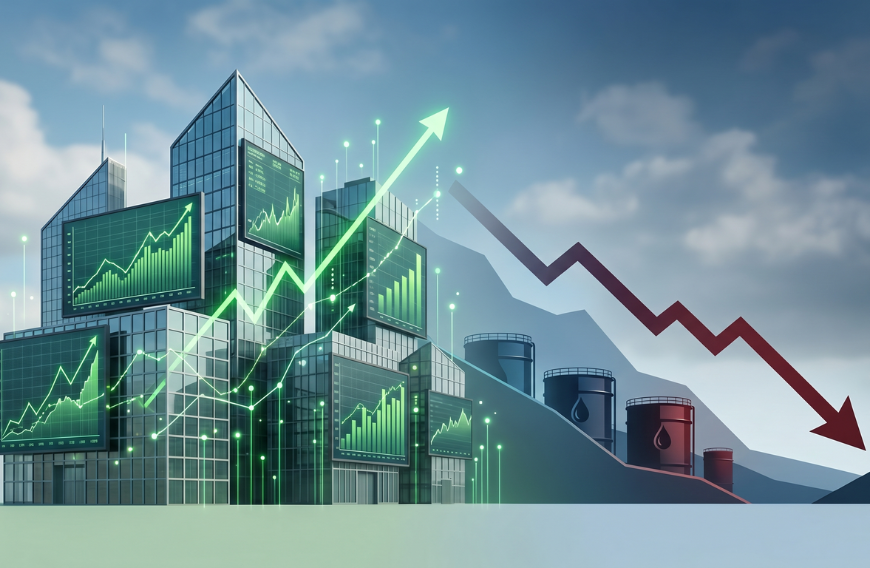
# Wall Street’s Recovery Faces Tests From AI Spending, Energy Prices and U.S. Politics
*By Aklaq Siddiqi*
A stock market rebound does not necessarily mean the problems behind a selloff have disappeared. As Wall Street confronts rising energy costs, questions about artificial-intelligence investments, an upcoming Federal Reserve decision and a closely contested U.S. midterm election, investors face several uncertainties at once.
The concern is not that another market collapse is inevitable. Rather, the conditions needed to support lasting confidence have yet to become clear. A short-term recovery may offer relief, but investors must distinguish between improving market sentiment and a genuine improvement in economic and corporate fundamentals.
### Strong Earnings May No Longer Guarantee Higher Share Prices
For technology companies, the focus has shifted beyond whether quarterly earnings exceed analysts’ expectations. Investors increasingly want evidence that enormous investments in artificial intelligence will produce sustainable cash flow and attractive returns.
Meta demonstrated this challenge when its revenue exceeded expectations, yet investors remained concerned about the scale and financing of its ambitions. Other technology companies may face similar scrutiny, although their financial positions and business models differ.
Strong results can still support share prices, particularly when companies demonstrate consistent revenue growth, manageable capital spending and clear ways to generate income from AI products. However, earnings that beat expectations may not be enough to reassure investors if spending continues to rise without convincing evidence of future returns.
The distinction matters because a company's financial performance and its stock-market performance do not always move in the same direction.
### Saudi–Houthi Tensions Increase Energy-Supply Concerns
The confrontation between Saudi Arabia and Yemen’s Iran-aligned Houthis has brought geopolitical risk directly into the inflation debate. Attacks have reportedly targeted Saudi airports and energy-related facilities, while Saudi Arabia has responded with strikes against missile-launching sites. Saudi Aramco also instructed employees to evacuate its Dhahran headquarters and work remotely as fighting intensified. Some individual claims about attacks remain disputed or unconfirmed.
The escalation has increased concerns about potential disruptions to energy supplies. Brent crude rose to approximately $114.72 a barrel early Friday, its highest level in more than five months, as traders assessed the possibility of further supply interruptions. The conflict also raises concerns about the area surrounding Bab el-Mandeb, a strategic maritime passage linking the Red Sea and the Gulf of Aden.
An evacuation does not necessarily mean oil production has stopped, just as a threat to shipping does not automatically translate into a confirmed supply loss. Nevertheless, markets often react to the possibility of disruption before its full economic consequences become apparent.
Higher fuel costs can affect the wider economy through transportation, manufacturing and distribution. U.S. diesel prices reportedly increased by nearly 10 cents a gallon in the latest week, reaching around $6.28. Businesses have also reported passing higher fuel expenses through their supply chains, putting pressure on operating costs and profit margins.
For investors, the concern is that an energy-price shock could sustain inflation even as other parts of the economy lose momentum.
### The Federal Reserve Faces Conflicting Economic Signals
The U.S. economy is not uniformly weakening, but signs of slower momentum are emerging alongside persistent price pressures. September services activity continued to expand at a slower pace, while businesses reported rising input costs and supply-chain constraints.
This combination complicates the Federal Reserve’s decisions. Higher energy prices can push inflation upward while reducing household purchasing power and increasing costs for businesses. Policymakers must determine whether these pressures will be temporary or spread more broadly through the economy.
A rate increase at the Fed’s Oct. 27–28 meeting was not the dominant expectation in the latest Reuters survey. Of 100 economists surveyed, 94 expected rates to remain unchanged, while another increase was anticipated in December.
However, investors should not focus exclusively on whether the Fed raises rates immediately. Even if policymakers hold rates steady, a firm warning about persistent inflation could undermine hopes for monetary relief.
Technology stocks are particularly sensitive to this uncertainty because their valuations often depend on expectations of future growth and profits. If borrowing costs remain elevated or expected returns become less certain, investors may become less willing to pay high prices for anticipated earnings.
### The November Midterms Add Political Uncertainty
The next major political milestone is the U.S. midterm election on Nov. 3. Investors will begin assessing the results the following morning, although closely contested races could take longer to resolve.
Republicans are defending narrow congressional majorities, while Democrats are seeking to change the balance of power in Washington. Affordability, immigration and President Donald Trump’s record are among the central campaign issues.
Higher energy prices connect international developments with domestic political pressure. Households feel the impact through everyday expenses, while the administration faces questions about how it will address rising costs before Election Day.
For markets, however, the election result should not be treated as an automatic signal to buy or sell. Investors will need to assess the potential implications for legislation, fiscal negotiations and the administration’s ability to advance its policy agenda. Government-funding and debt-ceiling disputes could also remain relevant after the election, regardless of which party gains ground.
Nor will the arrival of Nov. 4 eliminate uncertainty. The election may clarify political control, but it will not automatically resolve energy-supply risks, inflation pressures or questions about the returns from AI investments.
### Waiting Can Be a Strategy, Not a Prediction
For investors considering short-term technology trades, waiting for the Fed decision and additional corporate earnings reports may help avoid committing capital before important information becomes available. Such caution does not necessarily mean abandoning a long-term investment strategy.
Waiting carries its own risk: markets can recover before economic news becomes reassuring. Equally, buying simply because prices have fallen or stock futures have turned positive can lead investors to overlook unresolved problems.
The coming days will require a careful distinction between a temporary trading rebound and a sustainable investment opportunity. A stronger recovery would need support from convincing evidence that corporate returns justify AI spending, inflation is becoming more manageable and geopolitical tensions are not causing deeper economic disruption.
The central argument for caution is not that markets must decline. It is that investors should avoid confusing uncertainty with opportunity or a sudden change in sentiment with proof that underlying risks have disappeared.
*By Aklaq Siddiqi*
A stock market rebound does not necessarily mean the problems behind a selloff have disappeared. As Wall Street confronts rising energy costs, questions about artificial-intelligence investments, an upcoming Federal Reserve decision and a closely contested U.S. midterm election, investors face several uncertainties at once.
The concern is not that another market collapse is inevitable. Rather, the conditions needed to support lasting confidence have yet to become clear. A short-term recovery may offer relief, but investors must distinguish between improving market sentiment and a genuine improvement in economic and corporate fundamentals.
### Strong Earnings May No Longer Guarantee Higher Share Prices
For technology companies, the focus has shifted beyond whether quarterly earnings exceed analysts’ expectations. Investors increasingly want evidence that enormous investments in artificial intelligence will produce sustainable cash flow and attractive returns.
Meta demonstrated this challenge when its revenue exceeded expectations, yet investors remained concerned about the scale and financing of its ambitions. Other technology companies may face similar scrutiny, although their financial positions and business models differ.
Strong results can still support share prices, particularly when companies demonstrate consistent revenue growth, manageable capital spending and clear ways to generate income from AI products. However, earnings that beat expectations may not be enough to reassure investors if spending continues to rise without convincing evidence of future returns.
The distinction matters because a company's financial performance and its stock-market performance do not always move in the same direction.
### Saudi–Houthi Tensions Increase Energy-Supply Concerns
The confrontation between Saudi Arabia and Yemen’s Iran-aligned Houthis has brought geopolitical risk directly into the inflation debate. Attacks have reportedly targeted Saudi airports and energy-related facilities, while Saudi Arabia has responded with strikes against missile-launching sites. Saudi Aramco also instructed employees to evacuate its Dhahran headquarters and work remotely as fighting intensified. Some individual claims about attacks remain disputed or unconfirmed.
The escalation has increased concerns about potential disruptions to energy supplies. Brent crude rose to approximately $114.72 a barrel early Friday, its highest level in more than five months, as traders assessed the possibility of further supply interruptions. The conflict also raises concerns about the area surrounding Bab el-Mandeb, a strategic maritime passage linking the Red Sea and the Gulf of Aden.
An evacuation does not necessarily mean oil production has stopped, just as a threat to shipping does not automatically translate into a confirmed supply loss. Nevertheless, markets often react to the possibility of disruption before its full economic consequences become apparent.
Higher fuel costs can affect the wider economy through transportation, manufacturing and distribution. U.S. diesel prices reportedly increased by nearly 10 cents a gallon in the latest week, reaching around $6.28. Businesses have also reported passing higher fuel expenses through their supply chains, putting pressure on operating costs and profit margins.
For investors, the concern is that an energy-price shock could sustain inflation even as other parts of the economy lose momentum.
### The Federal Reserve Faces Conflicting Economic Signals
The U.S. economy is not uniformly weakening, but signs of slower momentum are emerging alongside persistent price pressures. September services activity continued to expand at a slower pace, while businesses reported rising input costs and supply-chain constraints.
This combination complicates the Federal Reserve’s decisions. Higher energy prices can push inflation upward while reducing household purchasing power and increasing costs for businesses. Policymakers must determine whether these pressures will be temporary or spread more broadly through the economy.
A rate increase at the Fed’s Oct. 27–28 meeting was not the dominant expectation in the latest Reuters survey. Of 100 economists surveyed, 94 expected rates to remain unchanged, while another increase was anticipated in December.
However, investors should not focus exclusively on whether the Fed raises rates immediately. Even if policymakers hold rates steady, a firm warning about persistent inflation could undermine hopes for monetary relief.
Technology stocks are particularly sensitive to this uncertainty because their valuations often depend on expectations of future growth and profits. If borrowing costs remain elevated or expected returns become less certain, investors may become less willing to pay high prices for anticipated earnings.
### The November Midterms Add Political Uncertainty
The next major political milestone is the U.S. midterm election on Nov. 3. Investors will begin assessing the results the following morning, although closely contested races could take longer to resolve.
Republicans are defending narrow congressional majorities, while Democrats are seeking to change the balance of power in Washington. Affordability, immigration and President Donald Trump’s record are among the central campaign issues.
Higher energy prices connect international developments with domestic political pressure. Households feel the impact through everyday expenses, while the administration faces questions about how it will address rising costs before Election Day.
For markets, however, the election result should not be treated as an automatic signal to buy or sell. Investors will need to assess the potential implications for legislation, fiscal negotiations and the administration’s ability to advance its policy agenda. Government-funding and debt-ceiling disputes could also remain relevant after the election, regardless of which party gains ground.
Nor will the arrival of Nov. 4 eliminate uncertainty. The election may clarify political control, but it will not automatically resolve energy-supply risks, inflation pressures or questions about the returns from AI investments.
### Waiting Can Be a Strategy, Not a Prediction
For investors considering short-term technology trades, waiting for the Fed decision and additional corporate earnings reports may help avoid committing capital before important information becomes available. Such caution does not necessarily mean abandoning a long-term investment strategy.
Waiting carries its own risk: markets can recover before economic news becomes reassuring. Equally, buying simply because prices have fallen or stock futures have turned positive can lead investors to overlook unresolved problems.
The coming days will require a careful distinction between a temporary trading rebound and a sustainable investment opportunity. A stronger recovery would need support from convincing evidence that corporate returns justify AI spending, inflation is becoming more manageable and geopolitical tensions are not causing deeper economic disruption.
The central argument for caution is not that markets must decline. It is that investors should avoid confusing uncertainty with opportunity or a sudden change in sentiment with proof that underlying risks have disappeared.
Tags
news
Comments (0)
Login to post comments
No comments yet
Be the first to share your thoughts about this post.