News
General
9 views
Hasan Minhaj’s ‘dharka’ blunder goes viral, triggering memes, desi jokes and online roasts
Oct 23, 2026
📍 Phliadelphia,PA, USA
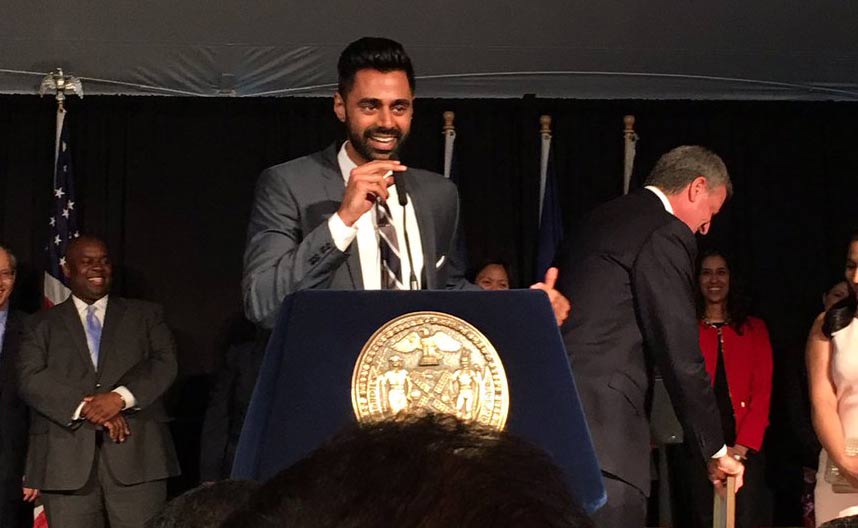
Minhaj’s little malapropism may have been unwitting, but the netizens made sure he was fried as hot as the tadka on a desi dal.
Indian American comedian Hasan Minhaj has sparked an online frenzy after confusing “dharka” with “tadka,” prompting a wave of memes, culinary corrections and jokes about Indian household traditions. The viral moment has also attracted brands such as Kissan India, which seized the opportunity to turn the mix-up into a marketing campaign.
For anyone familiar with an Indian kitchen, *tadka* is a familiar finishing technique that transforms a simple bowl of dal into a flavorful dish. Prepared by heating oil or ghee and adding ingredients such as cumin or mustard seeds, garlic, onions, tomatoes and red chilies, the sizzling mixture releases aromatic flavors that give lentils their distinctive taste.
From everyday home kitchens to Michelin-starred restaurants and roadside *dhabas*, dal tadka remains a popular staple of Indian cuisine. That familiarity made Minhaj’s use of the word “dharka” during a recent interview with *Food & Wine* particularly amusing to many viewers.
“If you go to a South Asian restaurant, and even in India, there’s this idea that when you sometimes order dal, you’ll say extra dharka ‘dharka’ is the fried onions that you put on the top,” Minhaj said.
He continued with an emphatic request for a generous serving: “Hey, hey, don’t, don’t, don’t, don’t be cheap with it. Like, I want extra dharka. Put the onions on that. I don’t want to be able to, you know, I want you to kiss my beloved after this meal, like, do not shortchange me with the dharka.”
His confident description quickly became fodder for social media users, many of whom corrected the terminology while questioning whether his explanation reflected how the dish is actually ordered in India.
Uzair Quaraishi offered a detailed explanation of the traditional technique on Instagram, writing: “Tarka, also known as tadka, chhonk, baghaar or phoron is a core cooking technique in South Asian cuisine where whole or ground spices, herbs and aromatics are bloomed in hot fat such as ghee, butter or oil to release fat-soluble flavors and aroma.”
Others focused less on the culinary distinction and more on Minhaj’s delivery. Indian chef Dimple Senani, who works to revive Sindhi food traditions, responded with a humorous observation: “All I need in life is this man’s confidence. And some extra *Dharka*, whatever it means.”
Another user, @naviscotia, imagined how the request might be received in a traditional Indian household, joking: “Imagine asking your mummy for dharka; there will be a chappal flying your way.”
## Kissan India turns the mix-up into marketing
The online conversation soon moved beyond memes and comment sections, drawing the attention of food brands eager to join the trend.
Kissan India used the viral moment to promote its Teekhi Lehsun Mirch Chutney. In an Instagram post, the condiment brand showed its spicy garlic chutney being added to a bowl of dal, accompanied by the message: “Missing That Extra Dharka? Bring On The SPICY, GARLICKY HEAT.”
“Extra ‘dharka’ miss ho gaya toh kya hua? Add as much extra Kissan Teekhi Lehsun Mirch Chutney to your dal as you like,” the company wrote in the caption.
The campaign demonstrated how a small linguistic mix-up can become an opportunity for brands to connect with online audiences through humor and familiar cultural references.
## Food experts and entertainers join the conversation
Monica Saigal, a food author whose books include *The Everything Indian Cookbook* and *Papa’s Butter Chicken*, told *The American Bazaar* that Minhaj’s confidence initially led her to investigate whether the term had a regional culinary meaning.
“To be honest, he was so confident I went down a rabbit hole trying to see if dharka was a regional Indian term that I had never heard of or a different regional name for fried onions. I always feel like I’m learning so I thought that maybe it’s something that I’ve never heard of from some remote part of India and I’ll learn something new,” Saigal said.
She then captured the difference between the two words with a playful reference to Bollywood romance and Indian food: “Dharka is my dil after watching SRK in any romance. Tadka is my Dal being topped with hot seasoned oil or ghee!”
Toronto-based actor Tejas Sona also responded with a video inspired by Minhaj’s remark. Speaking to *The American Bazaar*, Sona said the clip was intended as lighthearted entertainment.
“I love Hasan’s confidence when he says that! I made that video because it’s just a fun video, and honestly, an excuse for me to dance a little too!” Sona said.
Minhaj’s profile as an Emmy and Peabody Award-winning comedian has added another dimension to the discussion. Known for drawing on his experiences growing up as a South Asian American, he frequently explores the expectations, traditions and contradictions of life in Indian households. For some critics, his apparent unfamiliarity with a widely recognized culinary term made the exchange especially entertaining.
The reactions have ranged from affectionate wordplay to pointed criticism. Instagram user Aishwaryagan wrote: “My dal dharka and my dil tadka.”
Another user, Wakeupswap, suggested: “I get the impression he was thinking of tadka and Madhuri Dixit at the same time.”
Madhurima007 took a broader view, writing: “Call me a puritan, but the NRI hot take on Indian culture and food has run its course. We can all go home now.”
Hari Adivarekar, a New York-based photographer, questioned why the terminology had not been challenged during the interview, writing: “Even worse is Food and Wine being the culinary expert and not having anyone who knows this basic stuff about Indian food.”
Others challenged Minhaj’s description of restaurant ordering practices. “Which Indian asks for extra ‘dharka’? This guy is so delulu. It’s unreal,” wrote Sam Kashyap.
## A familiar debate over Indian food and cultural identity
Beyond the joke itself, the incident has revived a wider discussion about how Indian food traditions and terminology are represented to Western audiences. Expressions such as “chai tea” and “ghee butter” have previously attracted criticism because they repeat meanings or alter familiar terms in ways that can sound unusual to people who grew up with the original vocabulary.
Anum Yousaf connected the controversy to another recurring debate over Indian flatbread. “Give me the confidence of a diaspora desi man. Just today I was fuming about the tired joke about naan bread meaning bread bread. Nan in Farsi is bread. Naan in Urdu/Hindi is a specific kind of flatbread. So, Naan is naan,” Yousaf wrote.
The discussion reflects the different ways people approach cultural language, especially when familiar foods are explained to audiences outside their original communities. While some viewers treated Minhaj’s mistake as harmless comedy, others used the moment to highlight the importance of understanding regional food traditions and terminology.
For now, the “dharka” mix-up has delivered a generous helping of internet humor, inspired creative responses from entertainers and provided a marketing opportunity for a condiment brand. It has also demonstrated how a single word can spark a much larger conversation about food, identity and cultural familiarity.
Tags
news
Comments (0)
Login to post comments
No comments yet
Be the first to share your thoughts about this post.