News
General
15 views
Jeff Bezos says ‘success is not villainy’ amid growing criticism of billionaires
Oct 14, 2026
📍 Phliadelphia,PA, USA
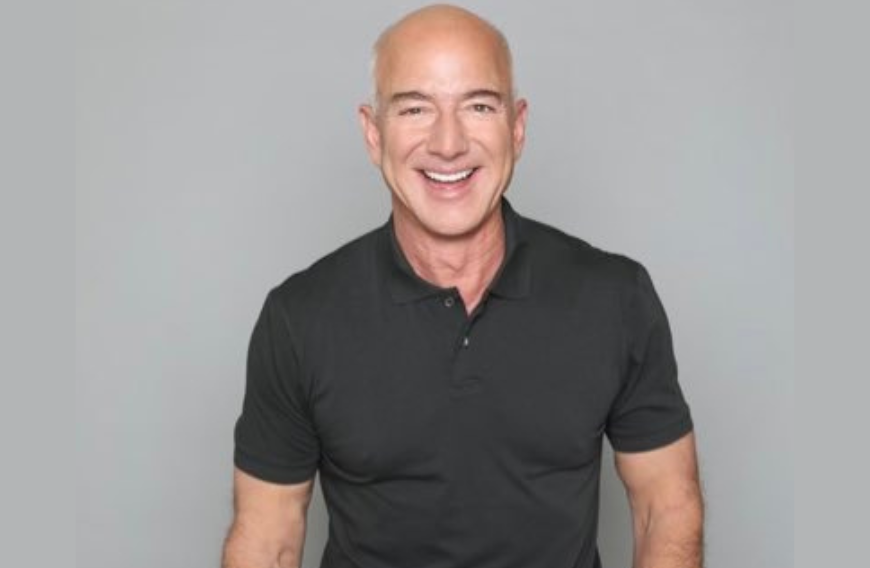
# Jeff Bezos Says Becoming a Billionaire Through Business Success Does Not Make Someone a Villain
Amazon founder Jeff Bezos has pushed back against the idea that extreme wealth automatically makes someone morally wrong, arguing that people who view business success as villainy have been taught to interpret economic achievement through an unhelpful framework. His comments come amid growing public debate over wealth inequality, the rising cost of living and the responsibilities of billionaires.
“I think we live in an environment where some people have been taught, I think incorrectly, but taught … this whole kind of oppressor/oppressed framework, and [that] success is villainy,” Bezos told Fox News.
To illustrate his point, Bezos described how a person could begin with a small food business employing around 10 people, expand it into a company with thousands of locations and workers, and eventually become a billionaire. He argued that building a successful enterprise does not, by itself, make its founder a bad person.
“Success is not villainy. You can be a billionaire if you started a hamburger stand,” Bezos said.
He added that creating products customers genuinely enjoy can be a legitimate foundation for business success. “There’s nothing wrong with making unbelievably good chicken that people love. And it doesn’t make him a bad person,” he said.
Bezos’s remarks come as public scrutiny of the ultrawealthy intensifies, particularly amid concerns about the widening gap between rich and poor. According to a 2025 Pew Research Center study cited in reports, approximately 18% of Americans viewed being extremely rich as morally wrong. That figure rose to roughly 33% among adults ages 18 to 29, highlighting differences in attitudes toward wealth across age groups.
At the same time, Oxfam reported that the combined fortunes of the world’s billionaires reached a record $18.3 trillion in 2025. The concentration of wealth has drawn greater attention as many households continue to face high housing costs, financial pressures and challenges in achieving homeownership.
Bezos acknowledged that affordability is a real concern, particularly for younger Americans struggling to find housing near their workplaces. He cautioned, however, against focusing on assigning blame instead of identifying the underlying causes and developing practical solutions.
“You can’t pretend there’s no problem,” he said. “Young people look at the cost of housing and think, ‘I have to live two hours out of town. I can’t live close to my job.’”
The Amazon founder argued that executives should be judged by their ability to solve problems rather than simply criticize others. Referring to leaders at Amazon, Blue Origin and Prometheus, he said he would not tolerate executives who concentrated on blaming people without working toward meaningful remedies.
“If there’s somebody at Amazon or Blue Origin or Prometheus, an executive at one of my companies, instead of working on a root cause and a real fix, all they did is point fingers and blame people, we would exit them quickly,” Bezos said. “They wouldn’t be here long.”
His comments reflect a broader argument that business success should be considered alongside the value a company creates, the jobs it supports and the products or services it provides. Critics of extreme wealth, meanwhile, continue to raise questions about economic inequality, access to opportunity and whether the benefits of corporate growth are distributed widely enough.
Bezos has also recently spoken about the potential impact of artificial intelligence on employment and productivity. He suggested that advances in AI could eventually make three-day workweeks possible and allow more households to support themselves with a single income. Such changes, he argued, could reshape the relationship between work, productivity and family life.
The remarks come as Amazon continues to restructure its workforce. The company has eliminated approximately 30,000 corporate positions since late 2025, including another round of job cuts announced in October. The reductions have drawn attention to the relationship between technological advancement, operational efficiency and employment as companies increasingly adopt AI-driven tools.
Bezos’s latest comments therefore place two interconnected issues at the center of the debate: how society evaluates the accumulation of substantial private wealth and how businesses respond to the economic challenges facing ordinary households. While he maintains that becoming wealthy through building a successful business does not make someone a villain, his remarks also acknowledge that affordability problems require concrete solutions rather than rhetoric alone.
Tags
news
Comments (0)
Login to post comments
No comments yet
Be the first to share your thoughts about this post.