News
General
27 views
What happens after a startup receives a term sheet?
Oct 13, 2026
📍 Phliadelphia,PA, USA
# What Happens After a Startup Receives a Term Sheet?
The term sheet arrives, the valuation meets expectations, and the founders celebrate what feels like a major milestone. A subtle “big things coming” update might even appear on LinkedIn. But once the excitement settles, the real work begins.
Receiving a term sheet does not mean the investment has reached the company’s bank account. Instead, it typically outlines the commercial framework of the proposed transaction, covering key elements such as valuation, investment amount, type of security, board representation, liquidation preferences, founder obligations, exclusivity, information rights and exit provisions. Certain clauses, including confidentiality, exclusivity, governing law and costs, may be legally binding depending on how the document is drafted. The investment itself, however, generally remains subject to due diligence and the execution of definitive agreements.
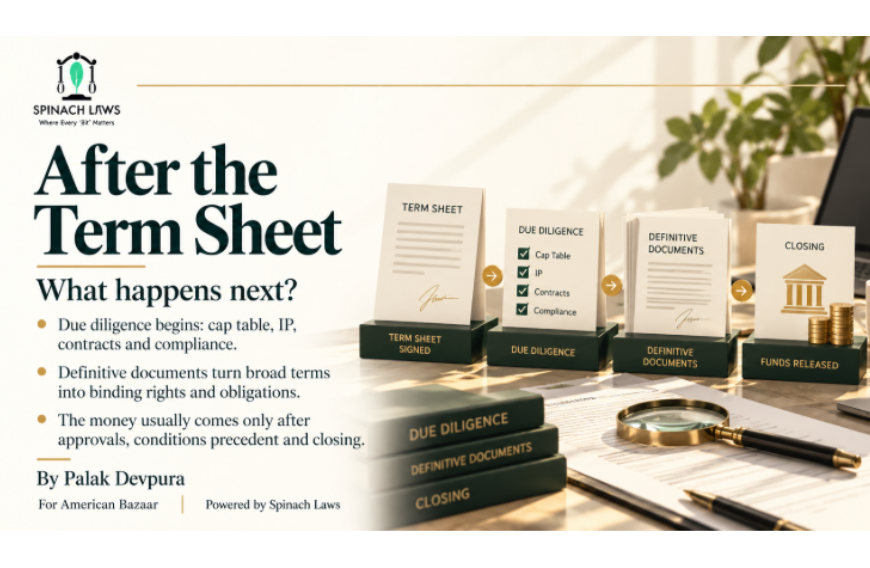
The first major stage following the term sheet is due diligence. Investors and their advisers begin examining whether the business presented during fundraising matches the company’s actual legal, financial and operational position. This process helps them understand the risks associated with the investment and identify issues that could affect the transaction.
The review can cover incorporation records, capitalization tables, previous share issuances, founder ownership, material contracts, intellectual property, employment documentation, tax matters, litigation, licences, data-handling practices and regulatory compliance. The objective is not merely to uncover problems but to establish a clear picture of the company’s structure, obligations and potential liabilities.
Once due diligence progresses, attention shifts to definitive documentation. Depending on the structure of the investment, this may include a share subscription agreement, shareholders’ agreement and amendments to the company’s constitutional documents. These agreements convert the broad commercial terms negotiated earlier into detailed legal rights and responsibilities.
This stage can reveal how much detail sits behind seemingly routine language. A reference to “customary investor rights,” for example, may eventually translate into extensive provisions covering reserved matters requiring investor consent, restrictions on share transfers, representations and warranties, indemnities and exit arrangements. Founders need to understand these provisions because they can influence future decision-making, fundraising flexibility and control of the business.
The next hurdle is satisfying the conditions precedent, or requirements that must be completed before the transaction can close. An earlier shareholder filing may need correction, an intellectual property assignment from a founder may be missing, or an important employment agreement may still require a signature. Investors may also require board and shareholder approvals, valuation documentation or specific regulatory steps. Until the agreed conditions are fulfilled or waived, the investment may remain pending.
After the necessary approvals, documentation and closing requirements are addressed, the transaction moves toward completion and post-closing compliance. Shares or other securities are issued in accordance with the agreed terms, company registers and capitalization tables are updated, and applicable corporate and foreign investment filings must be completed within the relevant requirements and timelines.
For founders, the practical lesson is straightforward: a term sheet marks the beginning of the investment execution process, not its conclusion. Startups that maintain accurate corporate records, properly documented intellectual property ownership, reliable capitalization tables and well-organized contracts are generally better prepared to navigate this stage. Those that postpone basic compliance and documentation work until an investor requests it may face delays, additional expenses and difficult negotiations.
A successful fundraising process therefore depends on more than securing an attractive valuation or persuading an investor to commit. It also requires the company to demonstrate that its legal, financial and operational foundations can withstand scrutiny.
Funding rounds do not become complicated because founders fail to celebrate a term sheet. They become complicated when unresolved documentation, compliance gaps and ownership questions emerge after the investor has committed time and resources to the deal. Being transaction-ready before fundraising begins can make the difference between a smooth closing and a prolonged process.
The term sheet arrives, the valuation meets expectations, and the founders celebrate what feels like a major milestone. A subtle “big things coming” update might even appear on LinkedIn. But once the excitement settles, the real work begins.
Receiving a term sheet does not mean the investment has reached the company’s bank account. Instead, it typically outlines the commercial framework of the proposed transaction, covering key elements such as valuation, investment amount, type of security, board representation, liquidation preferences, founder obligations, exclusivity, information rights and exit provisions. Certain clauses, including confidentiality, exclusivity, governing law and costs, may be legally binding depending on how the document is drafted. The investment itself, however, generally remains subject to due diligence and the execution of definitive agreements.
The first major stage following the term sheet is due diligence. Investors and their advisers begin examining whether the business presented during fundraising matches the company’s actual legal, financial and operational position. This process helps them understand the risks associated with the investment and identify issues that could affect the transaction.
The review can cover incorporation records, capitalization tables, previous share issuances, founder ownership, material contracts, intellectual property, employment documentation, tax matters, litigation, licences, data-handling practices and regulatory compliance. The objective is not merely to uncover problems but to establish a clear picture of the company’s structure, obligations and potential liabilities.
Once due diligence progresses, attention shifts to definitive documentation. Depending on the structure of the investment, this may include a share subscription agreement, shareholders’ agreement and amendments to the company’s constitutional documents. These agreements convert the broad commercial terms negotiated earlier into detailed legal rights and responsibilities.
This stage can reveal how much detail sits behind seemingly routine language. A reference to “customary investor rights,” for example, may eventually translate into extensive provisions covering reserved matters requiring investor consent, restrictions on share transfers, representations and warranties, indemnities and exit arrangements. Founders need to understand these provisions because they can influence future decision-making, fundraising flexibility and control of the business.
The next hurdle is satisfying the conditions precedent, or requirements that must be completed before the transaction can close. An earlier shareholder filing may need correction, an intellectual property assignment from a founder may be missing, or an important employment agreement may still require a signature. Investors may also require board and shareholder approvals, valuation documentation or specific regulatory steps. Until the agreed conditions are fulfilled or waived, the investment may remain pending.
After the necessary approvals, documentation and closing requirements are addressed, the transaction moves toward completion and post-closing compliance. Shares or other securities are issued in accordance with the agreed terms, company registers and capitalization tables are updated, and applicable corporate and foreign investment filings must be completed within the relevant requirements and timelines.
For founders, the practical lesson is straightforward: a term sheet marks the beginning of the investment execution process, not its conclusion. Startups that maintain accurate corporate records, properly documented intellectual property ownership, reliable capitalization tables and well-organized contracts are generally better prepared to navigate this stage. Those that postpone basic compliance and documentation work until an investor requests it may face delays, additional expenses and difficult negotiations.
A successful fundraising process therefore depends on more than securing an attractive valuation or persuading an investor to commit. It also requires the company to demonstrate that its legal, financial and operational foundations can withstand scrutiny.
Funding rounds do not become complicated because founders fail to celebrate a term sheet. They become complicated when unresolved documentation, compliance gaps and ownership questions emerge after the investor has committed time and resources to the deal. Being transaction-ready before fundraising begins can make the difference between a smooth closing and a prolonged process.
Tags
news
Comments (0)
Login to post comments
No comments yet
Be the first to share your thoughts about this post.