News
General
17 views
Navaratri Day 2: The wisdom of perseverance
Oct 13, 2026
📍 Phliadelphia,PA, USA
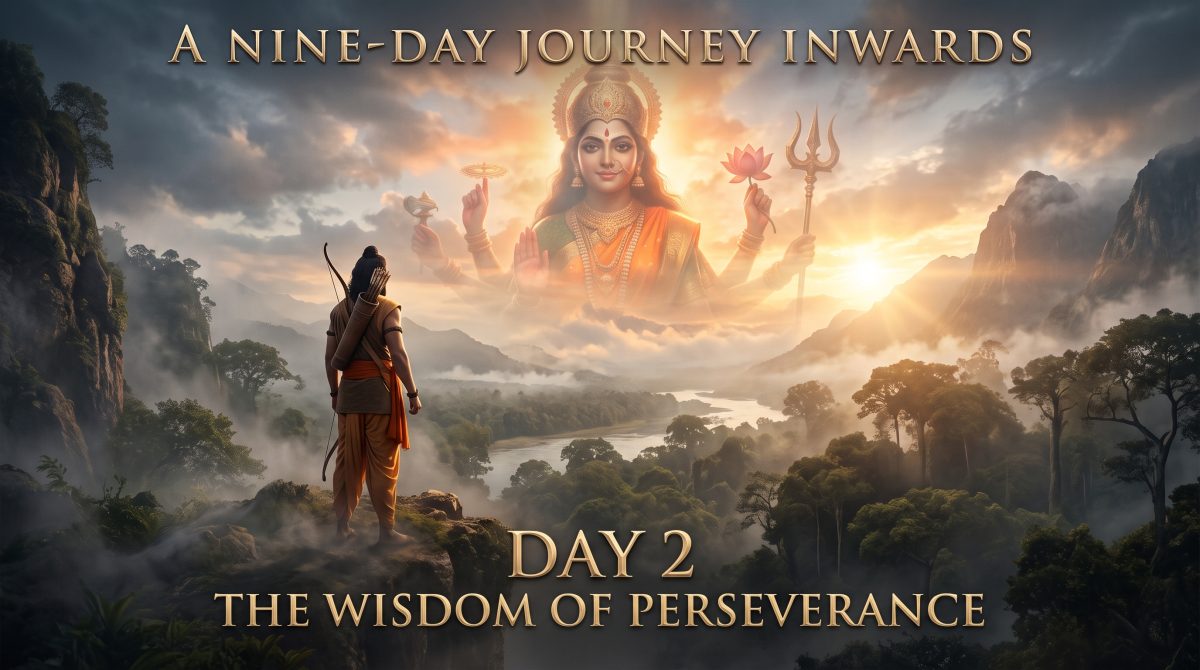
# Navaratri Day 2: Goddess Brahmacharini and the Deeper Meaning of Perseverance
The second day of Navaratri is dedicated to Goddess Brahmacharini, a manifestation of the divine feminine who embodies tapasya, or disciplined spiritual practice. Traditionally portrayed holding a rosary and a water vessel, the goddess symbolizes devotion, self-control and the determination to pursue a higher purpose. Her message offers a timeless lesson: the true value of perseverance lies not simply in how long we continue, but in the intention that drives our efforts.
Persistence and perseverance are often treated as interchangeable concepts, yet they represent different approaches to pursuing a goal. Persistence is the willingness to continue despite obstacles, sometimes even when doing so causes harm. Perseverance, by contrast, combines sustained effort with purpose, discernment and an understanding of what an objective is intended to accomplish.
Without this distinction, determination can gradually turn into obsession. Becoming too attached to a particular outcome can cause us to lose sight of the values that motivated us in the first place. Career ambitions may undermine the relationships they were meant to support, while the desire to prove ourselves right can prevent us from accepting our mistakes. Similarly, the pursuit of success can become so consuming that we stop questioning the personal sacrifices required to achieve it.
Ambition and commitment are not the problem. Both are essential to meaningful progress and achievement. The difficulty arises when the goal becomes more important than the purpose behind it. When our identity becomes tied to a particular result, changing direction may feel like failure, even when circumstances have shifted or the original objective no longer serves us. At that point, ego can begin to override rational judgment.
Perseverance demands a different kind of strength. It requires commitment alongside reflection, self-awareness and the willingness to make course corrections when necessary. Goddess Brahmacharini represents this balance through the disciplined direction of energy toward a higher purpose. Discipline allows intention to endure when enthusiasm fades and immediate rewards disappear. However, discipline without reflection can become stubbornness. The deeper lesson is to remain faithful to our principles while retaining the wisdom to reconsider our methods and expectations.
The *Ramayana* offers a compelling illustration through Rama’s decision to honor his father’s promise and accept fourteen years of exile. Rather than abandoning his commitment when it becomes personally costly, Rama acts according to his understanding of dharma, the moral principles and responsibilities that guide his conduct. His decision demonstrates that perseverance is not merely about enduring hardship; it is about remaining guided by principles that extend beyond immediate personal benefit, including his own claim to the throne.
Rama’s journey also shows that perseverance is not simply an insistence on achieving a predetermined outcome. His life demands responses to changing circumstances, difficult choices and uncertainty. His steadfastness is grounded in dharma rather than an overriding desire to win. At the same time, determination alone does not make a goal worthwhile. A person can display extraordinary persistence while pursuing an objective that conflicts with their values or causes harm.
For Generation Z, this distinction is particularly relevant in a culture that frequently celebrates relentless productivity, visible accomplishments and ambitious personal goals. Young people are often encouraged to push harder, overcome every obstacle and never give up. Yet an equally important question is often overlooked: What is the purpose of the struggle, and what are we sacrificing—including our identity, relationships and well-being—along the way?
A meaningful life cannot be measured solely by the goals we accomplish. It must also be evaluated through the intentions we preserve, the relationships we nurture and the principles we refuse to compromise. Sometimes perseverance means continuing when circumstances become difficult. At other times, it means recognizing that the path must change so that the original purpose can remain intact.
The second day of Navaratri invites us to examine not only the strength of our determination but also the intention behind it. Goddess Brahmacharini reminds us that discipline gives purpose the strength to endure, while Rama’s example highlights the importance of allowing principle, rather than personal gratification, to guide our decisions.
Ultimately, persistence encourages us to keep moving forward, while perseverance challenges us to remember why we began and recognize when the purpose matters more than the goal.
Tags
news
Comments (0)
Login to post comments
No comments yet
Be the first to share your thoughts about this post.