News
General
13 views
‘The real boss of India’: Elon Musk mocks Mukesh Ambani as ‘Prime Minister’ over Starlink
Oct 12, 2026
📍 Phliadelphia,PA, USA
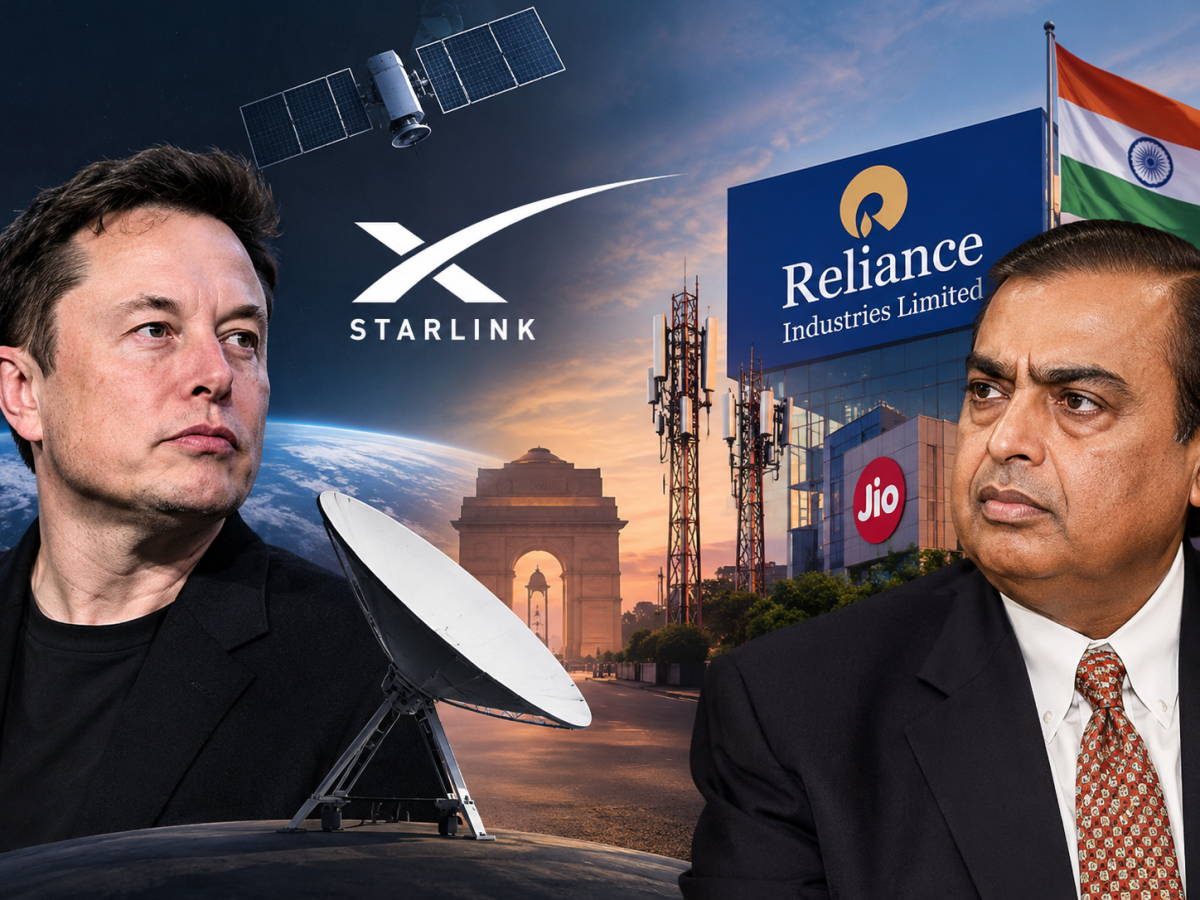
# Elon Musk Mocks Mukesh Ambani as ‘Prime Minister’ in Escalating Starlink India Dispute
Tesla and SpaceX CEO Elon Musk has intensified his public dispute with Reliance Industries chairman Mukesh Ambani, sarcastically referring to the Indian billionaire as the country’s “Prime Minister” while accusing him of seeking to protect his business interests from competition. The remarks come as SpaceX’s Starlink satellite internet service continues to await the final approvals required to begin commercial operations in India.
In a post on X on Friday, Musk questioned Ambani’s influence over India’s business and regulatory environment and urged him to allow Starlink to compete in the country’s telecommunications market. “Dear Prime Minister Ambani, Please accept my humble apologies for not realizing that you are the real boss of India. Naturally, you would prefer to maintain your monopolistic exploitation of the great people of India, but would you nonetheless consider allowing Starlink to compete?” Musk wrote.
Musk argued that Starlink could help address India’s digital divide by providing internet connectivity to communities that lack reliable access. He said satellite internet could create educational opportunities for children, enable small businesses to reach international customers and connect people living in remote areas where traditional broadband infrastructure remains limited.
“There are many areas of India, as there are in all countries, with no Internet access, which denies children the opportunity for education and for small businesses the opportunity to sell their goods to a global market. Starlink would change their lives for the better,” Musk added.
He also emphasized the potential role of satellite connectivity during emergencies, pointing to Starlink’s use in disaster-hit regions around the world. Musk argued that the service could help maintain communications when conventional networks fail, potentially supporting rescue operations and helping affected communities stay connected.
“Also, Starlink has proven to be essential for saving lives during natural disasters throughout the world, when all other communications systems have failed, so you would also be helping save men, women and children throughout India,” he wrote.
The latest comments follow several days of criticism directed at Indian business interests over the delays surrounding Starlink’s market entry. Earlier in the week, Musk accused unnamed “oligarchs” of obstructing the launch to protect their commercial positions. His allegations have drawn attention to the balance between competition, regulatory oversight and the influence of major corporate groups in India’s telecommunications sector.
India’s Ministry of Communications has rejected claims that Starlink is being treated unfairly. The ministry has maintained that the country’s regulatory framework for satellite communications is “fair and non-discriminatory,” emphasizing that Starlink and other licensed operators must complete the required security reviews before receiving satellite spectrum.
Musk continued his criticism on Thursday by directly questioning Ambani’s influence, asking, “Is Ambani the real boss of India?” Opposition leader Rahul Gandhi subsequently joined the online exchange, responding to Musk’s post with, “Wait till you discover the other guy.”
The exchanges have attracted widespread attention on social media, with technology professionals, influencers and other prominent users resharing Musk’s comments and debating the competitive dynamics of India’s telecom market. The controversy has brought renewed focus to the obstacles facing Starlink as it seeks access to one of the world’s largest internet markets.
## Starlink Awaits Final Approval in India
SpaceX has been working for several years to introduce Starlink in India. Although the company has secured key regulatory clearances, it has yet to complete every requirement needed to begin commercial service. Additional security assessments and approvals remain outstanding.
In March 2025, Reliance Jio and Bharti Airtel announced distribution agreements with SpaceX to offer Starlink services in India once the necessary regulatory approvals were obtained. The partnerships represented a significant step toward the satellite internet provider’s entry into the country and created potential distribution channels through two established telecommunications companies.
However, the agreements have not resulted in an immediate commercial launch. In a statement on Thursday, the Ministry of Communications said Starlink and two other licensed satellite operators were undergoing security assessments that must be completed before satellite spectrum can be assigned.
The ministry said the three companies were at “broadly the same regulatory stage,” disputing the suggestion that Starlink was facing discriminatory treatment. The government’s position is that the outstanding assessments form part of the regulatory process applicable to satellite operators seeking to provide services in India.
Reliance Jio and Airtel are also developing their own satellite connectivity strategies. Jio has a joint venture with Luxembourg-based SES, while Airtel is a major shareholder in Eutelsat OneWeb, which is pursuing satellite communications services in India. These interests place both companies among the key participants in the country’s emerging satellite internet market.
## Competition for India’s Satellite Internet Market
With more than a billion internet users, India represents a substantial opportunity for satellite internet providers. Starlink’s technology could help reach remote communities and areas where expanding terrestrial networks is difficult or expensive. Yet entering the market also requires navigating a complex regulatory environment and competing in a telecommunications sector dominated by established operators, including Ambani’s Reliance Jio.
Reliance Industries operates India’s largest telecommunications operator and has participated in major projects alongside Prime Minister Narendra Modi’s government. Its scale and position in the telecom industry have made the group an influential participant in debates over how new connectivity providers should enter the market.
The current dispute also follows an earlier disagreement over how India should allocate spectrum for satellite communications. SpaceX supported an administrative allocation process, while Reliance Jio argued that spectrum should be assigned through an auction. The Indian government ultimately opted for administrative allocation, aligning with SpaceX’s preferred approach on that specific issue.
Despite that decision, Starlink’s launch remains on hold pending the completion of the necessary regulatory and security requirements. The outstanding approvals have become a focal point of Musk’s criticism, although the government maintains that the process is being applied fairly to licensed satellite operators.
Musk’s latest remarks have transformed the delay into a highly visible public confrontation involving two of the world’s most prominent business leaders. At its core, the dispute raises questions about market access, regulatory oversight and competition as satellite internet services seek a larger role in India’s digital economy. Whether Starlink will receive its remaining approvals and when commercial services might begin remain unresolved.
Tesla and SpaceX CEO Elon Musk has intensified his public dispute with Reliance Industries chairman Mukesh Ambani, sarcastically referring to the Indian billionaire as the country’s “Prime Minister” while accusing him of seeking to protect his business interests from competition. The remarks come as SpaceX’s Starlink satellite internet service continues to await the final approvals required to begin commercial operations in India.
In a post on X on Friday, Musk questioned Ambani’s influence over India’s business and regulatory environment and urged him to allow Starlink to compete in the country’s telecommunications market. “Dear Prime Minister Ambani, Please accept my humble apologies for not realizing that you are the real boss of India. Naturally, you would prefer to maintain your monopolistic exploitation of the great people of India, but would you nonetheless consider allowing Starlink to compete?” Musk wrote.
Musk argued that Starlink could help address India’s digital divide by providing internet connectivity to communities that lack reliable access. He said satellite internet could create educational opportunities for children, enable small businesses to reach international customers and connect people living in remote areas where traditional broadband infrastructure remains limited.
“There are many areas of India, as there are in all countries, with no Internet access, which denies children the opportunity for education and for small businesses the opportunity to sell their goods to a global market. Starlink would change their lives for the better,” Musk added.
He also emphasized the potential role of satellite connectivity during emergencies, pointing to Starlink’s use in disaster-hit regions around the world. Musk argued that the service could help maintain communications when conventional networks fail, potentially supporting rescue operations and helping affected communities stay connected.
“Also, Starlink has proven to be essential for saving lives during natural disasters throughout the world, when all other communications systems have failed, so you would also be helping save men, women and children throughout India,” he wrote.
The latest comments follow several days of criticism directed at Indian business interests over the delays surrounding Starlink’s market entry. Earlier in the week, Musk accused unnamed “oligarchs” of obstructing the launch to protect their commercial positions. His allegations have drawn attention to the balance between competition, regulatory oversight and the influence of major corporate groups in India’s telecommunications sector.
India’s Ministry of Communications has rejected claims that Starlink is being treated unfairly. The ministry has maintained that the country’s regulatory framework for satellite communications is “fair and non-discriminatory,” emphasizing that Starlink and other licensed operators must complete the required security reviews before receiving satellite spectrum.
Musk continued his criticism on Thursday by directly questioning Ambani’s influence, asking, “Is Ambani the real boss of India?” Opposition leader Rahul Gandhi subsequently joined the online exchange, responding to Musk’s post with, “Wait till you discover the other guy.”
The exchanges have attracted widespread attention on social media, with technology professionals, influencers and other prominent users resharing Musk’s comments and debating the competitive dynamics of India’s telecom market. The controversy has brought renewed focus to the obstacles facing Starlink as it seeks access to one of the world’s largest internet markets.
## Starlink Awaits Final Approval in India
SpaceX has been working for several years to introduce Starlink in India. Although the company has secured key regulatory clearances, it has yet to complete every requirement needed to begin commercial service. Additional security assessments and approvals remain outstanding.
In March 2025, Reliance Jio and Bharti Airtel announced distribution agreements with SpaceX to offer Starlink services in India once the necessary regulatory approvals were obtained. The partnerships represented a significant step toward the satellite internet provider’s entry into the country and created potential distribution channels through two established telecommunications companies.
However, the agreements have not resulted in an immediate commercial launch. In a statement on Thursday, the Ministry of Communications said Starlink and two other licensed satellite operators were undergoing security assessments that must be completed before satellite spectrum can be assigned.
The ministry said the three companies were at “broadly the same regulatory stage,” disputing the suggestion that Starlink was facing discriminatory treatment. The government’s position is that the outstanding assessments form part of the regulatory process applicable to satellite operators seeking to provide services in India.
Reliance Jio and Airtel are also developing their own satellite connectivity strategies. Jio has a joint venture with Luxembourg-based SES, while Airtel is a major shareholder in Eutelsat OneWeb, which is pursuing satellite communications services in India. These interests place both companies among the key participants in the country’s emerging satellite internet market.
## Competition for India’s Satellite Internet Market
With more than a billion internet users, India represents a substantial opportunity for satellite internet providers. Starlink’s technology could help reach remote communities and areas where expanding terrestrial networks is difficult or expensive. Yet entering the market also requires navigating a complex regulatory environment and competing in a telecommunications sector dominated by established operators, including Ambani’s Reliance Jio.
Reliance Industries operates India’s largest telecommunications operator and has participated in major projects alongside Prime Minister Narendra Modi’s government. Its scale and position in the telecom industry have made the group an influential participant in debates over how new connectivity providers should enter the market.
The current dispute also follows an earlier disagreement over how India should allocate spectrum for satellite communications. SpaceX supported an administrative allocation process, while Reliance Jio argued that spectrum should be assigned through an auction. The Indian government ultimately opted for administrative allocation, aligning with SpaceX’s preferred approach on that specific issue.
Despite that decision, Starlink’s launch remains on hold pending the completion of the necessary regulatory and security requirements. The outstanding approvals have become a focal point of Musk’s criticism, although the government maintains that the process is being applied fairly to licensed satellite operators.
Musk’s latest remarks have transformed the delay into a highly visible public confrontation involving two of the world’s most prominent business leaders. At its core, the dispute raises questions about market access, regulatory oversight and competition as satellite internet services seek a larger role in India’s digital economy. Whether Starlink will receive its remaining approvals and when commercial services might begin remain unresolved.
Tags
news
Comments (0)
Login to post comments
No comments yet
Be the first to share your thoughts about this post.