News
General
24 views
Bhramar Mukherjee wins award for researching AI models for screening anemia
Oct 09, 2026
📍 Phliadelphia,PA, USA
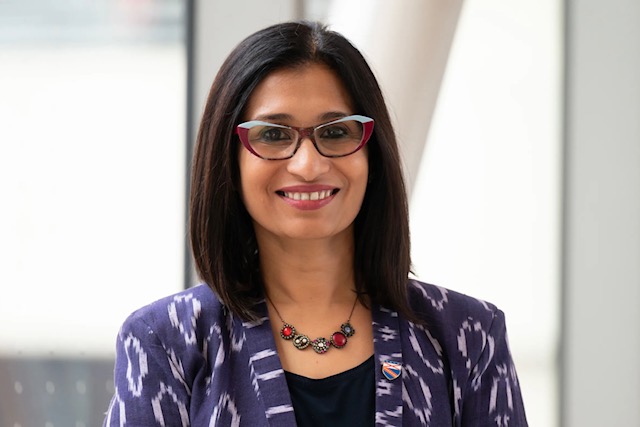
# Yale’s Dr. Bhramar Mukherjee Wins 2026 Award for AI-Based Anemia Screening Research in India
Indian American researcher Dr. Bhramar Mukherjee of Yale University has received the 2026 Hecht Global Health Policy Innovation and Systems Impact Faculty Network Award for a research project exploring how artificial intelligence can improve anemia screening in India.
The award-winning initiative will bring together the Yale School of Public Health (YSPH) and Khushi Baby Association, a nonprofit organization working in India, to evaluate whether deep learning-based AI models can reliably identify anemia through images in real-world community settings.
The research will examine how these technologies can be used by India’s accredited social health activists, commonly known as ASHA workers, to support screening activities. Their responsibilities could include obtaining consent, capturing images and interpreting screening results, with the AI algorithms updated in real time as part of the study.
Mukherjee, Yale School of Public Health’s senior associate dean of public health data science and data equity, said the central objective is to determine whether image-based AI models can function effectively outside controlled research environments.
“The question my Hecht Award project sets out to answer is whether deep learning-based AI models for image-based screening of anemia can be used effectively in field settings,” Mukherjee said.
The Hecht award is intended to help faculty members establish a foundation for larger research initiatives and secure additional funding. For Mukherjee’s project, the recognition provides an opportunity to investigate how emerging technology could address a persistent public health challenge while generating evidence relevant to health policy.
Mukherjee holds several academic and research appointments at Yale. She is the Anna M.R. Lauder Professor of Biostatistics and a professor of chronic disease epidemiology at YSPH. She also holds a secondary appointment in Yale’s Department of Statistics and Data Science and is affiliated with the MacMillan Center and the Institute for the Foundations of Data Science. In addition, she serves on the Yale Cancer Center director’s cabinet.
Her academic training includes a master’s degree in applied statistics and data analysis from the Indian Statistical Institute, followed by an MS and PhD in statistics from Purdue University in West Lafayette, Indiana.
The research addresses a significant health concern in India, which carries the world’s largest burden of maternal anemia. The condition affects an estimated 52% of pregnant women nationally, with prevalence exceeding 60% in some tribal and rural districts.
Anemia during pregnancy can create serious risks for mothers and newborns, particularly when the condition is not identified early enough for appropriate treatment. Community-level screening methods can fail to detect moderate anemia, potentially delaying referrals and further medical evaluation.
Such gaps can lead to missed opportunities for timely care, increasing the risk of preventable complications for both mothers and infants. Improving the accuracy and reach of screening is therefore an important part of efforts to strengthen maternal healthcare, especially in underserved communities.
Smartphone-based clinical decision support tools powered by AI could offer a way to extend screening services to areas where access to conventional diagnostic resources is limited. However, the rapid development of these technologies has outpaced the evidence available about how well they perform in everyday healthcare environments.
Without robust field evaluations, policymakers may lack the information needed to determine whether such tools are reliable, practical and suitable for wider adoption.
Mukherjee’s project will study MAHILA, short for Maternal Anemia Hemoglobin Imaging for Last-mile Assessment. The initiative uses a non-invasive smartphone-based clinical decision support tool and will follow a three-stage approach involving adaptation, evaluation and implementation research.
The study will assess the tool’s performance in community settings and examine whether health workers can use it consistently under real-world conditions. Researchers will also identify the training, supervision and practical support needed to integrate the technology into existing screening programs.
Beyond evaluating the AI model itself, the project will consider how the tool can be adapted to different field environments and how well its performance translates from its original development setting to the communities where it may ultimately be used.
Students will work alongside Khushi Baby data scientists, with student interns recruited from Indian institutions contributing to the real-world adaptation and assessment of the underlying deep learning model. This collaboration is expected to bring together academic expertise, technical development and on-the-ground implementation experience.
The research will also produce a policy briefing book outlining findings relevant to the potential use of AI-assisted anemia screening in public health programs.
By combining technical evaluation with implementation research, the team aims to establish whether smartphone-based AI screening can offer a dependable and practical option for community health workers.
The findings could help inform future decisions about the use of AI-enabled screening tools in maternal healthcare, while clarifying the safeguards, training and supporting systems required before broader deployment.
For Mukherjee and her collaborators, the project represents an opportunity to connect advances in data science with a pressing public health need. Its central focus is not simply whether AI can identify signs of anemia, but whether the technology can work reliably in the communities that stand to benefit most from improved screening and timely care.
Tags
news
Comments (0)
Login to post comments
No comments yet
Be the first to share your thoughts about this post.