News
General
3 views
Anthropic consults Hindu monk to discuss AI ethics
Oct 07, 2026
📍 Phliadelphia,PA, USA
### Anthropic Turns to Vedanta and Philosophy as AI Raises Questions About Consciousness
As artificial intelligence systems become increasingly capable, some of the most difficult questions facing AI companies are moving beyond engineering and into philosophy, ethics and the nature of consciousness.
Anthropic, the developer of Claude, has been engaging with religious scholars, philosophers and other thinkers as it considers how advanced AI systems should behave and how society should approach questions that technology alone cannot easily answer.
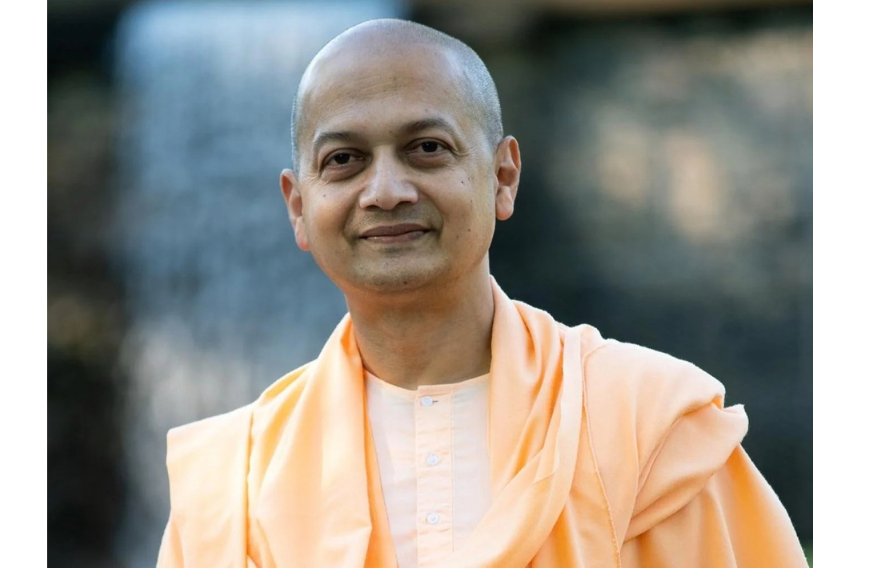
Among those consulted by the company was Swami Sarvapriyananda, minister and spiritual leader of the Vedanta Society of New York and a monk of the Ramakrishna Order.
Sarvapriyananda spoke publicly about his interactions with Anthropic during a panel discussion at the University of Oxford in August 2026. He said the company reached out to him to discuss topics including artificial intelligence, consciousness and ethics.
According to Sarvapriyananda, he subsequently visited different groups associated with Anthropic in San Francisco on two occasions. His participation brought a Vedantic perspective to discussions taking place within one of the world's leading AI companies.
The connection is notable because Vedanta has a long philosophical tradition of examining consciousness, the nature of the self and the relationship between awareness and the mind. Sarvapriyananda has also addressed these subjects extensively through lectures and discussions involving academic and scientific audiences.
His involvement, however, does not mean Anthropic believes Claude is conscious. Instead, his comments highlight the extent to which questions about consciousness, selfhood and moral status have entered broader conversations about the future of AI.
Anthropic has separately developed a constitution for Claude that outlines principles intended to influence the model's behavior and values. The document is designed to provide broader guidance rather than relying exclusively on conventional instructions given to an AI system.
The company's latest constitution also recognizes that there is uncertainty surrounding whether AI systems could possess consciousness or moral status. Anthropic has said it does not know whether Claude is conscious or has moral status today, nor whether that could change as AI systems become more capable.
That uncertainty has led the company to treat AI consciousness as an area for continued research rather than as a question with an established answer.
Sarvapriyananda has argued that intelligence and consciousness should not automatically be treated as the same thing. During the Oxford discussion, he described his interest in AI partly as an opportunity to examine the distinction between a system's ability to demonstrate intelligence and the possibility of subjective awareness.
He also questioned whether humanity has fully resolved what selfhood means even in its own case. Discussing the possibility of selfhood in AI, he noted that there is no straightforward answer for today's systems and suggested that the concept of the human self is itself difficult to define conclusively.
The distinction is important because sophisticated language generation and humanlike interaction do not, on their own, establish that an AI system has subjective experience.
Anthropic's outreach reportedly extends beyond Vedanta as well. Discussions involving the company have included thinkers from different religious and philosophical traditions, along with professionals working in areas such as counseling and mental health. Some participants have indicated that portions of these conversations remain confidential.
There is currently no established scientific consensus demonstrating that Claude or other mainstream AI systems possess consciousness.
Anthropic's engagement with religious and philosophical thinkers should therefore be viewed as part of a broader effort to examine unresolved questions surrounding AI values, ethics, consciousness and responsible behavior.
As AI capabilities advance, technology companies increasingly face questions that cannot be answered through computing power or model performance alone. Determining how AI systems should behave, what principles should guide them and how humans should respond to increasingly sophisticated machines requires input from technology, philosophy and ethics.
The debate over machine consciousness remains unresolved, but the growing involvement of philosophers and religious thinkers suggests that AI development is increasingly becoming a question not only of what machines can do, but also of what their growing capabilities could mean for humanity.
As artificial intelligence systems become increasingly capable, some of the most difficult questions facing AI companies are moving beyond engineering and into philosophy, ethics and the nature of consciousness.
Anthropic, the developer of Claude, has been engaging with religious scholars, philosophers and other thinkers as it considers how advanced AI systems should behave and how society should approach questions that technology alone cannot easily answer.
Among those consulted by the company was Swami Sarvapriyananda, minister and spiritual leader of the Vedanta Society of New York and a monk of the Ramakrishna Order.
Sarvapriyananda spoke publicly about his interactions with Anthropic during a panel discussion at the University of Oxford in August 2026. He said the company reached out to him to discuss topics including artificial intelligence, consciousness and ethics.
According to Sarvapriyananda, he subsequently visited different groups associated with Anthropic in San Francisco on two occasions. His participation brought a Vedantic perspective to discussions taking place within one of the world's leading AI companies.
The connection is notable because Vedanta has a long philosophical tradition of examining consciousness, the nature of the self and the relationship between awareness and the mind. Sarvapriyananda has also addressed these subjects extensively through lectures and discussions involving academic and scientific audiences.
His involvement, however, does not mean Anthropic believes Claude is conscious. Instead, his comments highlight the extent to which questions about consciousness, selfhood and moral status have entered broader conversations about the future of AI.
Anthropic has separately developed a constitution for Claude that outlines principles intended to influence the model's behavior and values. The document is designed to provide broader guidance rather than relying exclusively on conventional instructions given to an AI system.
The company's latest constitution also recognizes that there is uncertainty surrounding whether AI systems could possess consciousness or moral status. Anthropic has said it does not know whether Claude is conscious or has moral status today, nor whether that could change as AI systems become more capable.
That uncertainty has led the company to treat AI consciousness as an area for continued research rather than as a question with an established answer.
Sarvapriyananda has argued that intelligence and consciousness should not automatically be treated as the same thing. During the Oxford discussion, he described his interest in AI partly as an opportunity to examine the distinction between a system's ability to demonstrate intelligence and the possibility of subjective awareness.
He also questioned whether humanity has fully resolved what selfhood means even in its own case. Discussing the possibility of selfhood in AI, he noted that there is no straightforward answer for today's systems and suggested that the concept of the human self is itself difficult to define conclusively.
The distinction is important because sophisticated language generation and humanlike interaction do not, on their own, establish that an AI system has subjective experience.
Anthropic's outreach reportedly extends beyond Vedanta as well. Discussions involving the company have included thinkers from different religious and philosophical traditions, along with professionals working in areas such as counseling and mental health. Some participants have indicated that portions of these conversations remain confidential.
There is currently no established scientific consensus demonstrating that Claude or other mainstream AI systems possess consciousness.
Anthropic's engagement with religious and philosophical thinkers should therefore be viewed as part of a broader effort to examine unresolved questions surrounding AI values, ethics, consciousness and responsible behavior.
As AI capabilities advance, technology companies increasingly face questions that cannot be answered through computing power or model performance alone. Determining how AI systems should behave, what principles should guide them and how humans should respond to increasingly sophisticated machines requires input from technology, philosophy and ethics.
The debate over machine consciousness remains unresolved, but the growing involvement of philosophers and religious thinkers suggests that AI development is increasingly becoming a question not only of what machines can do, but also of what their growing capabilities could mean for humanity.
Tags
news
Comments (0)
Login to post comments
No comments yet
Be the first to share your thoughts about this post.