News
General
11 views
Artificial Symbiotic Intelligence: What vision and biology can teach us about how to collaborate with AI
Sep 30, 2026
📍 Phliadelphia,PA, USA
# Artificial Symbiotic Intelligence: Rethinking the Relationship Between Humans and AI
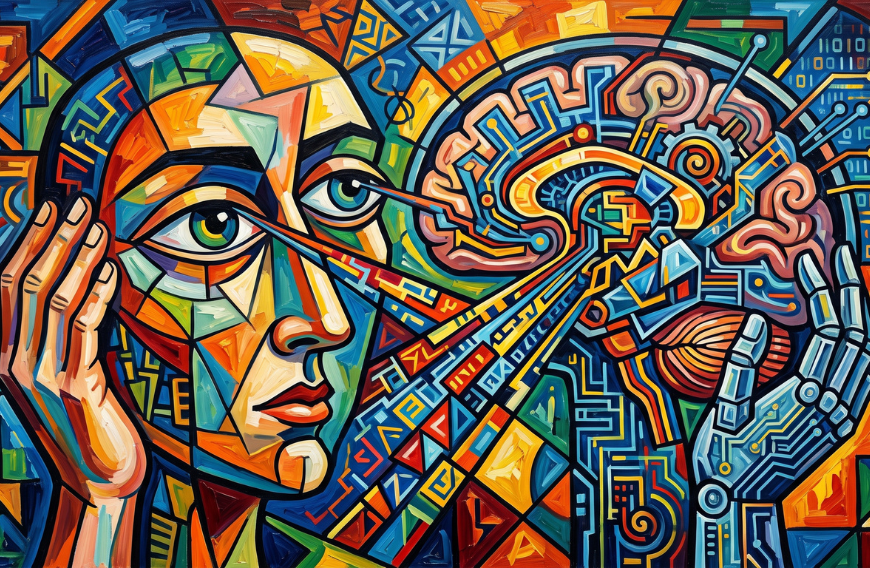
The word “symbiosis” comes from biology and describes a close relationship between different organisms living together. Such relationships can take several forms. Mutualism benefits both sides, commensalism benefits one while leaving the other largely unaffected, and parasitism allows one organism to gain at another’s expense. In some relationships, dependence can eventually become so strong that one organism struggles to function without the other.
That biological continuum offers a useful way to consider the rapidly evolving relationship between humans and artificial intelligence. As AI systems become more capable, the question is no longer simply whether machines can perform tasks traditionally handled by people. It is also about what happens when humans and AI begin relying on one another to perform cognitive work.
If AI gradually replaces human judgment rather than supporting it, the relationship could move toward dependency, potentially weakening skills people once exercised independently. If AI extracts information, labor or value from people without providing meaningful reciprocal benefits, the relationship could take on characteristics of parasitism.
A different possibility is mutualism, in which humans and AI retain distinct capabilities while contributing those strengths to a shared system. The DeepMind Institute’s discussion of Artificial Symbiotic Intelligence provides one framework for considering this model of human-machine collaboration.
## An Orchestra of Sight, Vision and Perception
Artificial Symbiotic Intelligence does not necessarily envision AI replacing human intelligence. Instead, it describes a relationship in which human and machine capabilities complement one another, potentially producing outcomes that neither could achieve as effectively alone.
The development of artificial intelligence has long been influenced by attempts to understand how the human brain processes information. Early neural-network research drew inspiration from biological neurons and the way they receive, combine and transmit signals. Frank Rosenblatt’s perceptron, for example, was influenced by concepts surrounding neural processing.
Research by David Hubel and Torsten Wiesel into the visual cortex further demonstrated that different neurons respond selectively to increasingly complex features of the visual environment. Their work helped establish a hierarchical understanding of visual processing, in which sophisticated representations can emerge from combinations of simpler signals.
These ideas later influenced developments in computer vision and convolutional neural networks. In that sense, one part of AI’s history can be traced to an attempt to understand how humans see.
But human vision itself is not the work of a single processor. It is the result of numerous specialized systems working together, much like an orchestra in which different sections contribute to a larger composition.
When light enters the eye, it reaches the retina, which is far more complex than a simple photographic surface. Photoreceptors, bipolar cells, horizontal cells, amacrine cells and retinal ganglion cells interact to transform incoming optical information.
Before signals even leave the eye through the optic nerve, the visual system has already processed characteristics such as contrast, intensity, spatial relationships and changes over time.
The information then travels through the visual pathways to the primary visual cortex and onward to multiple interconnected areas of the brain. Different networks contribute to identifying objects, understanding movement, interpreting spatial relationships and guiding physical actions.
Color, depth, shape and motion are therefore not processed by one isolated visual center. Instead, they emerge through interactions among specialized systems.
Perception adds another layer. What humans experience is not simply the detection of visual information but an interpretation shaped by memory, emotion, attention, experience and context.
Seeing a familiar person in a crowded room, for example, involves much more than detecting a collection of facial features. The brain combines the incoming visual information with memories and knowledge associated with that individual to produce a meaningful perception.
## Lessons for Human-AI Collaboration
The first lesson that Artificial Symbiotic Intelligence can draw from the visual system is that intelligence does not necessarily require one system to perform every function.
The second is perhaps more important: intelligence depends on coordination. Different components process information in different ways, modify what they receive and contribute their results to a larger system.
This distinction becomes clearer when separating sight, vision and perception.
Sight begins with the processing of sensory information. Vision involves more sophisticated interpretation of that information. Perception incorporates additional layers of memory, emotion, context and prior experience.
The same principle could apply to human-AI systems. Instead of expecting one AI model to perform every cognitive function, different systems could contribute specialized capabilities while humans provide another layer of context and judgment.
AI systems can process enormous volumes of information, identify patterns across large datasets, perform repetitive operations consistently and generate potential explanations or solutions quickly.
Humans contribute different strengths, including lived experience, values, social understanding, contextual judgment and responsibility. People also determine what objectives are meaningful in a particular situation and what consequences should be considered.
The objective of symbiosis, therefore, would not be to make humans behave like machines or machines behave exactly like humans. It would be to create a larger cognitive system in which the strengths of each complement the limitations of the other.
## From AI Models to Collective Intelligence
As AI systems evolve, they are increasingly capable of interacting with other systems, using external tools, accessing memory, interpreting images, reasoning over information and taking actions.
This development challenges the idea that intelligence must reside entirely inside one closed system. Instead, intelligence can emerge through coordination among multiple components.
Artificial Symbiotic Intelligence could represent an extension of this idea. Rather than focusing solely on whether a single model can become capable enough to replace humans, researchers and developers could increasingly examine how different forms of intelligence can cooperate.
AI models could communicate with other AI systems, but human participation would remain an important part of the equation.
In such a system, AI could help people identify patterns that might otherwise be difficult to see, retrieve information that would be difficult to remember, explore large numbers of possibilities and challenge assumptions.
Humans, meanwhile, could provide the context, values, judgment and accountability needed to determine how those capabilities should be applied.
The resulting relationship would not necessarily be about one form of intelligence becoming dominant. Instead, it would involve different forms of intelligence contributing to a shared process.
## The Cognitive Crossover Point
There may eventually be a point at which AI systems perform more of the information processing, analysis, writing, coding and decision support involved in everyday work than humans do themselves. The DeepMind Institute has described this possibility in terms of a “cognitive crossover point.”
As machines assume a larger share of cognitive tasks, the central challenge may not be preventing AI from doing useful work. Instead, it may be determining which responsibilities should remain firmly under human control.
The human visual system provides an interesting analogy. The brain does not consciously process every individual signal entering the eye. Much of the work is delegated to specialized biological systems, while higher-level processes integrate the results into a meaningful understanding of the world.
Human-AI collaboration could develop along similar lines. People may delegate certain forms of information processing and analysis to machines while retaining responsibility for judgment, values, context and decisions involving human consequences.
The critical issue will be maintaining a balance in which greater machine capability expands human abilities rather than gradually eliminating the skills humans need to exercise independently.
Artificial intelligence began, in part, by looking to biology for inspiration. Researchers studied neurons, perception and the organization of the brain to understand how intelligent behavior might emerge from interconnected systems.
The next stage of AI may require another look at biology—not simply at individual neurons or brain regions, but at how specialized components cooperate to create something greater than any one component.
That perspective could point toward a future in which intelligence is increasingly shared between humans and machines. The defining question may not be whether AI replaces human intelligence, but whether the two can develop a productive relationship in which each strengthens the other without surrendering the capabilities that make human judgment valuable.
The word “symbiosis” comes from biology and describes a close relationship between different organisms living together. Such relationships can take several forms. Mutualism benefits both sides, commensalism benefits one while leaving the other largely unaffected, and parasitism allows one organism to gain at another’s expense. In some relationships, dependence can eventually become so strong that one organism struggles to function without the other.
That biological continuum offers a useful way to consider the rapidly evolving relationship between humans and artificial intelligence. As AI systems become more capable, the question is no longer simply whether machines can perform tasks traditionally handled by people. It is also about what happens when humans and AI begin relying on one another to perform cognitive work.
If AI gradually replaces human judgment rather than supporting it, the relationship could move toward dependency, potentially weakening skills people once exercised independently. If AI extracts information, labor or value from people without providing meaningful reciprocal benefits, the relationship could take on characteristics of parasitism.
A different possibility is mutualism, in which humans and AI retain distinct capabilities while contributing those strengths to a shared system. The DeepMind Institute’s discussion of Artificial Symbiotic Intelligence provides one framework for considering this model of human-machine collaboration.
## An Orchestra of Sight, Vision and Perception
Artificial Symbiotic Intelligence does not necessarily envision AI replacing human intelligence. Instead, it describes a relationship in which human and machine capabilities complement one another, potentially producing outcomes that neither could achieve as effectively alone.
The development of artificial intelligence has long been influenced by attempts to understand how the human brain processes information. Early neural-network research drew inspiration from biological neurons and the way they receive, combine and transmit signals. Frank Rosenblatt’s perceptron, for example, was influenced by concepts surrounding neural processing.
Research by David Hubel and Torsten Wiesel into the visual cortex further demonstrated that different neurons respond selectively to increasingly complex features of the visual environment. Their work helped establish a hierarchical understanding of visual processing, in which sophisticated representations can emerge from combinations of simpler signals.
These ideas later influenced developments in computer vision and convolutional neural networks. In that sense, one part of AI’s history can be traced to an attempt to understand how humans see.
But human vision itself is not the work of a single processor. It is the result of numerous specialized systems working together, much like an orchestra in which different sections contribute to a larger composition.
When light enters the eye, it reaches the retina, which is far more complex than a simple photographic surface. Photoreceptors, bipolar cells, horizontal cells, amacrine cells and retinal ganglion cells interact to transform incoming optical information.
Before signals even leave the eye through the optic nerve, the visual system has already processed characteristics such as contrast, intensity, spatial relationships and changes over time.
The information then travels through the visual pathways to the primary visual cortex and onward to multiple interconnected areas of the brain. Different networks contribute to identifying objects, understanding movement, interpreting spatial relationships and guiding physical actions.
Color, depth, shape and motion are therefore not processed by one isolated visual center. Instead, they emerge through interactions among specialized systems.
Perception adds another layer. What humans experience is not simply the detection of visual information but an interpretation shaped by memory, emotion, attention, experience and context.
Seeing a familiar person in a crowded room, for example, involves much more than detecting a collection of facial features. The brain combines the incoming visual information with memories and knowledge associated with that individual to produce a meaningful perception.
## Lessons for Human-AI Collaboration
The first lesson that Artificial Symbiotic Intelligence can draw from the visual system is that intelligence does not necessarily require one system to perform every function.
The second is perhaps more important: intelligence depends on coordination. Different components process information in different ways, modify what they receive and contribute their results to a larger system.
This distinction becomes clearer when separating sight, vision and perception.
Sight begins with the processing of sensory information. Vision involves more sophisticated interpretation of that information. Perception incorporates additional layers of memory, emotion, context and prior experience.
The same principle could apply to human-AI systems. Instead of expecting one AI model to perform every cognitive function, different systems could contribute specialized capabilities while humans provide another layer of context and judgment.
AI systems can process enormous volumes of information, identify patterns across large datasets, perform repetitive operations consistently and generate potential explanations or solutions quickly.
Humans contribute different strengths, including lived experience, values, social understanding, contextual judgment and responsibility. People also determine what objectives are meaningful in a particular situation and what consequences should be considered.
The objective of symbiosis, therefore, would not be to make humans behave like machines or machines behave exactly like humans. It would be to create a larger cognitive system in which the strengths of each complement the limitations of the other.
## From AI Models to Collective Intelligence
As AI systems evolve, they are increasingly capable of interacting with other systems, using external tools, accessing memory, interpreting images, reasoning over information and taking actions.
This development challenges the idea that intelligence must reside entirely inside one closed system. Instead, intelligence can emerge through coordination among multiple components.
Artificial Symbiotic Intelligence could represent an extension of this idea. Rather than focusing solely on whether a single model can become capable enough to replace humans, researchers and developers could increasingly examine how different forms of intelligence can cooperate.
AI models could communicate with other AI systems, but human participation would remain an important part of the equation.
In such a system, AI could help people identify patterns that might otherwise be difficult to see, retrieve information that would be difficult to remember, explore large numbers of possibilities and challenge assumptions.
Humans, meanwhile, could provide the context, values, judgment and accountability needed to determine how those capabilities should be applied.
The resulting relationship would not necessarily be about one form of intelligence becoming dominant. Instead, it would involve different forms of intelligence contributing to a shared process.
## The Cognitive Crossover Point
There may eventually be a point at which AI systems perform more of the information processing, analysis, writing, coding and decision support involved in everyday work than humans do themselves. The DeepMind Institute has described this possibility in terms of a “cognitive crossover point.”
As machines assume a larger share of cognitive tasks, the central challenge may not be preventing AI from doing useful work. Instead, it may be determining which responsibilities should remain firmly under human control.
The human visual system provides an interesting analogy. The brain does not consciously process every individual signal entering the eye. Much of the work is delegated to specialized biological systems, while higher-level processes integrate the results into a meaningful understanding of the world.
Human-AI collaboration could develop along similar lines. People may delegate certain forms of information processing and analysis to machines while retaining responsibility for judgment, values, context and decisions involving human consequences.
The critical issue will be maintaining a balance in which greater machine capability expands human abilities rather than gradually eliminating the skills humans need to exercise independently.
Artificial intelligence began, in part, by looking to biology for inspiration. Researchers studied neurons, perception and the organization of the brain to understand how intelligent behavior might emerge from interconnected systems.
The next stage of AI may require another look at biology—not simply at individual neurons or brain regions, but at how specialized components cooperate to create something greater than any one component.
That perspective could point toward a future in which intelligence is increasingly shared between humans and machines. The defining question may not be whether AI replaces human intelligence, but whether the two can develop a productive relationship in which each strengthens the other without surrendering the capabilities that make human judgment valuable.
Tags
news
Comments (0)
Login to post comments
No comments yet
Be the first to share your thoughts about this post.