News
General
4 views
Houston Aga’s becomes Uber Eats’ busiest restaurant
Sep 25, 2026
📍 Phliadelphia,PA, USA
# Houston’s Aga’s Becomes Uber Eats’ Busiest Single-Location Restaurant Worldwide
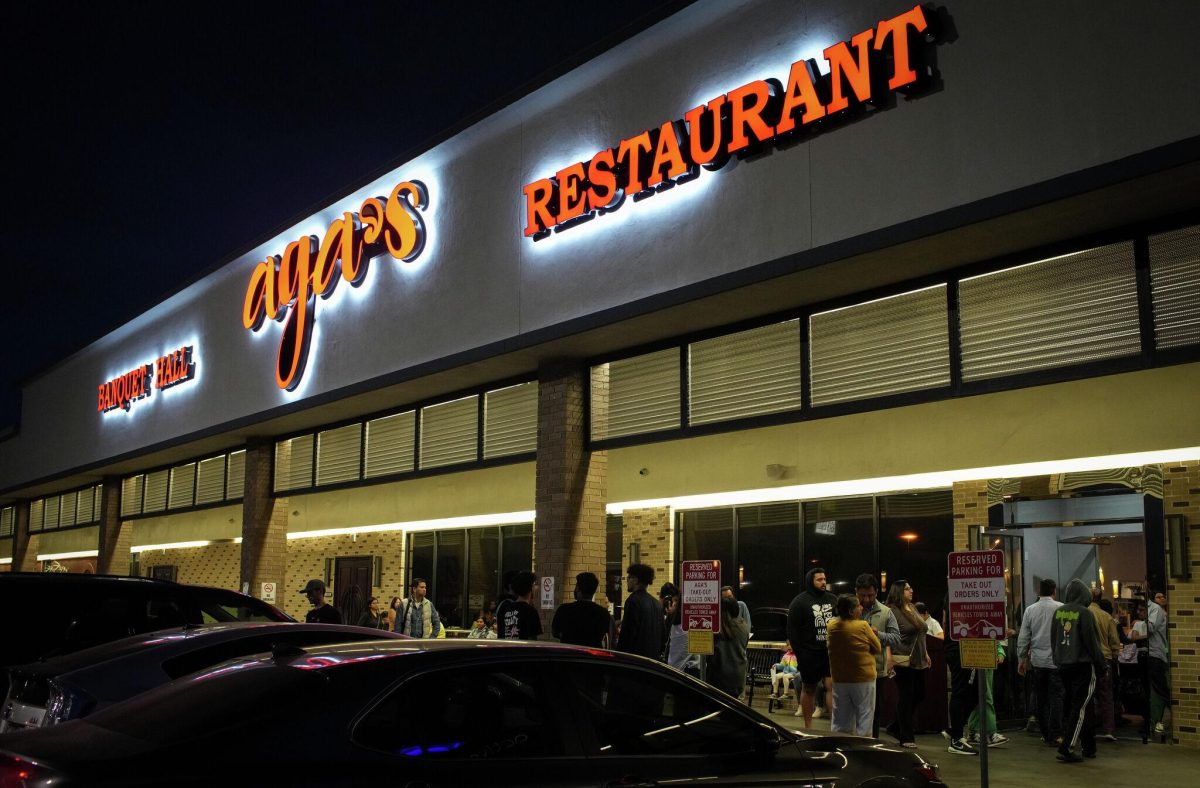
A family-run Indian-Pakistani restaurant in a Houston strip mall has become the busiest single-location restaurant on Uber Eats worldwide, handling an extraordinary volume of dine-in, takeout and delivery orders.
Aga’s Restaurant, located in a 16,000-square-foot space, serves roughly 4,000 dine-in customers each day while processing another 1,600 or so takeout and delivery orders, according to The New York Times. The restaurant says its annual takeout and delivery volume has reached about half a million orders, with yearly revenue extending well into eight figures.
Uber Eats says Aga’s receives more delivery orders than any other single-location restaurant on its global platform. The distinction has also been reported by Business Insider and the Houston Chronicle.
The restaurant’s performance stands out because Indian and Pakistani food does not rank among Uber Eats’ three most-ordered cuisines, while Houston is also outside the platform’s three largest delivery markets.
The extraordinary order volume has created a steady stream of delivery drivers at the restaurant. Uber Eats driver Gilbert Guajardo told The New York Times that almost all of his delivery orders come from Aga’s and estimated that he earned about $50,000 from deliveries originating there over a two-year period.
For some drivers, Aga’s has become a primary source of delivery work because of the restaurant’s consistent flow of orders and tips.
The restaurant also receives a substantial number of orders directly from customers rather than through delivery platforms. The Maredia family has converted a storage area into a call center where employees take orders in several languages.
Aga’s success is particularly notable given its beginnings. Six siblings from the Maredia family purchased the restaurant in 2010 despite having no previous restaurant experience.
Shaukat Maredia, one of the owners, has recalled that Aga’s was struggling when the family took over. The siblings renovated the restaurant, improved its service and expanded the menu with dishes reflecting their Indian and Pakistani backgrounds.
They introduced regional specialties including Hyderabadi gosht and Balti gosht while learning more about cooking through family knowledge, online videos and other resources.
The restaurant initially relied heavily on word-of-mouth recommendations. By 2013, the business had become profitable.
A major transformation came during the COVID-19 pandemic. Aga’s had introduced delivery services about two years earlier, and demand increased sharply as customers shifted toward ordering meals at home.
The family responded by expanding the kitchen and increasing its workforce by approximately 20%. Aga’s now employs around 200 people, according to Maredia, with average wages of about $20 an hour.
The restaurant estimates that approximately 60% of its customers are South Asian, while the remaining 40% come from other backgrounds.
Its popularity also reflects Houston’s diverse population. Bao Ong, a Houston Chronicle restaurant critic who named Aga’s the city’s best restaurant in 2025, has pointed to the region’s diverse communities as an important part of the restaurant’s appeal.
The Houston metropolitan area has approximately 655,000 South Asian residents, according to research cited by The New York Times from Rice University’s Kinder Institute for Urban Research.
Rather than significantly altering its food for mainstream tastes, Aga’s has continued to emphasize Indian and Pakistani flavors.
Its menu includes dishes such as nihari, kebabs, goat chops, biryani, Hyderabadi gosht and Balti gosht.
The restaurant can draw large crowds during peak periods, with hundreds of customers sometimes waiting for tables. Demand became strong enough that its banquet hall was converted into additional dining space in 2019.
Aga’s volume has also given the family greater leverage when negotiating with delivery platforms. Maredia said the restaurant persuaded DoorDash, Uber Eats and Grubhub to reduce their commissions in exchange for its business, although he did not disclose the specific terms because of nondisclosure agreements.
The delivery companies did not independently confirm those claims. DoorDash has described Aga’s as a “top performing restaurant,” while both DoorDash and Uber Eats have promoted the restaurant in the Houston area.
The family is now looking beyond its original Houston location. Aga’s recently opened a takeout-focused restaurant in Katy, approximately 30 miles west of Houston, and is planning a nearby commissary kitchen as well as additional takeout locations across Texas.
The Katy restaurant was designed primarily for delivery and takeout, but the family is already considering expanding into an adjoining storefront as demand grows.
Aga’s rise from a struggling strip-mall restaurant to the world's busiest single-location restaurant on Uber Eats illustrates how a locally rooted food business can combine community demand, distinctive regional cuisine and delivery operations to build a large-scale restaurant business.
A family-run Indian-Pakistani restaurant in a Houston strip mall has become the busiest single-location restaurant on Uber Eats worldwide, handling an extraordinary volume of dine-in, takeout and delivery orders.
Aga’s Restaurant, located in a 16,000-square-foot space, serves roughly 4,000 dine-in customers each day while processing another 1,600 or so takeout and delivery orders, according to The New York Times. The restaurant says its annual takeout and delivery volume has reached about half a million orders, with yearly revenue extending well into eight figures.
Uber Eats says Aga’s receives more delivery orders than any other single-location restaurant on its global platform. The distinction has also been reported by Business Insider and the Houston Chronicle.
The restaurant’s performance stands out because Indian and Pakistani food does not rank among Uber Eats’ three most-ordered cuisines, while Houston is also outside the platform’s three largest delivery markets.
The extraordinary order volume has created a steady stream of delivery drivers at the restaurant. Uber Eats driver Gilbert Guajardo told The New York Times that almost all of his delivery orders come from Aga’s and estimated that he earned about $50,000 from deliveries originating there over a two-year period.
For some drivers, Aga’s has become a primary source of delivery work because of the restaurant’s consistent flow of orders and tips.
The restaurant also receives a substantial number of orders directly from customers rather than through delivery platforms. The Maredia family has converted a storage area into a call center where employees take orders in several languages.
Aga’s success is particularly notable given its beginnings. Six siblings from the Maredia family purchased the restaurant in 2010 despite having no previous restaurant experience.
Shaukat Maredia, one of the owners, has recalled that Aga’s was struggling when the family took over. The siblings renovated the restaurant, improved its service and expanded the menu with dishes reflecting their Indian and Pakistani backgrounds.
They introduced regional specialties including Hyderabadi gosht and Balti gosht while learning more about cooking through family knowledge, online videos and other resources.
The restaurant initially relied heavily on word-of-mouth recommendations. By 2013, the business had become profitable.
A major transformation came during the COVID-19 pandemic. Aga’s had introduced delivery services about two years earlier, and demand increased sharply as customers shifted toward ordering meals at home.
The family responded by expanding the kitchen and increasing its workforce by approximately 20%. Aga’s now employs around 200 people, according to Maredia, with average wages of about $20 an hour.
The restaurant estimates that approximately 60% of its customers are South Asian, while the remaining 40% come from other backgrounds.
Its popularity also reflects Houston’s diverse population. Bao Ong, a Houston Chronicle restaurant critic who named Aga’s the city’s best restaurant in 2025, has pointed to the region’s diverse communities as an important part of the restaurant’s appeal.
The Houston metropolitan area has approximately 655,000 South Asian residents, according to research cited by The New York Times from Rice University’s Kinder Institute for Urban Research.
Rather than significantly altering its food for mainstream tastes, Aga’s has continued to emphasize Indian and Pakistani flavors.
Its menu includes dishes such as nihari, kebabs, goat chops, biryani, Hyderabadi gosht and Balti gosht.
The restaurant can draw large crowds during peak periods, with hundreds of customers sometimes waiting for tables. Demand became strong enough that its banquet hall was converted into additional dining space in 2019.
Aga’s volume has also given the family greater leverage when negotiating with delivery platforms. Maredia said the restaurant persuaded DoorDash, Uber Eats and Grubhub to reduce their commissions in exchange for its business, although he did not disclose the specific terms because of nondisclosure agreements.
The delivery companies did not independently confirm those claims. DoorDash has described Aga’s as a “top performing restaurant,” while both DoorDash and Uber Eats have promoted the restaurant in the Houston area.
The family is now looking beyond its original Houston location. Aga’s recently opened a takeout-focused restaurant in Katy, approximately 30 miles west of Houston, and is planning a nearby commissary kitchen as well as additional takeout locations across Texas.
The Katy restaurant was designed primarily for delivery and takeout, but the family is already considering expanding into an adjoining storefront as demand grows.
Aga’s rise from a struggling strip-mall restaurant to the world's busiest single-location restaurant on Uber Eats illustrates how a locally rooted food business can combine community demand, distinctive regional cuisine and delivery operations to build a large-scale restaurant business.
Tags
news
Comments (0)
Login to post comments
No comments yet
Be the first to share your thoughts about this post.