News
General
3 views
Rubio announces new visa curbs on birth tourism networks
Sep 24, 2026
📍 Phliadelphia,PA, USA
# U.S. Announces Visa Restrictions Targeting Commercial Birth Tourism Networks
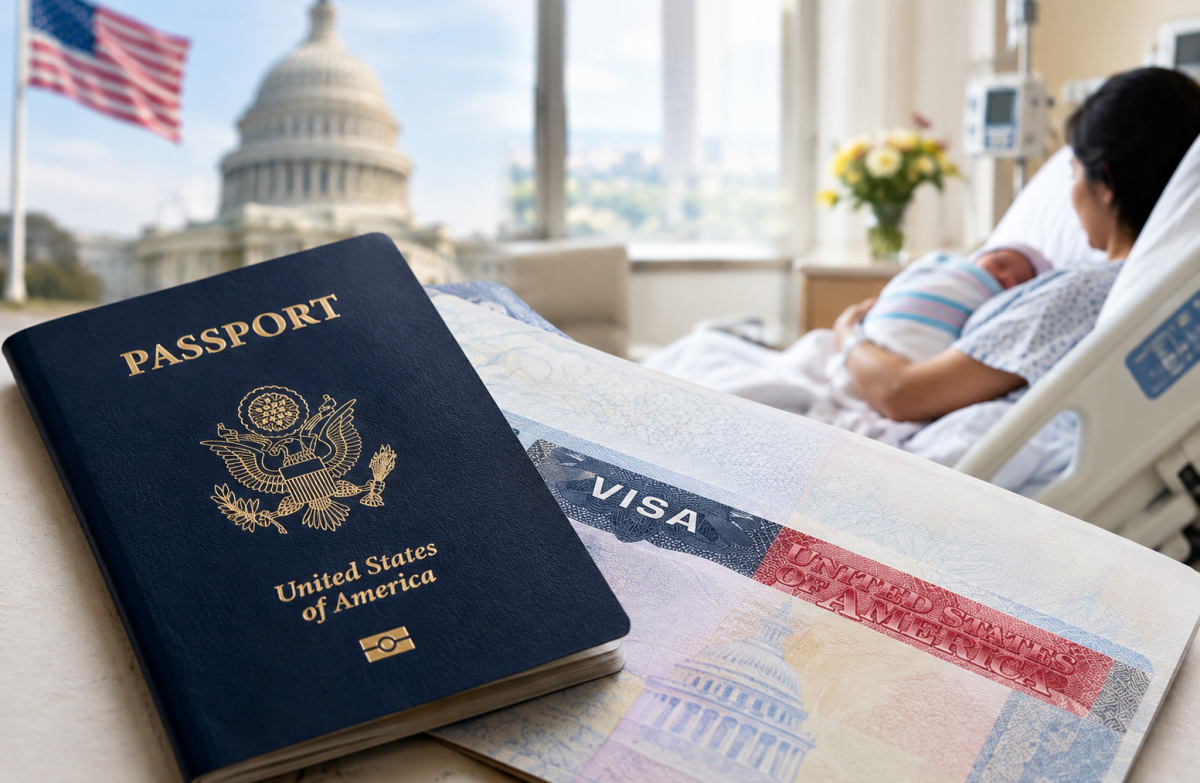
The United States has announced new visa restrictions targeting foreign nationals whom the administration determines are knowingly involved in or facilitating commercial “birth tourism,” including operators of birth tourism networks, visa intermediaries and foreign medical providers.
Secretary of State Marco Rubio announced the policy under Section 212(a)(3)(C) of the Immigration and Nationality Act, a provision that allows the secretary to make certain foreign-policy-based inadmissibility determinations.
The State Department said the new restrictions are aimed at people who knowingly engage in, have engaged in or facilitate commercial birth tourism to the United States.
The department specifically identified owners, operators and managers of commercial birth tourism networks, visa intermediaries accused of coaching applicants to commit fraud, foreign medical providers alleged to knowingly facilitate such travel and individuals involved in the alleged fraudulent use of Medicaid.
Rubio said commercial birth tourism networks have been used to arrange travel and childbirth in the United States for foreign nationals seeking U.S. citizenship for their children. He said the new restrictions are intended to target individuals who profit from or facilitate what the administration characterizes as abuse of the U.S. immigration and visa system.
The policy does not establish a blanket prohibition on pregnant foreign nationals traveling to the United States. Instead, it focuses on individuals whom the administration determines have knowingly participated in or facilitated commercial birth tourism.
The State Department already states that birth tourism is not a permissible purpose for a visitor visa when the primary purpose of the trip is to give birth in the United States to obtain U.S. citizenship for the child.
The department has maintained this position since 2020, when it amended its B-visa regulations to address birth tourism. Under the regulation, a consular officer may deny a B-visa application when there is reason to believe the applicant's primary purpose is giving birth in the United States to obtain citizenship for the child.
Section 212(a)(3)(C), which the latest policy invokes, concerns foreign-policy grounds for visa ineligibility. The State Department's visa-law guidance describes Section 212(a) as covering categories of foreign nationals who may be ineligible for visas or admission to the United States.
The latest action follows a broader expansion of visa screening and enforcement by the Trump administration.
The State Department announced in September that beginning October 1 it would expand online-presence reviews to additional nonimmigrant visa categories, including foreign media representatives and USMCA professionals and their dependents. The department said applicants in those categories would be required to make their social-media profiles public or open for the screening process.
For Indian travelers, the new policy does not establish a nationality-specific restriction. Indian applicants remain subject to the same U.S. visitor-visa rules governing the stated and actual purpose of travel.
The distinction is important because pregnancy itself does not automatically make a person ineligible for a visitor visa. The State Department's rule focuses specifically on travel whose primary purpose is giving birth in the United States to obtain citizenship for a child.
Visitor visas can be used for several legitimate purposes, including tourism, visiting family and friends and qualifying medical treatment. However, birth tourism is specifically excluded when obtaining U.S. citizenship for the child is the primary purpose of the trip.
The new restrictions therefore primarily affect people and organizations whom U.S. authorities identify as facilitating commercial birth-tourism arrangements, rather than creating a general restriction on pregnant travelers or Indian citizens.
The announcement also comes amid continuing legal and policy debates surrounding birthright citizenship and the Trump administration's immigration measures. The new visa restrictions themselves concern visa issuance and inadmissibility and do not, by themselves, amend the constitutional text governing citizenship.
The State Department said the policy is intended to disrupt commercial networks that profit from birth tourism, particularly where officials identify alleged fraud or other violations of U.S. immigration rules.
The administration's broader visa-enforcement effort is also placing greater emphasis on applicants demonstrating eligibility for the visa category requested and an intention to comply with the conditions of admission.
For prospective travelers, the key issue remains the purpose of the trip and whether the applicant accurately represents that purpose during the visa process. The State Department continues to list birth tourism as an impermissible basis for obtaining a visitor visa.
The latest policy adds another layer to the administration's efforts to target organizations and individuals involved in commercial birth-tourism arrangements while leaving ordinary tourism and qualifying medical travel subject to existing visa rules.
The United States has announced new visa restrictions targeting foreign nationals whom the administration determines are knowingly involved in or facilitating commercial “birth tourism,” including operators of birth tourism networks, visa intermediaries and foreign medical providers.
Secretary of State Marco Rubio announced the policy under Section 212(a)(3)(C) of the Immigration and Nationality Act, a provision that allows the secretary to make certain foreign-policy-based inadmissibility determinations.
The State Department said the new restrictions are aimed at people who knowingly engage in, have engaged in or facilitate commercial birth tourism to the United States.
The department specifically identified owners, operators and managers of commercial birth tourism networks, visa intermediaries accused of coaching applicants to commit fraud, foreign medical providers alleged to knowingly facilitate such travel and individuals involved in the alleged fraudulent use of Medicaid.
Rubio said commercial birth tourism networks have been used to arrange travel and childbirth in the United States for foreign nationals seeking U.S. citizenship for their children. He said the new restrictions are intended to target individuals who profit from or facilitate what the administration characterizes as abuse of the U.S. immigration and visa system.
The policy does not establish a blanket prohibition on pregnant foreign nationals traveling to the United States. Instead, it focuses on individuals whom the administration determines have knowingly participated in or facilitated commercial birth tourism.
The State Department already states that birth tourism is not a permissible purpose for a visitor visa when the primary purpose of the trip is to give birth in the United States to obtain U.S. citizenship for the child.
The department has maintained this position since 2020, when it amended its B-visa regulations to address birth tourism. Under the regulation, a consular officer may deny a B-visa application when there is reason to believe the applicant's primary purpose is giving birth in the United States to obtain citizenship for the child.
Section 212(a)(3)(C), which the latest policy invokes, concerns foreign-policy grounds for visa ineligibility. The State Department's visa-law guidance describes Section 212(a) as covering categories of foreign nationals who may be ineligible for visas or admission to the United States.
The latest action follows a broader expansion of visa screening and enforcement by the Trump administration.
The State Department announced in September that beginning October 1 it would expand online-presence reviews to additional nonimmigrant visa categories, including foreign media representatives and USMCA professionals and their dependents. The department said applicants in those categories would be required to make their social-media profiles public or open for the screening process.
For Indian travelers, the new policy does not establish a nationality-specific restriction. Indian applicants remain subject to the same U.S. visitor-visa rules governing the stated and actual purpose of travel.
The distinction is important because pregnancy itself does not automatically make a person ineligible for a visitor visa. The State Department's rule focuses specifically on travel whose primary purpose is giving birth in the United States to obtain citizenship for a child.
Visitor visas can be used for several legitimate purposes, including tourism, visiting family and friends and qualifying medical treatment. However, birth tourism is specifically excluded when obtaining U.S. citizenship for the child is the primary purpose of the trip.
The new restrictions therefore primarily affect people and organizations whom U.S. authorities identify as facilitating commercial birth-tourism arrangements, rather than creating a general restriction on pregnant travelers or Indian citizens.
The announcement also comes amid continuing legal and policy debates surrounding birthright citizenship and the Trump administration's immigration measures. The new visa restrictions themselves concern visa issuance and inadmissibility and do not, by themselves, amend the constitutional text governing citizenship.
The State Department said the policy is intended to disrupt commercial networks that profit from birth tourism, particularly where officials identify alleged fraud or other violations of U.S. immigration rules.
The administration's broader visa-enforcement effort is also placing greater emphasis on applicants demonstrating eligibility for the visa category requested and an intention to comply with the conditions of admission.
For prospective travelers, the key issue remains the purpose of the trip and whether the applicant accurately represents that purpose during the visa process. The State Department continues to list birth tourism as an impermissible basis for obtaining a visitor visa.
The latest policy adds another layer to the administration's efforts to target organizations and individuals involved in commercial birth-tourism arrangements while leaving ordinary tourism and qualifying medical travel subject to existing visa rules.
Tags
news
Comments (0)
Login to post comments
No comments yet
Be the first to share your thoughts about this post.