News
General
4 views
Six Indian American students named 2026 Davidson Fellows
Sep 21, 2026
📍 Phliadelphia,PA, USA
### Six Indian American Students Earn 2026 Davidson Fellows Scholarships for Research and Innovation
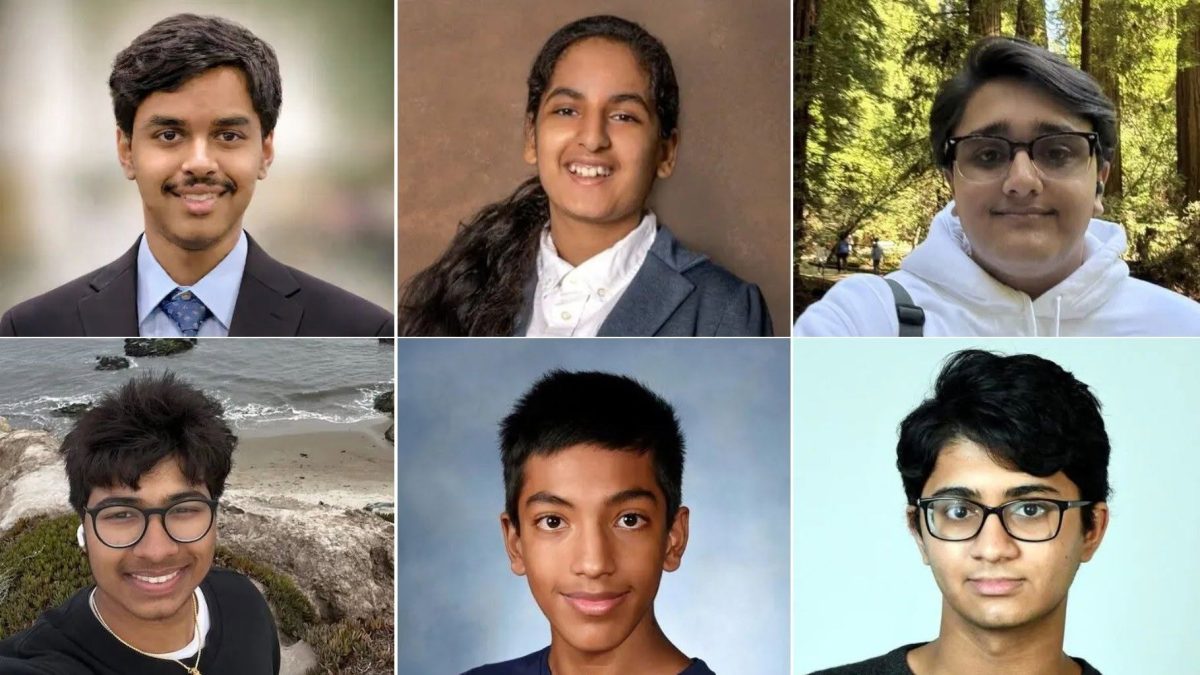
Six Indian American students have been named recipients of the 2026 Davidson Fellows Scholarship, receiving awards ranging from $25,000 to $100,000 for research projects tackling challenges in aviation, agriculture, astronomy, nuclear energy, public health and drug discovery.
The Davidson Institute awards scholarships to students aged 18 and younger who have completed significant work in areas including science, technology, mathematics, literature, music and philosophy. This year’s Indian American recipients include Aditya Sengupta, Tanishka Aglave, Hitaishi Chillara, Praadhyumn Indaana, Rajarshi Mandal and Pavan Subramani.
Sengupta, 18, of Bellevue, Washington, received the program’s highest award, a $100,000 Davidson Fellow Laureate scholarship. His project focuses on improving the prediction of clear-air turbulence, a potentially dangerous aviation phenomenon that can occur without the visible weather conditions typically associated with turbulent flights.
After experiencing unexpected turbulence himself, Sengupta began examining why clear-air turbulence remains difficult to forecast. His research led to ForeCAT, a machine-learning system that combines atmospheric physics with computational methods to estimate both the probability and intensity of turbulence.
According to his project results, the system produced substantial improvements compared with existing forecasting techniques. Sengupta has also been active in robotics and STEM outreach. His VEX Robotics team won first place nationally and finished second at the World Championship, while his research has received recognition at major science competitions. He plans to study computing and the sciences in college.
Tanishka Aglave, 17, of Valrico, Florida, received a $50,000 scholarship for research inspired by her family’s connection to citrus farming. She witnessed the impact of citrus greening disease on Florida’s citrus trees and began searching for a treatment that could be both effective and environmentally responsible.
Her project combines a bactericide made from curry leaf extract with localized heat treatment and computer vision. The technology is designed to help plants absorb treatment more effectively while allowing growers to evaluate disease severity through photographs of leaves.
Aglave spent more than 300 hours developing and refining the system. After early trunk-injection devices caused leakage and damage to young trees, she created and tested 3D-printed prototypes that eventually led to a smaller infusion system. Her research has also received recognition at the Regeneron International Science and Engineering Fair and has been published in the journal *Plant Disease*.
Hitaishi Chillara, 17, of Leander, Texas, received another $50,000 award for research exploring the relationship between galaxies and the supermassive black holes at their centers. His work combines astronomical observations, cosmological simulations and machine learning.
Chillara developed a computational framework to investigate whether galaxy colors and brightness can help scientists estimate the masses of central black holes. The approach could also provide new ways to analyze the enormous volumes of astronomical imagery expected from major sky surveys.
His interest in artificial intelligence began with curiosity about how a toy robotic dog maintained its balance. That led him to explore robotics, inverse kinematics and machine learning before turning his attention toward astronomy. He plans to pursue astrophysics and electrical engineering while continuing to explore connections between AI, astronomy and robotics.
Praadhyumn Indaana, 17, of Montvale, New Jersey, also received a $50,000 scholarship for work focused on nuclear energy safety. The Stanford Online High School student developed a physics-guided neural network designed to improve predictions of critical heat flux, a threshold at which heat transfer in nuclear reactor systems can deteriorate rapidly.
Indaana trained his model using data from more than 10,000 experiments during an eight-month independent research project. His reported results reduced average prediction error to 5.5 percent, compared with a 63 percent baseline associated with conventional physics-based formulas.
His academic interests include materials science, quantum physics, computing and nuclear fusion. He has also been recognized as a top-20 participant in the U.S. Physics Olympiad and achieved Gold level in the USA Computing Olympiad. He plans to study physics.
Rajarshi Mandal, 16, of Lexington, Massachusetts, received a $50,000 scholarship for developing a mathematical model aimed at improving the distribution of insecticide-treated mosquito nets used to prevent malaria.
Rather than relying primarily on population size when allocating mosquito nets, Mandal’s model considers factors such as insecticide resistance, climate-related changes in malaria transmission and the gradual deterioration of nets. According to information accompanying his fellowship, simulations showed that the approach could prevent twice as many infections while using the same number of nets.
Mandal has pursued advanced mathematics and computing outside the standard high school curriculum and is particularly interested in applying quantitative methods to health and biological problems. He is also an accomplished pianist who has performed at Carnegie Hall and holds a black belt in karate.
Pavan Subramani, 17, of Morgantown, West Virginia, received a $25,000 scholarship for research aimed at accelerating the search for potential drug candidates. His interest in drug discovery began after he encountered research involving a promising treatment for an inflammatory condition that failed during clinical trials.
Subramani taught himself Python and began using computational methods to explore why some potential medicines succeed in laboratory research but fail later. His project focuses on the Receptor for Advanced Glycation End products, or RAGE, a protein associated with several inflammatory diseases.
His system combines generative diffusion models with molecular dynamics simulations to screen potential compounds. Using deep-learning techniques, the framework examined a database containing 883 million compounds and identified small molecules predicted to have promising RAGE-binding characteristics and safety profiles.
The project earned Subramani a third-place Grand Award in chemistry at the Regeneron International Science and Engineering Fair. He plans to pursue studies in chemistry or applied physics, with interests in computational chemistry and biophysics.
Outside the laboratory, Subramani founded The Substance Safety Project, a nonprofit focused on substance-abuse education and advocacy. The organization has raised more than $10,000, distributed hundreds of drug-disposal packets and conducted educational programs reaching more than 1,500 people.
The Davidson Institute established its Fellows Scholarship to recognize young people who have completed significant research or creative work with potential broader impact. The program has awarded more than $10 million in scholarships since its creation.
Together, the six Indian American students represent a wide range of research interests, using artificial intelligence, mathematics, physics, biology and computational science to address problems spanning aviation safety, agriculture, astronomy, nuclear technology, infectious disease and medicine.
Six Indian American students have been named recipients of the 2026 Davidson Fellows Scholarship, receiving awards ranging from $25,000 to $100,000 for research projects tackling challenges in aviation, agriculture, astronomy, nuclear energy, public health and drug discovery.
The Davidson Institute awards scholarships to students aged 18 and younger who have completed significant work in areas including science, technology, mathematics, literature, music and philosophy. This year’s Indian American recipients include Aditya Sengupta, Tanishka Aglave, Hitaishi Chillara, Praadhyumn Indaana, Rajarshi Mandal and Pavan Subramani.
Sengupta, 18, of Bellevue, Washington, received the program’s highest award, a $100,000 Davidson Fellow Laureate scholarship. His project focuses on improving the prediction of clear-air turbulence, a potentially dangerous aviation phenomenon that can occur without the visible weather conditions typically associated with turbulent flights.
After experiencing unexpected turbulence himself, Sengupta began examining why clear-air turbulence remains difficult to forecast. His research led to ForeCAT, a machine-learning system that combines atmospheric physics with computational methods to estimate both the probability and intensity of turbulence.
According to his project results, the system produced substantial improvements compared with existing forecasting techniques. Sengupta has also been active in robotics and STEM outreach. His VEX Robotics team won first place nationally and finished second at the World Championship, while his research has received recognition at major science competitions. He plans to study computing and the sciences in college.
Tanishka Aglave, 17, of Valrico, Florida, received a $50,000 scholarship for research inspired by her family’s connection to citrus farming. She witnessed the impact of citrus greening disease on Florida’s citrus trees and began searching for a treatment that could be both effective and environmentally responsible.
Her project combines a bactericide made from curry leaf extract with localized heat treatment and computer vision. The technology is designed to help plants absorb treatment more effectively while allowing growers to evaluate disease severity through photographs of leaves.
Aglave spent more than 300 hours developing and refining the system. After early trunk-injection devices caused leakage and damage to young trees, she created and tested 3D-printed prototypes that eventually led to a smaller infusion system. Her research has also received recognition at the Regeneron International Science and Engineering Fair and has been published in the journal *Plant Disease*.
Hitaishi Chillara, 17, of Leander, Texas, received another $50,000 award for research exploring the relationship between galaxies and the supermassive black holes at their centers. His work combines astronomical observations, cosmological simulations and machine learning.
Chillara developed a computational framework to investigate whether galaxy colors and brightness can help scientists estimate the masses of central black holes. The approach could also provide new ways to analyze the enormous volumes of astronomical imagery expected from major sky surveys.
His interest in artificial intelligence began with curiosity about how a toy robotic dog maintained its balance. That led him to explore robotics, inverse kinematics and machine learning before turning his attention toward astronomy. He plans to pursue astrophysics and electrical engineering while continuing to explore connections between AI, astronomy and robotics.
Praadhyumn Indaana, 17, of Montvale, New Jersey, also received a $50,000 scholarship for work focused on nuclear energy safety. The Stanford Online High School student developed a physics-guided neural network designed to improve predictions of critical heat flux, a threshold at which heat transfer in nuclear reactor systems can deteriorate rapidly.
Indaana trained his model using data from more than 10,000 experiments during an eight-month independent research project. His reported results reduced average prediction error to 5.5 percent, compared with a 63 percent baseline associated with conventional physics-based formulas.
His academic interests include materials science, quantum physics, computing and nuclear fusion. He has also been recognized as a top-20 participant in the U.S. Physics Olympiad and achieved Gold level in the USA Computing Olympiad. He plans to study physics.
Rajarshi Mandal, 16, of Lexington, Massachusetts, received a $50,000 scholarship for developing a mathematical model aimed at improving the distribution of insecticide-treated mosquito nets used to prevent malaria.
Rather than relying primarily on population size when allocating mosquito nets, Mandal’s model considers factors such as insecticide resistance, climate-related changes in malaria transmission and the gradual deterioration of nets. According to information accompanying his fellowship, simulations showed that the approach could prevent twice as many infections while using the same number of nets.
Mandal has pursued advanced mathematics and computing outside the standard high school curriculum and is particularly interested in applying quantitative methods to health and biological problems. He is also an accomplished pianist who has performed at Carnegie Hall and holds a black belt in karate.
Pavan Subramani, 17, of Morgantown, West Virginia, received a $25,000 scholarship for research aimed at accelerating the search for potential drug candidates. His interest in drug discovery began after he encountered research involving a promising treatment for an inflammatory condition that failed during clinical trials.
Subramani taught himself Python and began using computational methods to explore why some potential medicines succeed in laboratory research but fail later. His project focuses on the Receptor for Advanced Glycation End products, or RAGE, a protein associated with several inflammatory diseases.
His system combines generative diffusion models with molecular dynamics simulations to screen potential compounds. Using deep-learning techniques, the framework examined a database containing 883 million compounds and identified small molecules predicted to have promising RAGE-binding characteristics and safety profiles.
The project earned Subramani a third-place Grand Award in chemistry at the Regeneron International Science and Engineering Fair. He plans to pursue studies in chemistry or applied physics, with interests in computational chemistry and biophysics.
Outside the laboratory, Subramani founded The Substance Safety Project, a nonprofit focused on substance-abuse education and advocacy. The organization has raised more than $10,000, distributed hundreds of drug-disposal packets and conducted educational programs reaching more than 1,500 people.
The Davidson Institute established its Fellows Scholarship to recognize young people who have completed significant research or creative work with potential broader impact. The program has awarded more than $10 million in scholarships since its creation.
Together, the six Indian American students represent a wide range of research interests, using artificial intelligence, mathematics, physics, biology and computational science to address problems spanning aviation safety, agriculture, astronomy, nuclear technology, infectious disease and medicine.
Tags
news
Comments (0)
Login to post comments
No comments yet
Be the first to share your thoughts about this post.