News
General
15 views
Artificial or real, intelligence belongs to humans
Sep 18, 2026
📍 Phliadelphia,PA, USA
### AI May Multiply Human Intelligence, But Its Direction Still Depends on People
Artificial intelligence is rapidly expanding what people can accomplish, from processing enormous amounts of information to writing software and analyzing complex problems, but the goals and decisions behind those capabilities remain fundamentally human.
The technology offers extraordinary memory, processing speed and accuracy, yet qualities such as purpose, originality, judgment, ambition and responsibility continue to depend on people.
For entrepreneurs who have spent decades watching technology reshape business, the speed of AI’s development has been both impressive and unsettling.
AI can be used for productive work, but the same capabilities can also be exploited for fraud, cybercrime, misinformation and other harmful activities.
That dual nature is not unique to artificial intelligence. Earlier technologies also expanded humanity’s ability to create as well as its ability to cause harm.
The challenge for businesses and governments is therefore increasingly becoming how to manage a powerful new capability while continuing to benefit from its productive uses.
One way to understand that challenge is to compare AI with a highly capable workforce.
Imagine an entrepreneur suddenly gaining access to dozens of digital assistants capable of researching information, writing documents, programming, analyzing data, preparing presentations, translating languages and responding to customers at speeds beyond a conventional workforce.
The obvious business response would be to find productive ways to use those capabilities.
But simply giving powerful tools unlimited access to a company would create new risks.
Human employees can make mistakes, mishandle confidential information, misunderstand instructions or make unauthorized decisions, which is why businesses have developed management systems around them.
Companies use permissions, audits, supervision, training, accounting controls and standard operating procedures to manage those risks.
AI systems increasingly require similar oversight because their speed and scale can amplify both useful decisions and mistakes.
Businesses therefore need to verify important outputs, control access to sensitive information and maintain human responsibility for consequential decisions.
In that sense, AI does not necessarily eliminate management. It can make effective management more important.
The same question extends beyond individual companies to countries competing to develop and deploy advanced AI.
While governments consider safety measures, other countries and organizations are continuing to invest in the technology.
The United States is consequently facing a policy challenge that involves balancing innovation, national security, economic competitiveness, environmental concerns and public safety.
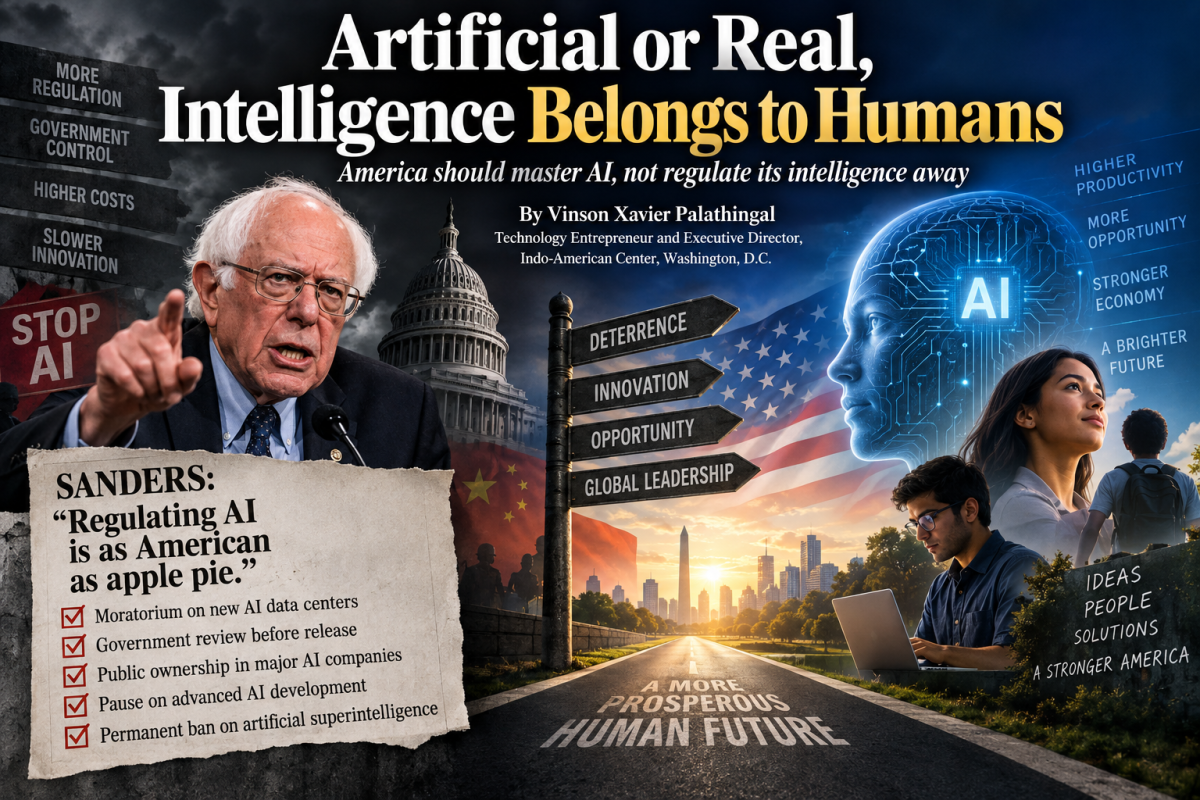
### Sanders pushes for stronger AI restrictions
Sen. Bernie Sanders has emerged as one of the most prominent lawmakers calling for stronger federal restrictions on advanced AI.
In March, Sanders and Rep. Alexandria Ocasio-Cortez announced legislation seeking a federal moratorium on new AI data centers until safeguards addressing issues including electricity costs, environmental effects, worker impacts and AI safety are established.
In September, Sanders and Rep. Greg Casar announced legislation that would permanently prohibit the development and deployment of artificial superintelligence while temporarily pausing advanced AI development until a federal regulatory framework is established.
Sanders has also proposed creating a federal agency to oversee advanced AI and has called for international cooperation to prevent the development of systems that could operate beyond human control.
His position reflects concerns about employment, environ
Artificial intelligence is rapidly expanding what people can accomplish, from processing enormous amounts of information to writing software and analyzing complex problems, but the goals and decisions behind those capabilities remain fundamentally human.
The technology offers extraordinary memory, processing speed and accuracy, yet qualities such as purpose, originality, judgment, ambition and responsibility continue to depend on people.
For entrepreneurs who have spent decades watching technology reshape business, the speed of AI’s development has been both impressive and unsettling.
AI can be used for productive work, but the same capabilities can also be exploited for fraud, cybercrime, misinformation and other harmful activities.
That dual nature is not unique to artificial intelligence. Earlier technologies also expanded humanity’s ability to create as well as its ability to cause harm.
The challenge for businesses and governments is therefore increasingly becoming how to manage a powerful new capability while continuing to benefit from its productive uses.
One way to understand that challenge is to compare AI with a highly capable workforce.
Imagine an entrepreneur suddenly gaining access to dozens of digital assistants capable of researching information, writing documents, programming, analyzing data, preparing presentations, translating languages and responding to customers at speeds beyond a conventional workforce.
The obvious business response would be to find productive ways to use those capabilities.
But simply giving powerful tools unlimited access to a company would create new risks.
Human employees can make mistakes, mishandle confidential information, misunderstand instructions or make unauthorized decisions, which is why businesses have developed management systems around them.
Companies use permissions, audits, supervision, training, accounting controls and standard operating procedures to manage those risks.
AI systems increasingly require similar oversight because their speed and scale can amplify both useful decisions and mistakes.
Businesses therefore need to verify important outputs, control access to sensitive information and maintain human responsibility for consequential decisions.
In that sense, AI does not necessarily eliminate management. It can make effective management more important.
The same question extends beyond individual companies to countries competing to develop and deploy advanced AI.
While governments consider safety measures, other countries and organizations are continuing to invest in the technology.
The United States is consequently facing a policy challenge that involves balancing innovation, national security, economic competitiveness, environmental concerns and public safety.
### Sanders pushes for stronger AI restrictions
Sen. Bernie Sanders has emerged as one of the most prominent lawmakers calling for stronger federal restrictions on advanced AI.
In March, Sanders and Rep. Alexandria Ocasio-Cortez announced legislation seeking a federal moratorium on new AI data centers until safeguards addressing issues including electricity costs, environmental effects, worker impacts and AI safety are established.
In September, Sanders and Rep. Greg Casar announced legislation that would permanently prohibit the development and deployment of artificial superintelligence while temporarily pausing advanced AI development until a federal regulatory framework is established.
Sanders has also proposed creating a federal agency to oversee advanced AI and has called for international cooperation to prevent the development of systems that could operate beyond human control.
His position reflects concerns about employment, environ
Tags
news
Comments (0)
Login to post comments
No comments yet
Be the first to share your thoughts about this post.