News
Entertainment
25 views
Our dollar, your problem
Sep 17, 2026
📍 Phliadelphia,PA, USA
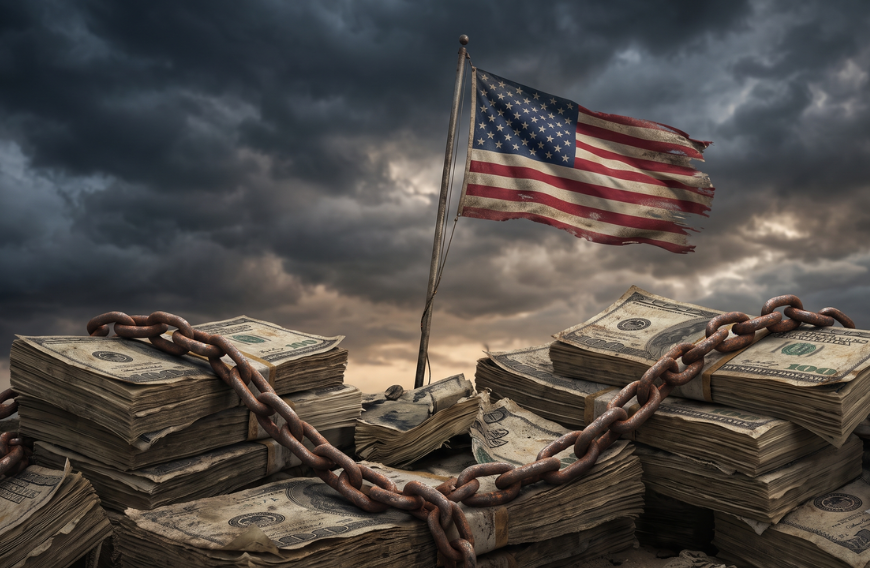
# The Dollar, Debt and the Price of America’s Cheap-Money Era
For much of my adult life, interest rates have been something I watched almost as closely as the weather. I entered college in the early 1990s and began working in 1996, eventually experiencing an America where mortgages and credit could be secured at rates close to 2 percent. Money often felt remarkably inexpensive. My father experienced a very different reality. When he purchased our first home in the 1980s, his mortgage carried an interest rate of about 16 percent, turning homeownership into a financial burden that demanded constant attention.
The contrast between those two experiences reflects more than changing economic conditions. It is part of the much larger story of the U.S. dollar, its position in the global financial system and the trust that has allowed America to borrow at a scale few other nations could sustain.
Reserve-currency status has never been permanent. Before the dollar dominated global finance, other currencies occupied that position. Italian city-states such as Genoa benefited from their influence over Mediterranean commerce, while the Dutch guilder became prominent during the 17th century as Amsterdam emerged as a major center of trade and finance. The British pound later became the leading international currency as Britain expanded its industrial, commercial and imperial influence.
The dollar's rise accelerated after World War I, when the United States emerged as the world's leading industrial power and a major international creditor. The transformation became institutionalized at Bretton Woods in 1944, when representatives from 44 countries created a monetary system centered on the U.S. dollar, with the dollar linked to gold.
For several decades, that arrangement helped reinforce America's economic position. But growing government spending, including the costs associated with the Vietnam War and expanding domestic programs, placed increasing pressure on the system. As foreign governments sought to exchange their dollars for American gold, the arrangement became increasingly difficult to maintain.
In August 1971, President Richard Nixon ended the dollar's convertibility into gold, an event widely known as the Nixon Shock. The change effectively transformed the international monetary system and contributed to a turbulent decade marked by oil shocks, inflation and stagflation.
That period shaped the economic environment in which my father purchased his home. By the early 1980s, Federal Reserve Chairman Paul Volcker had pushed interest rates sharply higher in an effort to bring inflation under control. Mortgage rates followed, reaching levels that would appear extraordinary to today's borrowers.
America's economic dominance also began facing new challenges. Japan emerged as a formidable industrial competitor during the 1980s, particularly in automobiles, electronics and manufacturing. The 1985 Plaza Accord sought to address currency imbalances by encouraging a weaker dollar against major currencies, including the Japanese yen. Japan subsequently experienced an enormous asset boom, followed by a collapse that ushered in decades of economic stagnation.
Europe offered another potential challenger with the creation of the euro. But the eurozone debt crisis between 2010 and 2012 exposed structural weaknesses within a monetary union that lacked a fully unified fiscal authority. Greece and several other European economies faced severe financial pressure, raising broader questions about the euro's long-term stability.
Today, China represents a different kind of challenge. Its enormous manufacturing base, technological ambitions and expanding international financial relationships have created a long-term competitor to the dollar-centered system.
At the same time, America's own fiscal position has become increasingly difficult to ignore. In August 2026, total U.S. federal debt crossed the $40 trillion threshold, highlighting how rapidly the government's obligations have expanded. The scale of the debt has also made the cost of financing it an increasingly important issue for future budgets.
Interest payments are becoming one of the government's largest expenses. Net federal interest costs exceeded $1 trillion in fiscal 2025, while projections indicate that annual interest expenses could rise substantially over the coming decade. Unlike a conventional household mortgage, the federal government's debt does not have a simple final payment date; existing obligations are continually refinanced as new borrowing occurs.
Yet the United States has an advantage that most heavily indebted countries do not possess: the world continues to demand dollars. The currency remains the dominant component of global foreign-exchange reserves and is involved in the overwhelming majority of foreign-exchange transactions. The dollar also remains deeply embedded in international trade and global financial markets.
That demand provides Washington with an extraordinary financial advantage. Investors around the world continue to purchase U.S. Treasury securities because American financial markets remain among the deepest and most liquid in the world. The dollar's international role therefore gives the United States borrowing capacity that other countries cannot easily replicate.
But the dollar's dominance is not completely unchanged. Its share of global reserves has declined from levels above 70 percent around the beginning of the century. One reason is geopolitical risk. Governments that have watched Russia's reserves frozen and individuals and institutions excluded from dollar-based financial networks have increasingly recognized that dependence on the dollar can carry political as well as economic consequences.
Central-bank purchases of gold and efforts by China to conduct more international trade using the yuan reflect part of that broader diversification. These developments do not mean the dollar has been displaced, but they indicate that some countries are looking for alternatives to complete reliance on the American financial system.
For Americans who benefited from mortgages or credit lines at exceptionally low rates, the recent environment has been a reminder that cheap money was not necessarily normal. It was the product of a particular combination of monetary policy, global capital flows, low inflation and enormous international demand for dollar-denominated assets.
Mortgage rates have now moved far beyond the levels that became familiar during the ultra-low-rate era. For younger Americans attempting to purchase their first homes, the financial environment can therefore look much closer to their parents' experience than to the period that followed the 2008 financial crisis.
The strength of the dollar brings important benefits as well. Americans can purchase many imported goods at relatively favorable prices, while the country's financial position allows the federal government to borrow at rates that would be difficult for many other nations to obtain.
But there is a cost. Rising interest payments consume federal resources that could otherwise be directed toward infrastructure, defense, healthcare, social programs or other priorities. As the population ages, pressure on programs such as Social Security is also expected to increase, creating another challenge for future budgets.
The dollar is unlikely to disappear from its central role in global finance simply because America's debt has reached a historic level. The United States still possesses enormous financial-market depth, institutional
For much of my adult life, interest rates have been something I watched almost as closely as the weather. I entered college in the early 1990s and began working in 1996, eventually experiencing an America where mortgages and credit could be secured at rates close to 2 percent. Money often felt remarkably inexpensive. My father experienced a very different reality. When he purchased our first home in the 1980s, his mortgage carried an interest rate of about 16 percent, turning homeownership into a financial burden that demanded constant attention.
The contrast between those two experiences reflects more than changing economic conditions. It is part of the much larger story of the U.S. dollar, its position in the global financial system and the trust that has allowed America to borrow at a scale few other nations could sustain.
Reserve-currency status has never been permanent. Before the dollar dominated global finance, other currencies occupied that position. Italian city-states such as Genoa benefited from their influence over Mediterranean commerce, while the Dutch guilder became prominent during the 17th century as Amsterdam emerged as a major center of trade and finance. The British pound later became the leading international currency as Britain expanded its industrial, commercial and imperial influence.
The dollar's rise accelerated after World War I, when the United States emerged as the world's leading industrial power and a major international creditor. The transformation became institutionalized at Bretton Woods in 1944, when representatives from 44 countries created a monetary system centered on the U.S. dollar, with the dollar linked to gold.
For several decades, that arrangement helped reinforce America's economic position. But growing government spending, including the costs associated with the Vietnam War and expanding domestic programs, placed increasing pressure on the system. As foreign governments sought to exchange their dollars for American gold, the arrangement became increasingly difficult to maintain.
In August 1971, President Richard Nixon ended the dollar's convertibility into gold, an event widely known as the Nixon Shock. The change effectively transformed the international monetary system and contributed to a turbulent decade marked by oil shocks, inflation and stagflation.
That period shaped the economic environment in which my father purchased his home. By the early 1980s, Federal Reserve Chairman Paul Volcker had pushed interest rates sharply higher in an effort to bring inflation under control. Mortgage rates followed, reaching levels that would appear extraordinary to today's borrowers.
America's economic dominance also began facing new challenges. Japan emerged as a formidable industrial competitor during the 1980s, particularly in automobiles, electronics and manufacturing. The 1985 Plaza Accord sought to address currency imbalances by encouraging a weaker dollar against major currencies, including the Japanese yen. Japan subsequently experienced an enormous asset boom, followed by a collapse that ushered in decades of economic stagnation.
Europe offered another potential challenger with the creation of the euro. But the eurozone debt crisis between 2010 and 2012 exposed structural weaknesses within a monetary union that lacked a fully unified fiscal authority. Greece and several other European economies faced severe financial pressure, raising broader questions about the euro's long-term stability.
Today, China represents a different kind of challenge. Its enormous manufacturing base, technological ambitions and expanding international financial relationships have created a long-term competitor to the dollar-centered system.
At the same time, America's own fiscal position has become increasingly difficult to ignore. In August 2026, total U.S. federal debt crossed the $40 trillion threshold, highlighting how rapidly the government's obligations have expanded. The scale of the debt has also made the cost of financing it an increasingly important issue for future budgets.
Interest payments are becoming one of the government's largest expenses. Net federal interest costs exceeded $1 trillion in fiscal 2025, while projections indicate that annual interest expenses could rise substantially over the coming decade. Unlike a conventional household mortgage, the federal government's debt does not have a simple final payment date; existing obligations are continually refinanced as new borrowing occurs.
Yet the United States has an advantage that most heavily indebted countries do not possess: the world continues to demand dollars. The currency remains the dominant component of global foreign-exchange reserves and is involved in the overwhelming majority of foreign-exchange transactions. The dollar also remains deeply embedded in international trade and global financial markets.
That demand provides Washington with an extraordinary financial advantage. Investors around the world continue to purchase U.S. Treasury securities because American financial markets remain among the deepest and most liquid in the world. The dollar's international role therefore gives the United States borrowing capacity that other countries cannot easily replicate.
But the dollar's dominance is not completely unchanged. Its share of global reserves has declined from levels above 70 percent around the beginning of the century. One reason is geopolitical risk. Governments that have watched Russia's reserves frozen and individuals and institutions excluded from dollar-based financial networks have increasingly recognized that dependence on the dollar can carry political as well as economic consequences.
Central-bank purchases of gold and efforts by China to conduct more international trade using the yuan reflect part of that broader diversification. These developments do not mean the dollar has been displaced, but they indicate that some countries are looking for alternatives to complete reliance on the American financial system.
For Americans who benefited from mortgages or credit lines at exceptionally low rates, the recent environment has been a reminder that cheap money was not necessarily normal. It was the product of a particular combination of monetary policy, global capital flows, low inflation and enormous international demand for dollar-denominated assets.
Mortgage rates have now moved far beyond the levels that became familiar during the ultra-low-rate era. For younger Americans attempting to purchase their first homes, the financial environment can therefore look much closer to their parents' experience than to the period that followed the 2008 financial crisis.
The strength of the dollar brings important benefits as well. Americans can purchase many imported goods at relatively favorable prices, while the country's financial position allows the federal government to borrow at rates that would be difficult for many other nations to obtain.
But there is a cost. Rising interest payments consume federal resources that could otherwise be directed toward infrastructure, defense, healthcare, social programs or other priorities. As the population ages, pressure on programs such as Social Security is also expected to increase, creating another challenge for future budgets.
The dollar is unlikely to disappear from its central role in global finance simply because America's debt has reached a historic level. The United States still possesses enormous financial-market depth, institutional
Tags
news
Comments (0)
Login to post comments
No comments yet
Be the first to share your thoughts about this post.