News
General
13 views
North Texas’ Asian population is growing — and so is the backlash
Sep 17, 2026
📍 Phliadelphia,PA, USA
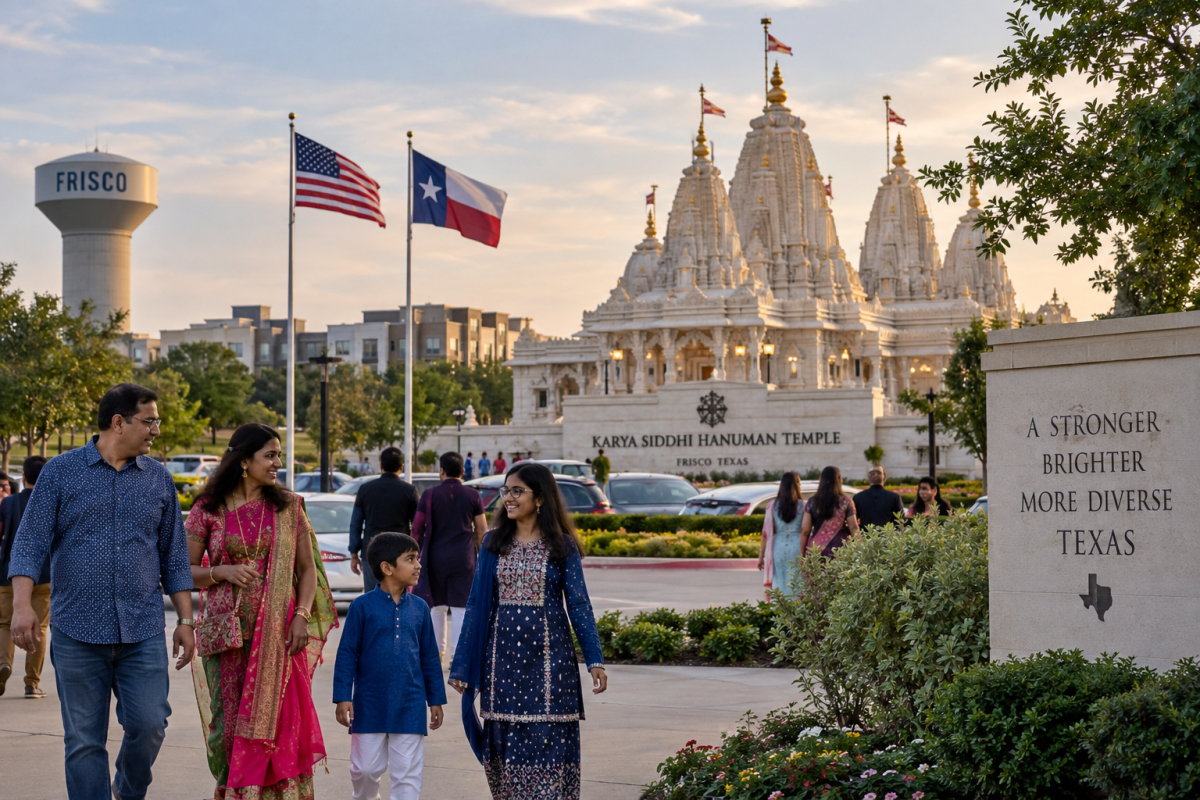
North Texas is experiencing a significant demographic transformation as Asian American communities continue to expand across the Dallas-Fort Worth region, with Indian Americans becoming an increasingly visible part of the area’s social, economic and cultural landscape.
The growth has been particularly noticeable in suburbs north of Dallas, including Frisco and Plano, where Indian American families have established businesses, cultural organizations, schools, restaurants, grocery stores and religious institutions.
The region’s changing demographics have also generated public debate over immigration, housing, development, religious institutions and the integration of newer communities into rapidly growing suburbs.
According to the North Central Texas Council of Governments, the region added more than 203,000 residents during 2025, bringing its population to nearly 9 million at the beginning of 2026. The population increase is contributing to broader changes in housing, transportation, infrastructure and public services.
Indian Americans are among the communities contributing to that growth, particularly in areas such as Collin County. Frisco has emerged as a major center of Indian American life, with the community becoming increasingly visible through businesses, cultural events and religious organizations.
One prominent example is the Karya Siddhi Hanuman Temple in Frisco, which serves as both a Hindu religious institution and a cultural center for the local community. The temple has become one of the most recognizable symbols of the area's growing Indian American population.
The visibility of Hindu temples and other cultural institutions has also become part of wider discussions about how quickly some North Texas communities are changing. Supporters view the institutions as a natural development of an established population, while some residents have raised questions about growth, land use, development and cultural change.
The debate has extended beyond the Indian American community. A proposed Muslim-led development known as The Meadow, formerly referred to as EPIC City, has also attracted public attention and controversy.
The proposed project near Josephine, northeast of Dallas, was envisioned as a large planned community featuring homes, a mosque, a faith-based school, apartments and commercial facilities. Supporters have described it as a community designed around an existing Muslim social and religious network.
Opponents have raised questions involving land use, transparency and whether a development centered around a particular religious community could contribute to segregation. Supporters have disputed those concerns and argued that some criticism is based on misconceptions about Muslim Americans.
The proposed development has also faced federal scrutiny, adding another dimension to the debate surrounding the project and its development plans.
Meanwhile, the broader demographic shift has increasingly entered political discussions in North Texas. In Frisco, debates surrounding immigration, H-1B visas and population growth have overlapped with conversations about the changing composition of the city.
A May 2026 report by The Texas Tribune documented tensions surrounding the growing Indian American population in Frisco, including criticism from some conservative voices over immigration and the H-1B visa program. The report also described responses from Indian American residents and community leaders who distinguished immigration-policy debates from criticism directed at people because of their ethnicity or nationality.
Frisco's growth illustrates how dramatically some North Texas suburbs have changed. The city, once considerably smaller and less diverse, has developed into a major population center with a substantial Indian American presence.
For many Indian American families, the region offers employment opportunities, schools, housing and established community networks. The availability of Indian grocery stores, restaurants, temples and cultural organizations has also made it easier for families to maintain connections to their heritage while building lives in the United States.
At the same time, rapid population growth has created broader challenges that extend beyond any single ethnic or religious community. Housing demand, traffic, infrastructure, land development and pressure on public services are among the issues confronting communities across the Dallas-Fort Worth area.
Some residents have connected these concerns with immigration and demographic change, while others have emphasized that development pressures affect the region as a whole and should be separated from questions about ethnicity or religion.
The political debate has also included discussions about the H-1B visa program, which has historically played an important role in bringing highly skilled workers, including many Indian professionals, to the United States.
The Texas Tribune reported that some Texas officials and conservative activists have called for tighter restrictions on immigration and H-1B visas, while Indian American residents and other community members have pushed back against rhetoric they view as targeting the broader Indian community.
These disagreements demonstrate how demographic change can become intertwined with national immigration debates and local concerns about growth. They also show the distinction between policy discussions about immigration and broader questions of cultural identity.
North Texas' transformation is not limited to Indian Americans or Muslims. Chinese, Vietnamese, Korean, Filipino and other Asian American communities have also expanded throughout the Dallas-Fort Worth region, contributing to the area's increasingly diverse population.
As these communities grow, their institutions are becoming a regular part of the region's suburban landscape. Businesses, schools, temples, mosques, cultural centers and community organizations are creating new networks while contributing to the economic and social life of North Texas.
For longtime residents, the speed of these changes can be striking, particularly in suburbs that have experienced rapid population growth within a relatively short period. For newer residents, the same transformation represents an opportunity to establish families, businesses and community institutions.
The discussions surrounding Frisco, Hindu temples and Muslim-led developments therefore reflect a broader question facing one of the country's fastest-growing metropolitan regions: how will established communities and newer populations adapt to continued growth?
With North Texas approaching 9 million residents and continuing to attract people from across the United States and around the world, demographic change is likely to remain an important part of the region's future.
The growth has been particularly noticeable in suburbs north of Dallas, including Frisco and Plano, where Indian American families have established businesses, cultural organizations, schools, restaurants, grocery stores and religious institutions.
The region’s changing demographics have also generated public debate over immigration, housing, development, religious institutions and the integration of newer communities into rapidly growing suburbs.
According to the North Central Texas Council of Governments, the region added more than 203,000 residents during 2025, bringing its population to nearly 9 million at the beginning of 2026. The population increase is contributing to broader changes in housing, transportation, infrastructure and public services.
Indian Americans are among the communities contributing to that growth, particularly in areas such as Collin County. Frisco has emerged as a major center of Indian American life, with the community becoming increasingly visible through businesses, cultural events and religious organizations.
One prominent example is the Karya Siddhi Hanuman Temple in Frisco, which serves as both a Hindu religious institution and a cultural center for the local community. The temple has become one of the most recognizable symbols of the area's growing Indian American population.
The visibility of Hindu temples and other cultural institutions has also become part of wider discussions about how quickly some North Texas communities are changing. Supporters view the institutions as a natural development of an established population, while some residents have raised questions about growth, land use, development and cultural change.
The debate has extended beyond the Indian American community. A proposed Muslim-led development known as The Meadow, formerly referred to as EPIC City, has also attracted public attention and controversy.
The proposed project near Josephine, northeast of Dallas, was envisioned as a large planned community featuring homes, a mosque, a faith-based school, apartments and commercial facilities. Supporters have described it as a community designed around an existing Muslim social and religious network.
Opponents have raised questions involving land use, transparency and whether a development centered around a particular religious community could contribute to segregation. Supporters have disputed those concerns and argued that some criticism is based on misconceptions about Muslim Americans.
The proposed development has also faced federal scrutiny, adding another dimension to the debate surrounding the project and its development plans.
Meanwhile, the broader demographic shift has increasingly entered political discussions in North Texas. In Frisco, debates surrounding immigration, H-1B visas and population growth have overlapped with conversations about the changing composition of the city.
A May 2026 report by The Texas Tribune documented tensions surrounding the growing Indian American population in Frisco, including criticism from some conservative voices over immigration and the H-1B visa program. The report also described responses from Indian American residents and community leaders who distinguished immigration-policy debates from criticism directed at people because of their ethnicity or nationality.
Frisco's growth illustrates how dramatically some North Texas suburbs have changed. The city, once considerably smaller and less diverse, has developed into a major population center with a substantial Indian American presence.
For many Indian American families, the region offers employment opportunities, schools, housing and established community networks. The availability of Indian grocery stores, restaurants, temples and cultural organizations has also made it easier for families to maintain connections to their heritage while building lives in the United States.
At the same time, rapid population growth has created broader challenges that extend beyond any single ethnic or religious community. Housing demand, traffic, infrastructure, land development and pressure on public services are among the issues confronting communities across the Dallas-Fort Worth area.
Some residents have connected these concerns with immigration and demographic change, while others have emphasized that development pressures affect the region as a whole and should be separated from questions about ethnicity or religion.
The political debate has also included discussions about the H-1B visa program, which has historically played an important role in bringing highly skilled workers, including many Indian professionals, to the United States.
The Texas Tribune reported that some Texas officials and conservative activists have called for tighter restrictions on immigration and H-1B visas, while Indian American residents and other community members have pushed back against rhetoric they view as targeting the broader Indian community.
These disagreements demonstrate how demographic change can become intertwined with national immigration debates and local concerns about growth. They also show the distinction between policy discussions about immigration and broader questions of cultural identity.
North Texas' transformation is not limited to Indian Americans or Muslims. Chinese, Vietnamese, Korean, Filipino and other Asian American communities have also expanded throughout the Dallas-Fort Worth region, contributing to the area's increasingly diverse population.
As these communities grow, their institutions are becoming a regular part of the region's suburban landscape. Businesses, schools, temples, mosques, cultural centers and community organizations are creating new networks while contributing to the economic and social life of North Texas.
For longtime residents, the speed of these changes can be striking, particularly in suburbs that have experienced rapid population growth within a relatively short period. For newer residents, the same transformation represents an opportunity to establish families, businesses and community institutions.
The discussions surrounding Frisco, Hindu temples and Muslim-led developments therefore reflect a broader question facing one of the country's fastest-growing metropolitan regions: how will established communities and newer populations adapt to continued growth?
With North Texas approaching 9 million residents and continuing to attract people from across the United States and around the world, demographic change is likely to remain an important part of the region's future.
Tags
news
Comments (0)
Login to post comments
No comments yet
Be the first to share your thoughts about this post.