News
General
15 views
Uber to cut 3,300 jobs in major restructuring
Sep 08, 2026
📍 Phliadelphia,PA, USA
### **Uber to Cut 3,300 Jobs as Company Reshapes Business for Robotaxi Future**
Uber Technologies is cutting approximately 3,300 jobs, or about 10% of its global workforce, in the company’s largest round of layoffs since the COVID-19 pandemic as it moves to simplify its operations and prepare for major changes in the transportation industry.
The layoffs were announced on September 2, 2026, with CEO Dara Khosrowshahi telling employees that years of rapid expansion had left Uber with a more complicated organizational structure. The restructuring will remove layers of management, consolidate teams and reduce administrative bureaucracy as the company seeks to operate more efficiently.
Uber had approximately 34,000 employees worldwide at the end of 2025, meaning the latest reduction will affect roughly one in every 10 workers. The company last announced a larger workforce reduction in May 2020, when the pandemic caused demand for transportation services to collapse and Uber eliminated around 6,700 positions.
Khosrowshahi said the restructuring is intended to create clearer responsibilities and allow the company to make decisions more quickly.
“A leaner organization will mean clearer ownership, faster decisions, and more time spent building rather than coordinating,” Khosrowshahi said in a message to employees, adding that the savings would be redirected toward growth, innovation and other strategic priorities.
As part of the restructuring, Uber plans to reduce by 20% the number of employees who sit seven or more management levels below the CEO. The company also plans to significantly reduce teams with only one or two direct reports and place some groups under fewer senior leaders.
Uber is simultaneously changing its workplace strategy. Fully remote positions will be limited to roughly 1% of the company's workforce, while most employees will continue working from the office at least three days a week.
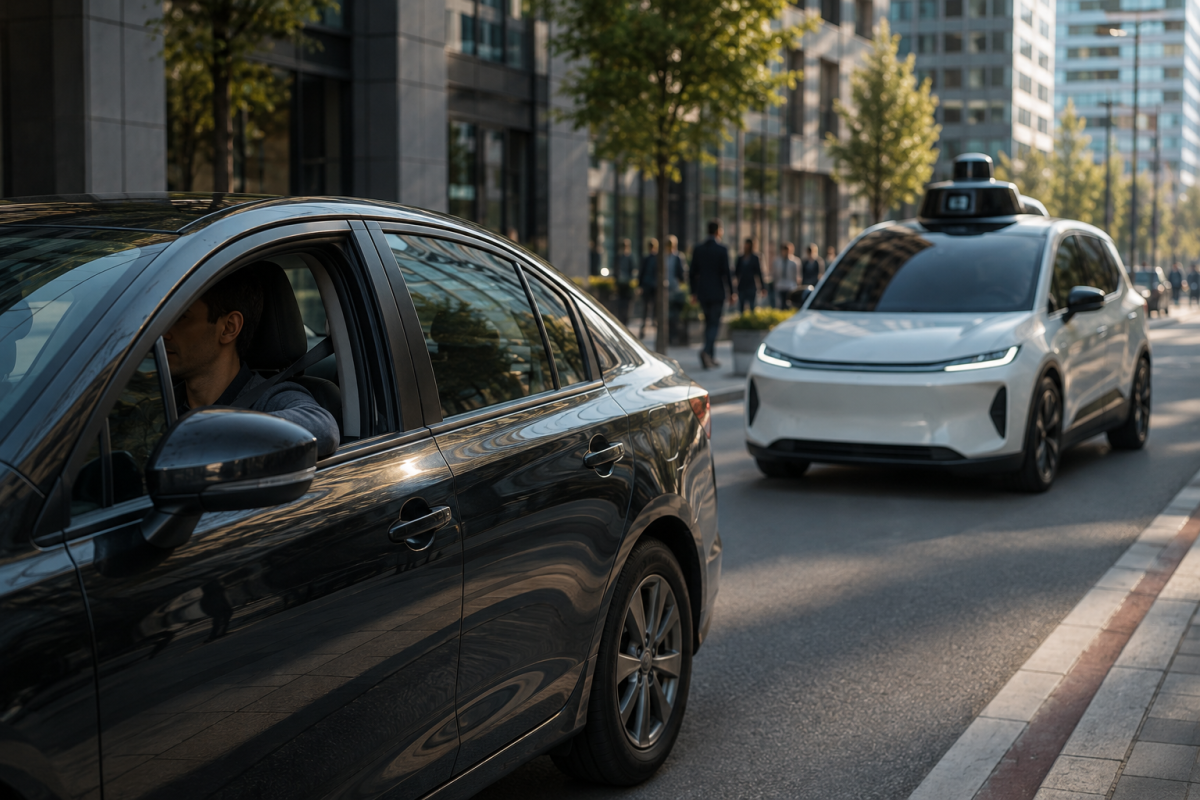
The restructuring comes at a critical point for Uber as autonomous vehicles increasingly become part of its long-term business strategy.
Waymo, one of the leading robotaxi companies in the United States, already operates autonomous vehicles through Uber's platform in Austin and Atlanta and is expanding into additional markets. Tesla and other companies are also working to develop competing autonomous transportation networks.
The rise of robotaxis could eventually challenge the traditional ride-hailing model, which depends heavily on connecting passengers with human drivers. As autonomous vehicles become more widely available, Uber's role could increasingly shift from managing a driver-based network to operating a broader marketplace for autonomous transportation.
Uber has indicated that it plans to invest more than $10 billion in robotaxi-related initiatives in the coming years. The company is also backing autonomous-driving companies as it seeks to establish a position in what could become a major segment of the transportation market.
That transition could require Uber to develop a different type of workforce.
Adam Ballantyne, an analyst at Uber shareholder Cambiar Investors, said the expansion of autonomous vehicles would require different capabilities from those needed to operate a network based primarily on human drivers.
Uber has not characterized the latest layoffs as an AI-driven workforce reduction. Khosrowshahi did not attribute the cuts directly to artificial intelligence, despite a broader trend among technology companies to reduce headcount while adopting AI tools to improve productivity.
However, Uber is increasing its spending on AI technology. Reports cited by Reuters indicated that employees had already used the company's entire 2026 AI budget during the first four months of the year.
The restructuring also comes amid competition in Uber's delivery business. Uber Eats continues to compete with companies such as DoorDash and Instacart, while Uber has pursued acquisitions to strengthen its position in the food and delivery market, including its $14.8 billion acquisition of Delivery Hero.
The company's financial performance has also faced pressure. Uber shares had declined nearly 8% during the year amid concerns about competition and the changing mobility landscape, although the stock gained almost 2% following news of the restructuring.
The job cuts mark an important transition for Uber as the company attempts to become leaner while redirecting resources toward autonomous transportation, technology and other growth opportunities.
For employees, the restructuring represents the largest workforce reduction Uber has undertaken since the pandemic. For the company, the cuts are part of a broader effort to simplify its organization and position itself for a transportation industry increasingly shaped by robotaxis and automation.
The success of that strategy will depend on whether Uber can reduce costs without weakening its core business while simultaneously building the technology and partnerships needed to compete in an increasingly autonomous mobility market.
Uber Technologies is cutting approximately 3,300 jobs, or about 10% of its global workforce, in the company’s largest round of layoffs since the COVID-19 pandemic as it moves to simplify its operations and prepare for major changes in the transportation industry.
The layoffs were announced on September 2, 2026, with CEO Dara Khosrowshahi telling employees that years of rapid expansion had left Uber with a more complicated organizational structure. The restructuring will remove layers of management, consolidate teams and reduce administrative bureaucracy as the company seeks to operate more efficiently.
Uber had approximately 34,000 employees worldwide at the end of 2025, meaning the latest reduction will affect roughly one in every 10 workers. The company last announced a larger workforce reduction in May 2020, when the pandemic caused demand for transportation services to collapse and Uber eliminated around 6,700 positions.
Khosrowshahi said the restructuring is intended to create clearer responsibilities and allow the company to make decisions more quickly.
“A leaner organization will mean clearer ownership, faster decisions, and more time spent building rather than coordinating,” Khosrowshahi said in a message to employees, adding that the savings would be redirected toward growth, innovation and other strategic priorities.
As part of the restructuring, Uber plans to reduce by 20% the number of employees who sit seven or more management levels below the CEO. The company also plans to significantly reduce teams with only one or two direct reports and place some groups under fewer senior leaders.
Uber is simultaneously changing its workplace strategy. Fully remote positions will be limited to roughly 1% of the company's workforce, while most employees will continue working from the office at least three days a week.
The restructuring comes at a critical point for Uber as autonomous vehicles increasingly become part of its long-term business strategy.
Waymo, one of the leading robotaxi companies in the United States, already operates autonomous vehicles through Uber's platform in Austin and Atlanta and is expanding into additional markets. Tesla and other companies are also working to develop competing autonomous transportation networks.
The rise of robotaxis could eventually challenge the traditional ride-hailing model, which depends heavily on connecting passengers with human drivers. As autonomous vehicles become more widely available, Uber's role could increasingly shift from managing a driver-based network to operating a broader marketplace for autonomous transportation.
Uber has indicated that it plans to invest more than $10 billion in robotaxi-related initiatives in the coming years. The company is also backing autonomous-driving companies as it seeks to establish a position in what could become a major segment of the transportation market.
That transition could require Uber to develop a different type of workforce.
Adam Ballantyne, an analyst at Uber shareholder Cambiar Investors, said the expansion of autonomous vehicles would require different capabilities from those needed to operate a network based primarily on human drivers.
Uber has not characterized the latest layoffs as an AI-driven workforce reduction. Khosrowshahi did not attribute the cuts directly to artificial intelligence, despite a broader trend among technology companies to reduce headcount while adopting AI tools to improve productivity.
However, Uber is increasing its spending on AI technology. Reports cited by Reuters indicated that employees had already used the company's entire 2026 AI budget during the first four months of the year.
The restructuring also comes amid competition in Uber's delivery business. Uber Eats continues to compete with companies such as DoorDash and Instacart, while Uber has pursued acquisitions to strengthen its position in the food and delivery market, including its $14.8 billion acquisition of Delivery Hero.
The company's financial performance has also faced pressure. Uber shares had declined nearly 8% during the year amid concerns about competition and the changing mobility landscape, although the stock gained almost 2% following news of the restructuring.
The job cuts mark an important transition for Uber as the company attempts to become leaner while redirecting resources toward autonomous transportation, technology and other growth opportunities.
For employees, the restructuring represents the largest workforce reduction Uber has undertaken since the pandemic. For the company, the cuts are part of a broader effort to simplify its organization and position itself for a transportation industry increasingly shaped by robotaxis and automation.
The success of that strategy will depend on whether Uber can reduce costs without weakening its core business while simultaneously building the technology and partnerships needed to compete in an increasingly autonomous mobility market.
Tags
news
Comments (0)
Login to post comments
No comments yet
Be the first to share your thoughts about this post.