News
General
8 views
RSS Chief Mohan Bhagwat’s US, Canada visits draw divided reactions
Sep 01, 2026
📍 Phliadelphia,PA, USA
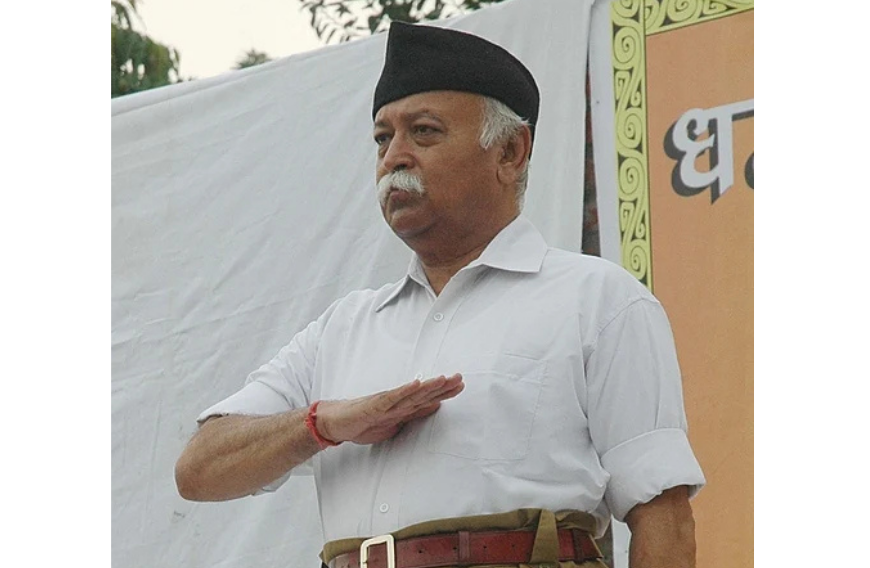
RSS chief Mohan Bhagwat’s visit to the United States and Canada has sparked a sharp debate, with supporters describing the tour as an opportunity for cultural outreach while critics view it as an attempt to reshape international perceptions of the Hindu nationalist organization.
Bhagwat was a keynote speaker at the “Universal Oneness Celebration” held at Madison Square Garden in New York on August 29.
Organized by American Hindus for Engagement and Dialogue, the gathering promoted the theme that humanity represents one global family.
Supporters of Bhagwat’s appearance said the event offered an opportunity to discuss Hindu philosophy, Indian civilization and the role of the diaspora in building international connections.
Critics, however, objected strongly to his participation, citing longstanding allegations against the RSS involving discrimination and violence affecting religious minorities in India.
Human rights and interfaith groups argued that international events featuring Bhagwat could help present the RSS in a more moderate light without adequately addressing those allegations.
Sravya Tadepalli of Hindus for Human Rights accused the organizers of presenting an inclusive message while, in her view, promoting an ideology she considers exclusionary.
New York Mayor Zohran Mamdani also expressed opposition to the RSS’s ideological outlook but acknowledged that the city government could not cancel a privately organized event.
The controversy expanded beyond advocacy groups after the U.S. Commission on International Religious Freedom called for Bhagwat’s visa to be revoked.
The commission cited concerns about religious freedom in India and what it described as worsening conditions for minority communities.
The RSS has defended Bhagwat’s international engagements and maintains close historical and political ties with the Bharatiya Janata Party.
Bhagwat’s tour continued in Canada, where he addressed more than 2,000 people at a Toronto gathering titled “Hindu Vishwa Bandhu—Embrace the World in Friendship.”
The event was organized by Canadian Hindus for Outreach, Relations and Dialogue, reflecting the wider effort to engage Hindu communities across North America.
In Toronto, Bhagwat focused heavily on India’s civilizational history and argued that the country’s global influence was built through knowledge, culture and service rather than military conquest.
He highlighted contributions associated with India, including mathematics, Ayurveda and traditional knowledge, while portraying India as a civilization that shared ideas rather than imposed them on other societies.
Bhagwat also argued that India historically provided refuge to persecuted communities and said Muslims, Christians and Jews have continued to maintain their identities while living in the country.
He presented India’s civilizational role as one based on cultural influence and knowledge rather than domination.
Former Alberta Premier and federal cabinet minister Jason Kenney attended the Toronto event as chief guest.
Kashmir Singh Dhaliwal, representing the Khalsa Diwan Society and Ross Street Gurdwara, served as Guest of Honor.
The contrasting reactions to Bhagwat’s tour reflect a broader international debate surrounding the RSS, Hindu nationalism and India’s treatment of religious minorities.
For supporters, the events represent an effort to communicate India’s cultural traditions and civilizational outlook to a global audience.
For critics, the appearances raise concerns that cultural diplomacy could overshadow contentious political and human-rights questions surrounding the organization.
Bhagwat’s North American tour has therefore become more than a series of diaspora gatherings, highlighting the increasingly contested role of Indian political and cultural organizations on the international stage.
Bhagwat was a keynote speaker at the “Universal Oneness Celebration” held at Madison Square Garden in New York on August 29.
Organized by American Hindus for Engagement and Dialogue, the gathering promoted the theme that humanity represents one global family.
Supporters of Bhagwat’s appearance said the event offered an opportunity to discuss Hindu philosophy, Indian civilization and the role of the diaspora in building international connections.
Critics, however, objected strongly to his participation, citing longstanding allegations against the RSS involving discrimination and violence affecting religious minorities in India.
Human rights and interfaith groups argued that international events featuring Bhagwat could help present the RSS in a more moderate light without adequately addressing those allegations.
Sravya Tadepalli of Hindus for Human Rights accused the organizers of presenting an inclusive message while, in her view, promoting an ideology she considers exclusionary.
New York Mayor Zohran Mamdani also expressed opposition to the RSS’s ideological outlook but acknowledged that the city government could not cancel a privately organized event.
The controversy expanded beyond advocacy groups after the U.S. Commission on International Religious Freedom called for Bhagwat’s visa to be revoked.
The commission cited concerns about religious freedom in India and what it described as worsening conditions for minority communities.
The RSS has defended Bhagwat’s international engagements and maintains close historical and political ties with the Bharatiya Janata Party.
Bhagwat’s tour continued in Canada, where he addressed more than 2,000 people at a Toronto gathering titled “Hindu Vishwa Bandhu—Embrace the World in Friendship.”
The event was organized by Canadian Hindus for Outreach, Relations and Dialogue, reflecting the wider effort to engage Hindu communities across North America.
In Toronto, Bhagwat focused heavily on India’s civilizational history and argued that the country’s global influence was built through knowledge, culture and service rather than military conquest.
He highlighted contributions associated with India, including mathematics, Ayurveda and traditional knowledge, while portraying India as a civilization that shared ideas rather than imposed them on other societies.
Bhagwat also argued that India historically provided refuge to persecuted communities and said Muslims, Christians and Jews have continued to maintain their identities while living in the country.
He presented India’s civilizational role as one based on cultural influence and knowledge rather than domination.
Former Alberta Premier and federal cabinet minister Jason Kenney attended the Toronto event as chief guest.
Kashmir Singh Dhaliwal, representing the Khalsa Diwan Society and Ross Street Gurdwara, served as Guest of Honor.
The contrasting reactions to Bhagwat’s tour reflect a broader international debate surrounding the RSS, Hindu nationalism and India’s treatment of religious minorities.
For supporters, the events represent an effort to communicate India’s cultural traditions and civilizational outlook to a global audience.
For critics, the appearances raise concerns that cultural diplomacy could overshadow contentious political and human-rights questions surrounding the organization.
Bhagwat’s North American tour has therefore become more than a series of diaspora gatherings, highlighting the increasingly contested role of Indian political and cultural organizations on the international stage.
Tags
news
Comments (0)
Login to post comments
No comments yet
Be the first to share your thoughts about this post.