News
General
6 views
Indian woman’s airport video sparks wheelchair misuse debate and online backlash
Aug 27, 2026
📍 Phliadelphia,PA, USA
**Viral Dallas Airport Video Sparks Debate Over Wheelchair Assistance**
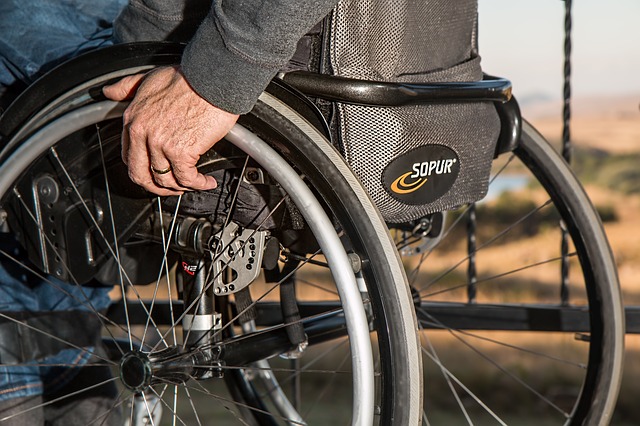
A video showing an Indian woman greeting her parents at Dallas Fort-Worth International Airport in Texas has triggered a heated online discussion about the use of wheelchair assistance by air travelers. The footage, shared on X, appears to show the woman’s mother arriving in a wheelchair before later standing up and walking without assistance. The video was posted by the X account “Texas Spectator,” which questioned the need for the wheelchair service and suggested that airport employees had assisted the family with their luggage. The post quickly attracted attention online, with users debating whether wheelchair services at airports are sometimes being misused. However, the video has not been independently verified, and there is no confirmed information about the woman’s mother’s medical condition or the reason she required wheelchair assistance at that particular time. Mobility needs cannot always be determined simply by observing whether someone can walk. Some disabilities and medical conditions are not visible, while some passengers may be capable of walking short distances but unable to comfortably manage the long distances commonly required inside major airports. Wheelchair assistance can also help elderly passengers or travelers who have difficulty standing or walking for extended periods. Despite these factors, the footage prompted criticism from several social media users who accused the family of taking advantage of airport services. Some commenters also used the incident to make broader claims about Indian travelers, while others criticized such generalizations and urged people not to make conclusions about an individual’s health based on a short video. Gaurav Sabnis, commenting on the controversy, accused the woman of contributing to what he described as a “scammy mindset” and argued that the video itself could be interpreted as evidence of wheelchair misuse. His comments added to the wider debate over whether travelers sometimes request mobility assistance despite being physically capable of walking. The controversy follows another recent discussion involving wheelchair assistance at U.S. airports. Travel commentator Priyesh Sharma posted a photograph showing a large group of passengers seated in airport wheelchairs near a departure gate. Although several passengers appeared elderly, others appeared to be younger or middle-aged, leading to further questions online about how the service is being used. Sharma argued that widespread misuse could eventually encourage airlines and airports to introduce stricter eligibility requirements or fees for wheelchair assistance. He also suggested alternatives for travelers who find large airports difficult to navigate, including direct flights, airport navigation assistance and paid meet-and-greet services. Wheelchair assistance is generally available to passengers who need help traveling through large airport terminals, including people who may still be able to walk independently for shorter distances. Depending on the airport and airline, assistance may cover areas such as check-in, security, immigration, departure gates and aircraft boarding. Supporters of stricter policies argue that unnecessary requests can place additional pressure on airport staff and potentially reduce availability for passengers with significant mobility needs. Others caution that judging passengers solely by their appearance or their ability to walk at a particular moment could unfairly exclude people with legitimate but less visible conditions. In the case of the Dallas airport video, there is currently no independent evidence establishing that the woman’s mother improperly used wheelchair assistance. The incident therefore remains primarily a social-media controversy rather than confirmed evidence of service misuse. The debate highlights the difficulty of distinguishing genuine accessibility needs from potential misuse based only on brief videos circulating online.
A video showing an Indian woman greeting her parents at Dallas Fort-Worth International Airport in Texas has triggered a heated online discussion about the use of wheelchair assistance by air travelers. The footage, shared on X, appears to show the woman’s mother arriving in a wheelchair before later standing up and walking without assistance. The video was posted by the X account “Texas Spectator,” which questioned the need for the wheelchair service and suggested that airport employees had assisted the family with their luggage. The post quickly attracted attention online, with users debating whether wheelchair services at airports are sometimes being misused. However, the video has not been independently verified, and there is no confirmed information about the woman’s mother’s medical condition or the reason she required wheelchair assistance at that particular time. Mobility needs cannot always be determined simply by observing whether someone can walk. Some disabilities and medical conditions are not visible, while some passengers may be capable of walking short distances but unable to comfortably manage the long distances commonly required inside major airports. Wheelchair assistance can also help elderly passengers or travelers who have difficulty standing or walking for extended periods. Despite these factors, the footage prompted criticism from several social media users who accused the family of taking advantage of airport services. Some commenters also used the incident to make broader claims about Indian travelers, while others criticized such generalizations and urged people not to make conclusions about an individual’s health based on a short video. Gaurav Sabnis, commenting on the controversy, accused the woman of contributing to what he described as a “scammy mindset” and argued that the video itself could be interpreted as evidence of wheelchair misuse. His comments added to the wider debate over whether travelers sometimes request mobility assistance despite being physically capable of walking. The controversy follows another recent discussion involving wheelchair assistance at U.S. airports. Travel commentator Priyesh Sharma posted a photograph showing a large group of passengers seated in airport wheelchairs near a departure gate. Although several passengers appeared elderly, others appeared to be younger or middle-aged, leading to further questions online about how the service is being used. Sharma argued that widespread misuse could eventually encourage airlines and airports to introduce stricter eligibility requirements or fees for wheelchair assistance. He also suggested alternatives for travelers who find large airports difficult to navigate, including direct flights, airport navigation assistance and paid meet-and-greet services. Wheelchair assistance is generally available to passengers who need help traveling through large airport terminals, including people who may still be able to walk independently for shorter distances. Depending on the airport and airline, assistance may cover areas such as check-in, security, immigration, departure gates and aircraft boarding. Supporters of stricter policies argue that unnecessary requests can place additional pressure on airport staff and potentially reduce availability for passengers with significant mobility needs. Others caution that judging passengers solely by their appearance or their ability to walk at a particular moment could unfairly exclude people with legitimate but less visible conditions. In the case of the Dallas airport video, there is currently no independent evidence establishing that the woman’s mother improperly used wheelchair assistance. The incident therefore remains primarily a social-media controversy rather than confirmed evidence of service misuse. The debate highlights the difficulty of distinguishing genuine accessibility needs from potential misuse based only on brief videos circulating online.
Tags
news
Comments (0)
Login to post comments
No comments yet
Be the first to share your thoughts about this post.