News
General
6 views
How 3 Harvard dropouts ‘Etched’ a $20 billion company in just 4 months
Aug 27, 2026
📍 Phliadelphia,PA, USA
Etched, a semiconductor startup founded by three 24-year-old Harvard dropouts, is drawing attention after reportedly reaching a valuation of about $21 billion in a remarkably short period. Founded by Gavin Uberti, Chris Zhu and Robert Wachen, the company has attempted to challenge the traditional belief that advanced hardware development must take years to reach the market. According to the company’s story, the founders moved from an early concept to working silicon, a complete computing system, a major customer and more than $1 billion in orders within roughly four months.
The company’s rapid progress is particularly notable because semiconductor development is traditionally considered one of the most difficult areas for young startups to enter. Designing advanced chips requires expertise in architecture, manufacturing, testing, memory, networking and power management, while mistakes can cost millions of dollars and delay development for years. Despite these challenges, Etched has adopted an approach that treats hardware development with a speed more commonly associated with software companies.
Uberti and Zhu reportedly met while studying at Harvard, including in Math 55, one of the university’s most demanding mathematics courses. Their young age initially created skepticism among investors, but the founders sought to overcome that disadvantage by bringing experienced engineers into the company. Around 15% of Etched’s approximately 400 employees reportedly previously worked at Nvidia, including engineers with extensive experience in chip design and data center technology.
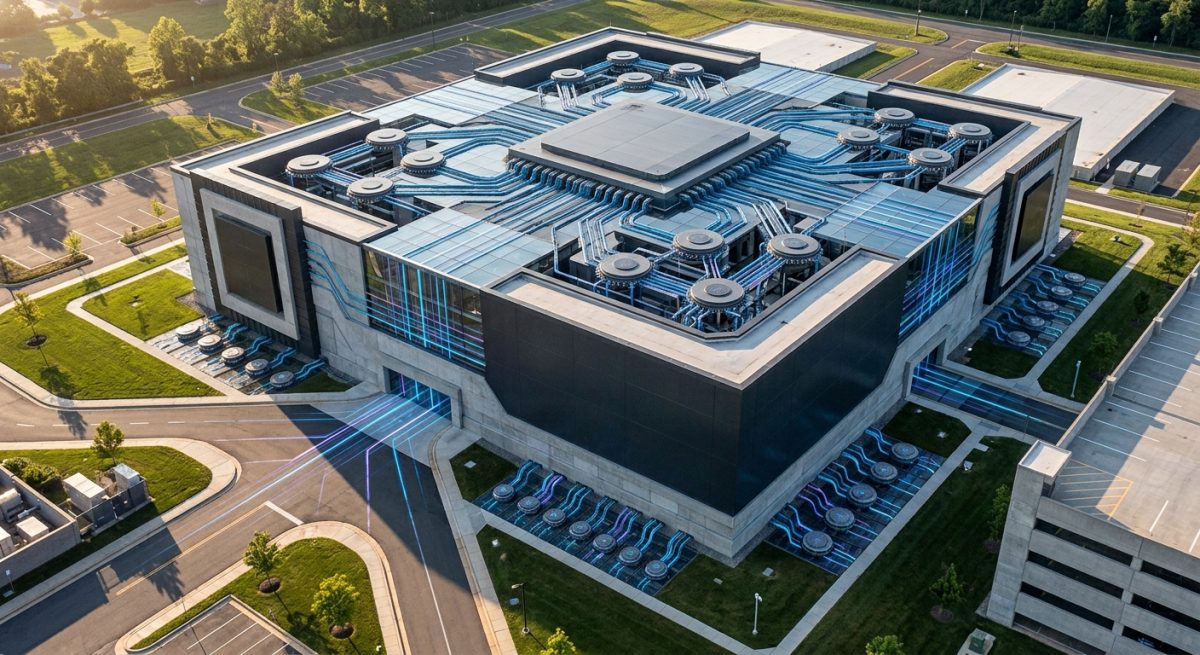
Etched’s philosophy is summarized by its motto, “Production is the product,” reflecting its decision to treat manufacturing, testing and deployment as part of the development process rather than as final stages. The company invested heavily in diagnostic equipment, software, server racks and data center infrastructure before its first chips were produced. It even built a 2-megawatt data center inside its offices to accelerate testing and development.
After receiving test chips manufactured by Taiwan Semiconductor Manufacturing Company, Etched said it was able to begin running AI inference workloads in only 44 days. The company argues that this is considerably faster than traditional semiconductor development cycles, although its performance claims and comparisons will ultimately need to be evaluated through independent testing and real-world applications.
The company’s main technological focus is artificial intelligence inference rather than AI training. Training involves using enormous amounts of computing power to teach AI models how to recognize patterns and perform tasks, while inference occurs whenever a trained model generates an answer or carries out a request. As AI becomes increasingly integrated into areas such as finance, healthcare, education, manufacturing and robotics, the amount of computing required for inference could grow substantially.
Nvidia has become a dominant force in AI computing largely because its GPUs are well suited to the parallel calculations required for training and other AI workloads. Etched is taking a more specialized approach by developing hardware specifically designed for AI inference. The company believes that focusing on one important workload could allow its architecture to deliver greater efficiency than general-purpose processors in particular applications.
One of the key ideas behind Etched’s technology is what it describes as “cluster-scale memory.” The concept focuses on improving how multiple processors communicate and access information. As AI models become larger, computing performance can increasingly be limited not by the speed of individual processors but by the time required to move information between processors and memory systems.
Etched claims that its architecture can significantly reduce certain communication delays compared with Nvidia’s Blackwell architecture. The company says some communication operations that take about 4,000 nanoseconds on Blackwell can be completed in roughly 700 nanoseconds using its architecture and custom interconnections. These figures remain company claims and will need to be independently verified, but they demonstrate the type of system-level problem Etched is attempting to solve.
The startup’s first major customer is reportedly Jane Street, a quantitative trading firm where even small improvements in computing speed can have significant financial implications. Jane Street is also leading Etched’s reported $700 million financing round, giving the company an important commercial partner as it moves from development toward broader deployment.
However, Etched’s reported $21 billion valuation does not guarantee that the company will succeed. The semiconductor industry has seen many startups develop promising technologies without achieving long-term commercial success. Nvidia remains a powerful competitor, while companies such as AMD, Google, Amazon and Microsoft are also developing specialized AI hardware and computing architectures.
Etched will ultimately need to demonstrate that its technology performs reliably at scale, delivers measurable advantages over competing systems and produces sufficient economic benefits to justify the substantial cost of specialized semiconductor infrastructure. The company’s rapid development is therefore only one part of the story.
What makes Etched particularly significant is the broader question it raises about the future of computing. Instead of viewing processors, memory and networking as separate components, the company is exploring whether they can be designed as a highly interconnected computing system. Its approach suggests that future AI performance may depend as much on how quickly information moves across an entire system as on how quickly an individual chip can perform calculations.
The company’s young founders have therefore combined an unconventional approach to hardware development with experienced semiconductor talent and a highly focused AI strategy. Whether Etched ultimately fulfills the expectations surrounding its valuation remains uncertain, but its rapid progress and specialized architecture are already challenging traditional assumptions about how quickly advanced semiconductor companies can develop and commercialize new technology.
The company’s rapid progress is particularly notable because semiconductor development is traditionally considered one of the most difficult areas for young startups to enter. Designing advanced chips requires expertise in architecture, manufacturing, testing, memory, networking and power management, while mistakes can cost millions of dollars and delay development for years. Despite these challenges, Etched has adopted an approach that treats hardware development with a speed more commonly associated with software companies.
Uberti and Zhu reportedly met while studying at Harvard, including in Math 55, one of the university’s most demanding mathematics courses. Their young age initially created skepticism among investors, but the founders sought to overcome that disadvantage by bringing experienced engineers into the company. Around 15% of Etched’s approximately 400 employees reportedly previously worked at Nvidia, including engineers with extensive experience in chip design and data center technology.
Etched’s philosophy is summarized by its motto, “Production is the product,” reflecting its decision to treat manufacturing, testing and deployment as part of the development process rather than as final stages. The company invested heavily in diagnostic equipment, software, server racks and data center infrastructure before its first chips were produced. It even built a 2-megawatt data center inside its offices to accelerate testing and development.
After receiving test chips manufactured by Taiwan Semiconductor Manufacturing Company, Etched said it was able to begin running AI inference workloads in only 44 days. The company argues that this is considerably faster than traditional semiconductor development cycles, although its performance claims and comparisons will ultimately need to be evaluated through independent testing and real-world applications.
The company’s main technological focus is artificial intelligence inference rather than AI training. Training involves using enormous amounts of computing power to teach AI models how to recognize patterns and perform tasks, while inference occurs whenever a trained model generates an answer or carries out a request. As AI becomes increasingly integrated into areas such as finance, healthcare, education, manufacturing and robotics, the amount of computing required for inference could grow substantially.
Nvidia has become a dominant force in AI computing largely because its GPUs are well suited to the parallel calculations required for training and other AI workloads. Etched is taking a more specialized approach by developing hardware specifically designed for AI inference. The company believes that focusing on one important workload could allow its architecture to deliver greater efficiency than general-purpose processors in particular applications.
One of the key ideas behind Etched’s technology is what it describes as “cluster-scale memory.” The concept focuses on improving how multiple processors communicate and access information. As AI models become larger, computing performance can increasingly be limited not by the speed of individual processors but by the time required to move information between processors and memory systems.
Etched claims that its architecture can significantly reduce certain communication delays compared with Nvidia’s Blackwell architecture. The company says some communication operations that take about 4,000 nanoseconds on Blackwell can be completed in roughly 700 nanoseconds using its architecture and custom interconnections. These figures remain company claims and will need to be independently verified, but they demonstrate the type of system-level problem Etched is attempting to solve.
The startup’s first major customer is reportedly Jane Street, a quantitative trading firm where even small improvements in computing speed can have significant financial implications. Jane Street is also leading Etched’s reported $700 million financing round, giving the company an important commercial partner as it moves from development toward broader deployment.
However, Etched’s reported $21 billion valuation does not guarantee that the company will succeed. The semiconductor industry has seen many startups develop promising technologies without achieving long-term commercial success. Nvidia remains a powerful competitor, while companies such as AMD, Google, Amazon and Microsoft are also developing specialized AI hardware and computing architectures.
Etched will ultimately need to demonstrate that its technology performs reliably at scale, delivers measurable advantages over competing systems and produces sufficient economic benefits to justify the substantial cost of specialized semiconductor infrastructure. The company’s rapid development is therefore only one part of the story.
What makes Etched particularly significant is the broader question it raises about the future of computing. Instead of viewing processors, memory and networking as separate components, the company is exploring whether they can be designed as a highly interconnected computing system. Its approach suggests that future AI performance may depend as much on how quickly information moves across an entire system as on how quickly an individual chip can perform calculations.
The company’s young founders have therefore combined an unconventional approach to hardware development with experienced semiconductor talent and a highly focused AI strategy. Whether Etched ultimately fulfills the expectations surrounding its valuation remains uncertain, but its rapid progress and specialized architecture are already challenging traditional assumptions about how quickly advanced semiconductor companies can develop and commercialize new technology.
Tags
news
Comments (0)
Login to post comments
No comments yet
Be the first to share your thoughts about this post.