News
General
20 views
Parents are becoming older and we are too busy becoming someone else
Aug 24, 2026
📍 Phliadelphia,PA, USA
# Before AI Changes the Future, We Should Remember the People Who Gave Us Our Past
As technology races toward a future shaped by artificial intelligence, there is one deeply human truth we should not overlook: our parents were once young people too. Before they became “Mom” and “Dad,” they had their own ambitions, uncertainties, financial struggles, disappointments and dreams. Many left their homes in their twenties knowing very little about the world, learning adulthood and parenthood largely through experience.
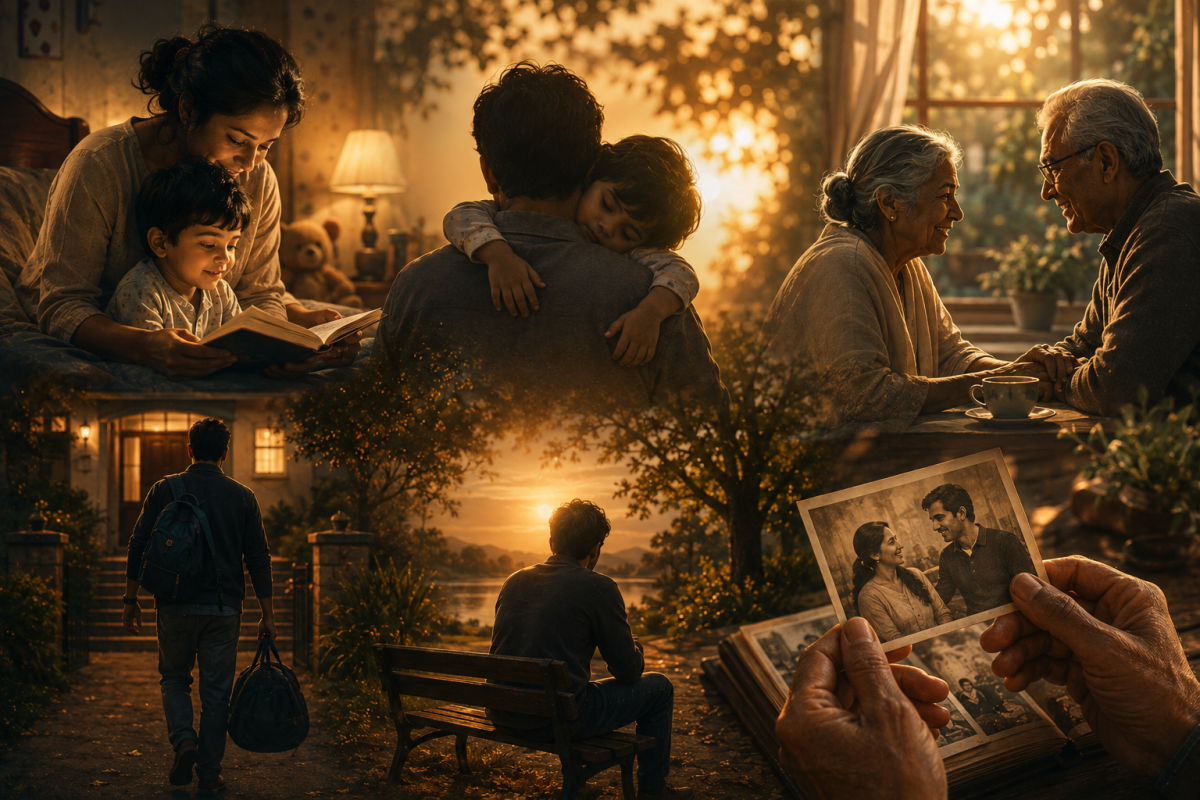
As children, however, we rarely saw that side of them. We remember the parent who stayed awake to tell us stories after a long day, the parent who carried us from the car when we pretended to be asleep, and the parent who somehow made life feel safe even while dealing with problems we never knew existed. We saw the people who carried us, but we did not see the weight they were carrying themselves.
Childhood gives us a strange understanding of time. Our parents seem permanent, almost untouched by age. While we are busy growing up, we rarely notice that they are growing older too. Then, slowly, the changes become impossible to ignore. Their hair turns grey, their hands look different, their steps become slower and conversations become shorter. The people who once seemed larger than life begin to show their vulnerability.
For many people, that realization arrives only after losing a parent. I lost my mother before I was 35, and watching friends celebrate their parents well into their 80s and 90s has made me think differently about how much time we are actually given. When I look back at the years I truly spent with my mother, especially after accounting for growing up, leaving home and building an adult life, the number feels surprisingly small — barely 18 years.
Eighteen years feels enormous when you are a child. From adulthood, it can feel heartbreakingly short.
That realization is especially meaningful for younger generations. Gen Z and those who follow have extraordinary opportunities to build careers, create businesses and pursue ambitions that previous generations could barely imagine. There is nothing wrong with ambition. But the pursuit of the next achievement can sometimes make us overlook the people and moments already in front of us.
And we are entering an extraordinary technological era. Artificial intelligence is transforming the way we work, communicate, learn and create. AI may eventually be able to preserve photographs, recreate voices, generate realistic images and reconstruct remarkable representations of people who are no longer alive. Yet there is one thing technology cannot reproduce: time.
AI cannot give someone another evening with their mother. It cannot recreate an authentic conversation with a father. It cannot restore the feeling of being a child sitting beside someone who made the world feel safe. Technology can preserve memories, but it cannot return the moments in which those memories were created.
That is why the next generation needs to learn not only how to use AI, but also how to remain human in an increasingly technological world. There is value in putting the phone away and sitting with your parents. There is value in listening to a story you have already heard. There is value in asking your mother what she was like at your age or asking your father what he dreamed of before becoming a parent.
Those conversations can change the way we see them. We begin to understand that our parents were not simply the people who raised us. They were individuals with fears, ambitions, mistakes, hopes and unanswered questions of their own. They were trying to figure out their lives while helping us figure out ours.
Losing a parent also means losing one of the few people who remembers who we were before the world knew us. They remember the child behind the career, the student behind the professional and the awkward teenager behind the confident adult. Their memories hold versions of us that no one else may remember in quite the same way.
So for those who still have their parents, the message is simple: do not wait for technology to preserve what you could experience today. Call them. Visit them. Ask questions. Listen to their stories. Find out who they were before you entered their lives. Give them the chance to tell you about the dreams they had when they were younger than you are now.
Because someday, we may look back and realize that the ordinary moments we barely noticed were among the most extraordinary moments of our lives. We spend so much time preparing for tomorrow that we sometimes forget that our lives are happening today.
Our parents were never simply getting older. They were living their one life, just as we are living ours.
AI may transform humanity’s future, but it will never replace the experience of being loved by a parent. And no technology, algorithm or artificial intelligence can give us back a moment we failed to appreciate while it was still ours.
As technology races toward a future shaped by artificial intelligence, there is one deeply human truth we should not overlook: our parents were once young people too. Before they became “Mom” and “Dad,” they had their own ambitions, uncertainties, financial struggles, disappointments and dreams. Many left their homes in their twenties knowing very little about the world, learning adulthood and parenthood largely through experience.
As children, however, we rarely saw that side of them. We remember the parent who stayed awake to tell us stories after a long day, the parent who carried us from the car when we pretended to be asleep, and the parent who somehow made life feel safe even while dealing with problems we never knew existed. We saw the people who carried us, but we did not see the weight they were carrying themselves.
Childhood gives us a strange understanding of time. Our parents seem permanent, almost untouched by age. While we are busy growing up, we rarely notice that they are growing older too. Then, slowly, the changes become impossible to ignore. Their hair turns grey, their hands look different, their steps become slower and conversations become shorter. The people who once seemed larger than life begin to show their vulnerability.
For many people, that realization arrives only after losing a parent. I lost my mother before I was 35, and watching friends celebrate their parents well into their 80s and 90s has made me think differently about how much time we are actually given. When I look back at the years I truly spent with my mother, especially after accounting for growing up, leaving home and building an adult life, the number feels surprisingly small — barely 18 years.
Eighteen years feels enormous when you are a child. From adulthood, it can feel heartbreakingly short.
That realization is especially meaningful for younger generations. Gen Z and those who follow have extraordinary opportunities to build careers, create businesses and pursue ambitions that previous generations could barely imagine. There is nothing wrong with ambition. But the pursuit of the next achievement can sometimes make us overlook the people and moments already in front of us.
And we are entering an extraordinary technological era. Artificial intelligence is transforming the way we work, communicate, learn and create. AI may eventually be able to preserve photographs, recreate voices, generate realistic images and reconstruct remarkable representations of people who are no longer alive. Yet there is one thing technology cannot reproduce: time.
AI cannot give someone another evening with their mother. It cannot recreate an authentic conversation with a father. It cannot restore the feeling of being a child sitting beside someone who made the world feel safe. Technology can preserve memories, but it cannot return the moments in which those memories were created.
That is why the next generation needs to learn not only how to use AI, but also how to remain human in an increasingly technological world. There is value in putting the phone away and sitting with your parents. There is value in listening to a story you have already heard. There is value in asking your mother what she was like at your age or asking your father what he dreamed of before becoming a parent.
Those conversations can change the way we see them. We begin to understand that our parents were not simply the people who raised us. They were individuals with fears, ambitions, mistakes, hopes and unanswered questions of their own. They were trying to figure out their lives while helping us figure out ours.
Losing a parent also means losing one of the few people who remembers who we were before the world knew us. They remember the child behind the career, the student behind the professional and the awkward teenager behind the confident adult. Their memories hold versions of us that no one else may remember in quite the same way.
So for those who still have their parents, the message is simple: do not wait for technology to preserve what you could experience today. Call them. Visit them. Ask questions. Listen to their stories. Find out who they were before you entered their lives. Give them the chance to tell you about the dreams they had when they were younger than you are now.
Because someday, we may look back and realize that the ordinary moments we barely noticed were among the most extraordinary moments of our lives. We spend so much time preparing for tomorrow that we sometimes forget that our lives are happening today.
Our parents were never simply getting older. They were living their one life, just as we are living ours.
AI may transform humanity’s future, but it will never replace the experience of being loved by a parent. And no technology, algorithm or artificial intelligence can give us back a moment we failed to appreciate while it was still ours.
Tags
news
Comments (0)
Login to post comments
No comments yet
Be the first to share your thoughts about this post.