News
General
136 views
If AI gives professional advice, does it need a license?
Aug 10, 2026
📍 Philadelphia, PA, USA
### Should AI Face the Same Accountability as Licensed Professionals?
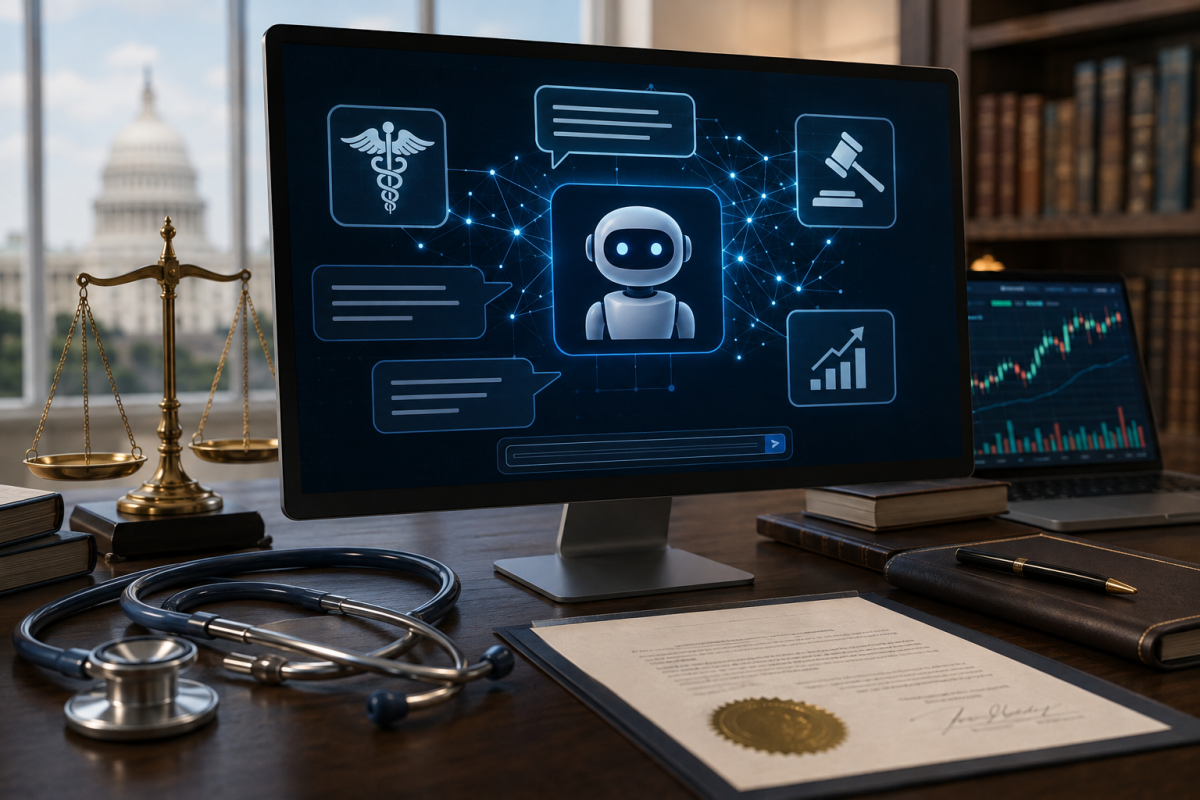
Artificial intelligence is rapidly moving beyond its original role as a tool for searching information and answering general questions, increasingly becoming a source of guidance for decisions that can have serious personal and financial consequences. Millions of people now use AI chatbots to discuss medical symptoms, legal disputes, investment decisions, insurance claims and other issues that traditionally require licensed professionals.
The growing use of AI in these areas is raising an important regulatory question: should companies providing AI systems face responsibilities similar to those imposed on doctors, lawyers and financial advisers? Professional licensing exists because mistakes in certain fields can cause significant harm. Doctors are required to meet education and examination standards, lawyers must follow professional conduct rules, and financial advisers can face regulatory action when they violate obligations to clients.
These systems are designed not only to establish expertise but also to create accountability when professional judgment causes harm. AI systems, however, are increasingly performing functions that resemble professional decision-making without necessarily being subject to comparable standards. Technology companies generally distinguish between providing information and giving professional advice, but that distinction becomes harder to maintain when an AI system evaluates a person’s specific circumstances and recommends what they should do.
Medical advice is particularly sensitive because incorrect guidance can have immediate consequences. A recent lawsuit filed by a Florida man against OpenAI alleges that ChatGPT discouraged him from seeking medical attention despite symptoms that were later associated with a life-threatening pulmonary embolism. The allegations have not established liability, but the case illustrates the difficult question of whether companies should owe users a duty of care when their systems provide individualized guidance. The legal profession has already faced a different version of the problem.
In the well-known Mata v. Avianca case, attorneys used ChatGPT while preparing a court filing and submitted fabricated legal citations generated by the system without properly verifying them. The court sanctioned the lawyers and emphasized that professionals remain responsible for their work even when artificial intelligence is involved. That principle demonstrates that AI cannot simply replace professional responsibility, but it also raises another question about consumers who rely directly on AI systems without having the expertise to verify the information themselves.
One major difference between traditional professionals and AI systems is the absence of a conventional fiduciary relationship. Doctors, lawyers and certain financial professionals may have legal obligations to protect their clients’ or patients’ interests, maintain confidentiality and avoid conflicts of interest. An AI system itself cannot easily hold such a duty because it is an algorithm rather than an accountable professional. Responsibility may therefore need to rest with the companies that design, deploy and operate these systems.
Such responsibility could include testing models for accuracy, monitoring their performance, clearly communicating limitations, maintaining records of important interactions and identifying circumstances in which human professionals should take over. Rather than licensing individual AI algorithms, regulators could consider licensing organizations that use AI to deliver medical, legal or financial services.
Companies operating in these areas could be required to demonstrate that their systems have undergone appropriate testing, provide clear disclosures and maintain meaningful human oversight for high-risk decisions.
They could also be required to establish procedures for investigating complaints and addressing foreseeable harm caused by inaccurate or misleading recommendations. The challenge for policymakers will be finding a balance between protecting consumers and allowing useful AI technologies to develop. Excessive regulation could limit innovation, while insufficient oversight could expose people to serious risks when they treat automated responses as professional judgments.
As AI becomes increasingly capable of analyzing personal circumstances and recommending specific actions, the distinction between an information tool and a professional adviser may continue to disappear. Society has spent decades creating safeguards around professions where mistakes can affect health, finances and fundamental rights.
If AI systems increasingly perform similar functions, the organizations behind those systems may need to accept a corresponding level of responsibility. The future of AI regulation may therefore depend not only on how intelligent these systems become, but also on how much accountability society requires when people trust them with decisions that can change their lives.
Artificial intelligence is rapidly moving beyond its original role as a tool for searching information and answering general questions, increasingly becoming a source of guidance for decisions that can have serious personal and financial consequences. Millions of people now use AI chatbots to discuss medical symptoms, legal disputes, investment decisions, insurance claims and other issues that traditionally require licensed professionals.
The growing use of AI in these areas is raising an important regulatory question: should companies providing AI systems face responsibilities similar to those imposed on doctors, lawyers and financial advisers? Professional licensing exists because mistakes in certain fields can cause significant harm. Doctors are required to meet education and examination standards, lawyers must follow professional conduct rules, and financial advisers can face regulatory action when they violate obligations to clients.
These systems are designed not only to establish expertise but also to create accountability when professional judgment causes harm. AI systems, however, are increasingly performing functions that resemble professional decision-making without necessarily being subject to comparable standards. Technology companies generally distinguish between providing information and giving professional advice, but that distinction becomes harder to maintain when an AI system evaluates a person’s specific circumstances and recommends what they should do.
Medical advice is particularly sensitive because incorrect guidance can have immediate consequences. A recent lawsuit filed by a Florida man against OpenAI alleges that ChatGPT discouraged him from seeking medical attention despite symptoms that were later associated with a life-threatening pulmonary embolism. The allegations have not established liability, but the case illustrates the difficult question of whether companies should owe users a duty of care when their systems provide individualized guidance. The legal profession has already faced a different version of the problem.
In the well-known Mata v. Avianca case, attorneys used ChatGPT while preparing a court filing and submitted fabricated legal citations generated by the system without properly verifying them. The court sanctioned the lawyers and emphasized that professionals remain responsible for their work even when artificial intelligence is involved. That principle demonstrates that AI cannot simply replace professional responsibility, but it also raises another question about consumers who rely directly on AI systems without having the expertise to verify the information themselves.
One major difference between traditional professionals and AI systems is the absence of a conventional fiduciary relationship. Doctors, lawyers and certain financial professionals may have legal obligations to protect their clients’ or patients’ interests, maintain confidentiality and avoid conflicts of interest. An AI system itself cannot easily hold such a duty because it is an algorithm rather than an accountable professional. Responsibility may therefore need to rest with the companies that design, deploy and operate these systems.
Such responsibility could include testing models for accuracy, monitoring their performance, clearly communicating limitations, maintaining records of important interactions and identifying circumstances in which human professionals should take over. Rather than licensing individual AI algorithms, regulators could consider licensing organizations that use AI to deliver medical, legal or financial services.
Companies operating in these areas could be required to demonstrate that their systems have undergone appropriate testing, provide clear disclosures and maintain meaningful human oversight for high-risk decisions.
They could also be required to establish procedures for investigating complaints and addressing foreseeable harm caused by inaccurate or misleading recommendations. The challenge for policymakers will be finding a balance between protecting consumers and allowing useful AI technologies to develop. Excessive regulation could limit innovation, while insufficient oversight could expose people to serious risks when they treat automated responses as professional judgments.
As AI becomes increasingly capable of analyzing personal circumstances and recommending specific actions, the distinction between an information tool and a professional adviser may continue to disappear. Society has spent decades creating safeguards around professions where mistakes can affect health, finances and fundamental rights.
If AI systems increasingly perform similar functions, the organizations behind those systems may need to accept a corresponding level of responsibility. The future of AI regulation may therefore depend not only on how intelligent these systems become, but also on how much accountability society requires when people trust them with decisions that can change their lives.
Tags
news
Comments (0)
Login to post comments
No comments yet
Be the first to share your thoughts about this post.