News
General
34 views
SpaceX backs Nvidia exclusively for future AI infrastructure
Aug 06, 2026
📍 Philadelphia, PA, USA
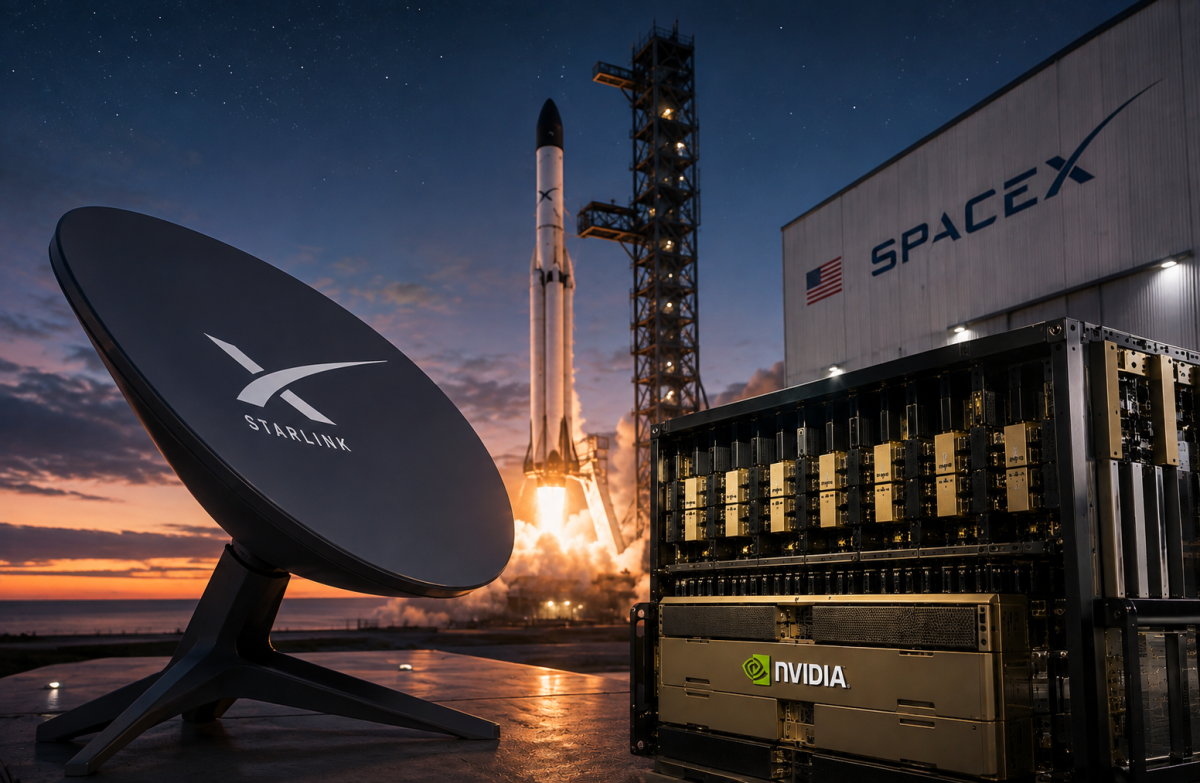
Elon Musk has announced that SpaceX will exclusively use Nvidia graphics processing units (GPUs) to power its future artificial intelligence infrastructure, calling Nvidia's upcoming Vera Rubin architecture the best AI computing platform available. Speaking during the company's earnings call, Musk said SpaceX had decided to build all of its next-generation AI systems on Nvidia hardware, strengthening an already close relationship between the two companies.
He praised the Vera Rubin NVL72 rack-scale platform, saying its design offers significant advantages over competing AI architectures by simplifying deployment and reducing the complex cabling required in traditional AI server systems. The move formalizes what has largely been SpaceX's existing approach, as Musk's AI venture xAI has already relied on Nvidia's Hopper and Blackwell GPUs to train successive versions of its Grok chatbot, with no public evidence of production use of rival AI accelerators.
Musk also revealed plans to extend Nvidia's technology beyond Earth by launching the first Starmind AI satellite next year, describing it as an optimized version of the Vera Rubin computing platform. According to Musk, the same AI architecture will power both terrestrial data centers and orbital computing systems, potentially creating one of the world's first large-scale AI infrastructures in space. While the ambitious project still faces major engineering challenges—including cooling systems, radiation protection, and long-term hardware reliability in orbit—it reflects SpaceX's broader vision of integrating advanced AI with satellite technology.
The exclusive partnership further strengthens Nvidia's leadership in the booming AI hardware market while increasing pressure on competing chipmakers. Investors welcomed the announcement, with Nvidia shares rising after Musk's endorsement of the company's next-generation AI platform.
He praised the Vera Rubin NVL72 rack-scale platform, saying its design offers significant advantages over competing AI architectures by simplifying deployment and reducing the complex cabling required in traditional AI server systems. The move formalizes what has largely been SpaceX's existing approach, as Musk's AI venture xAI has already relied on Nvidia's Hopper and Blackwell GPUs to train successive versions of its Grok chatbot, with no public evidence of production use of rival AI accelerators.
Musk also revealed plans to extend Nvidia's technology beyond Earth by launching the first Starmind AI satellite next year, describing it as an optimized version of the Vera Rubin computing platform. According to Musk, the same AI architecture will power both terrestrial data centers and orbital computing systems, potentially creating one of the world's first large-scale AI infrastructures in space. While the ambitious project still faces major engineering challenges—including cooling systems, radiation protection, and long-term hardware reliability in orbit—it reflects SpaceX's broader vision of integrating advanced AI with satellite technology.
The exclusive partnership further strengthens Nvidia's leadership in the booming AI hardware market while increasing pressure on competing chipmakers. Investors welcomed the announcement, with Nvidia shares rising after Musk's endorsement of the company's next-generation AI platform.
Tags
news
Comments (0)
Login to post comments
No comments yet
Be the first to share your thoughts about this post.