News
General
64 views
Maya Sherman: The future of AI governance depends on diplomacy, not just technology
Jul 27, 2026
📍 Philadelphia, PA, USA
**Editor’s note: This article is based on insights from a podcast series. The views expressed in the podcast reflect the speakers’ perspectives and do not necessarily represent those of this publication. Readers are encouraged to explore the full podcast for additional context**.
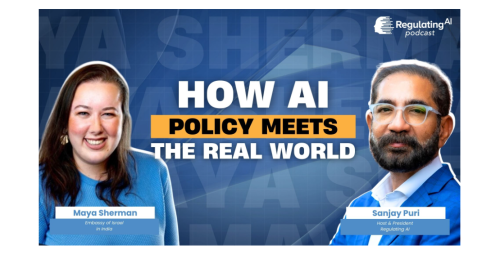
Artificial intelligence governance requires more than technological innovation—it demands ethical responsibility, inclusive policymaking, and global collaboration, according to AI policy researcher and technology diplomat Maya Sherman. Speaking on the Regulating AI podcast, Sherman shared how her early work monitoring cybercrime, extremism, and darknet activity shaped her perspective on the importance of combining cybersecurity with responsible AI governance. She argued that while AI has the potential to transform industries and improve productivity, it can also deepen the digital divide, reinforce bias, spread misinformation through deepfakes, and disproportionately impact developing economies. Sherman praised India's evolving AI strategy, noting that the country is adopting a flexible governance model that encourages innovation while gradually strengthening regulatory frameworks. She highlighted AI literacy initiatives that help farmers and informal workers use tools for crop monitoring, weather forecasting, and multilingual assistance, demonstrating AI's ability to drive social impact when deployed responsibly. Sherman also emphasized the need for greater representation of the Global South in global AI policy discussions and urged governments to invest in sovereign AI models that support local languages and cultural diversity. According to her, the future of artificial intelligence will depend not only on technological breakthroughs but also on diplomacy, inclusion, and thoughtful governance that balances innovation with public trust.
Artificial intelligence governance requires more than technological innovation—it demands ethical responsibility, inclusive policymaking, and global collaboration, according to AI policy researcher and technology diplomat Maya Sherman. Speaking on the Regulating AI podcast, Sherman shared how her early work monitoring cybercrime, extremism, and darknet activity shaped her perspective on the importance of combining cybersecurity with responsible AI governance. She argued that while AI has the potential to transform industries and improve productivity, it can also deepen the digital divide, reinforce bias, spread misinformation through deepfakes, and disproportionately impact developing economies. Sherman praised India's evolving AI strategy, noting that the country is adopting a flexible governance model that encourages innovation while gradually strengthening regulatory frameworks. She highlighted AI literacy initiatives that help farmers and informal workers use tools for crop monitoring, weather forecasting, and multilingual assistance, demonstrating AI's ability to drive social impact when deployed responsibly. Sherman also emphasized the need for greater representation of the Global South in global AI policy discussions and urged governments to invest in sovereign AI models that support local languages and cultural diversity. According to her, the future of artificial intelligence will depend not only on technological breakthroughs but also on diplomacy, inclusion, and thoughtful governance that balances innovation with public trust.
Tags
news
Comments (0)
Login to post comments
No comments yet
Be the first to share your thoughts about this post.