News
General
43 views
Who are American students who are no longer the majority?
Jul 13, 2026
📍 Philadelphia, PA, USA
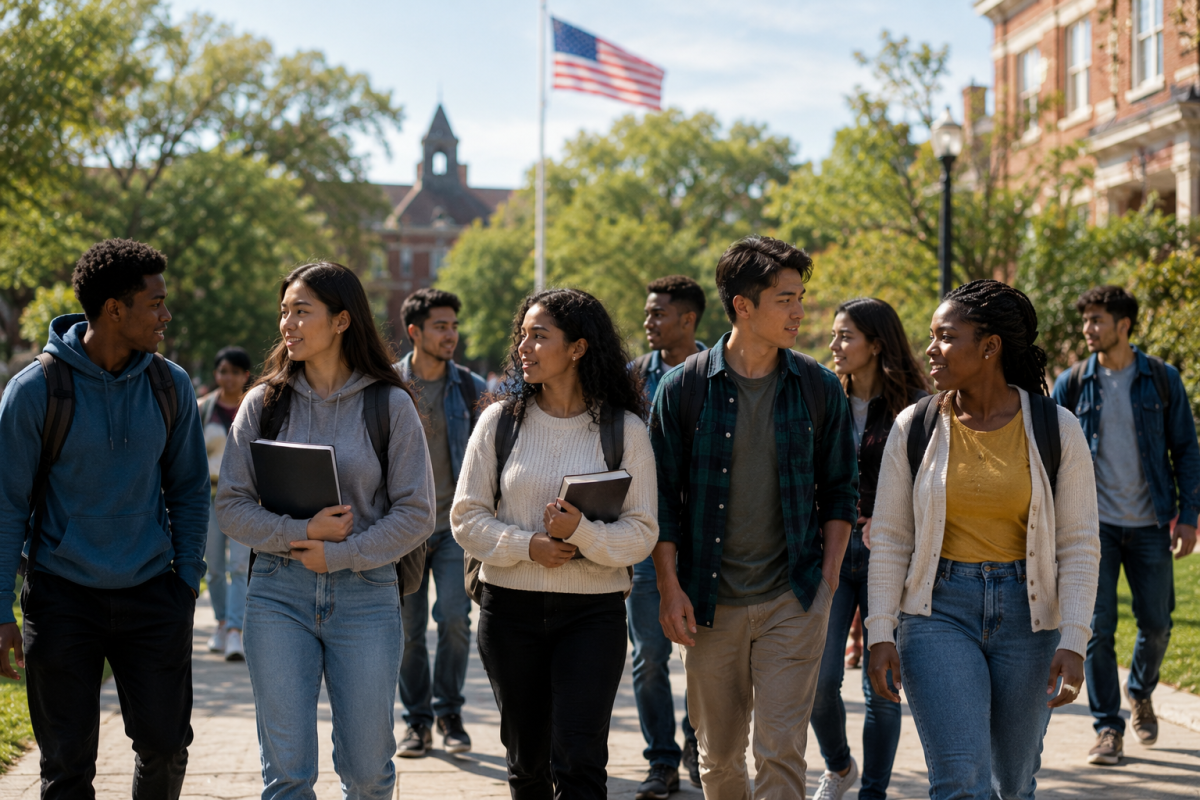
🇺🇸📚 A growing discussion about America’s changing classrooms is challenging how we define the term “American student.” In a recent opinion piece, sociologist **Dr. Rogelio Sáenz** argues that describing Latino students as separate from “American” students creates a misleading narrative that ignores the reality of today’s United States.
According to U.S. Census data, the overwhelming majority of Latino children enrolled in American schools were born in the United States and are U.S. citizens. Sáenz points out that while student populations have become increasingly diverse, diversity should not be confused with a decline in American students.
Instead, he argues that what has changed is the racial and ethnic composition of classrooms. Non-white students—including Latinos, Black Americans, Asian Americans, Native Americans, Pacific Islanders, and multiracial students—now make up the majority of students in many U.S. schools, while remaining an integral part of the American population.
Sáenz warns that language suggesting Latino students are somehow “non-American” can fuel unnecessary division, particularly during ongoing debates over immigration and national identity. He emphasizes that many of these students were born, raised, and educated in the United States and are just as American as any other child.
The commentary highlights the importance of using accurate language when discussing demographic change. America’s classrooms are becoming more diverse, but they continue to educate millions of American children from every racial, ethnic, and cultural background.
Ultimately, Sáenz argues that the conversation should focus on inclusion, educational opportunity, and the nation’s evolving diversity—not on creating false distinctions between who is and isn’t American. 🇺🇸🎓
According to U.S. Census data, the overwhelming majority of Latino children enrolled in American schools were born in the United States and are U.S. citizens. Sáenz points out that while student populations have become increasingly diverse, diversity should not be confused with a decline in American students.
Instead, he argues that what has changed is the racial and ethnic composition of classrooms. Non-white students—including Latinos, Black Americans, Asian Americans, Native Americans, Pacific Islanders, and multiracial students—now make up the majority of students in many U.S. schools, while remaining an integral part of the American population.
Sáenz warns that language suggesting Latino students are somehow “non-American” can fuel unnecessary division, particularly during ongoing debates over immigration and national identity. He emphasizes that many of these students were born, raised, and educated in the United States and are just as American as any other child.
The commentary highlights the importance of using accurate language when discussing demographic change. America’s classrooms are becoming more diverse, but they continue to educate millions of American children from every racial, ethnic, and cultural background.
Ultimately, Sáenz argues that the conversation should focus on inclusion, educational opportunity, and the nation’s evolving diversity—not on creating false distinctions between who is and isn’t American. 🇺🇸🎓
Tags
news
Comments (0)
Login to post comments
No comments yet
Be the first to share your thoughts about this post.