News
General
46 views
Katalyst launches orbital rescue mission for aging NASA observatory
Jul 06, 2026
📍 Philadelphia, PA, USA
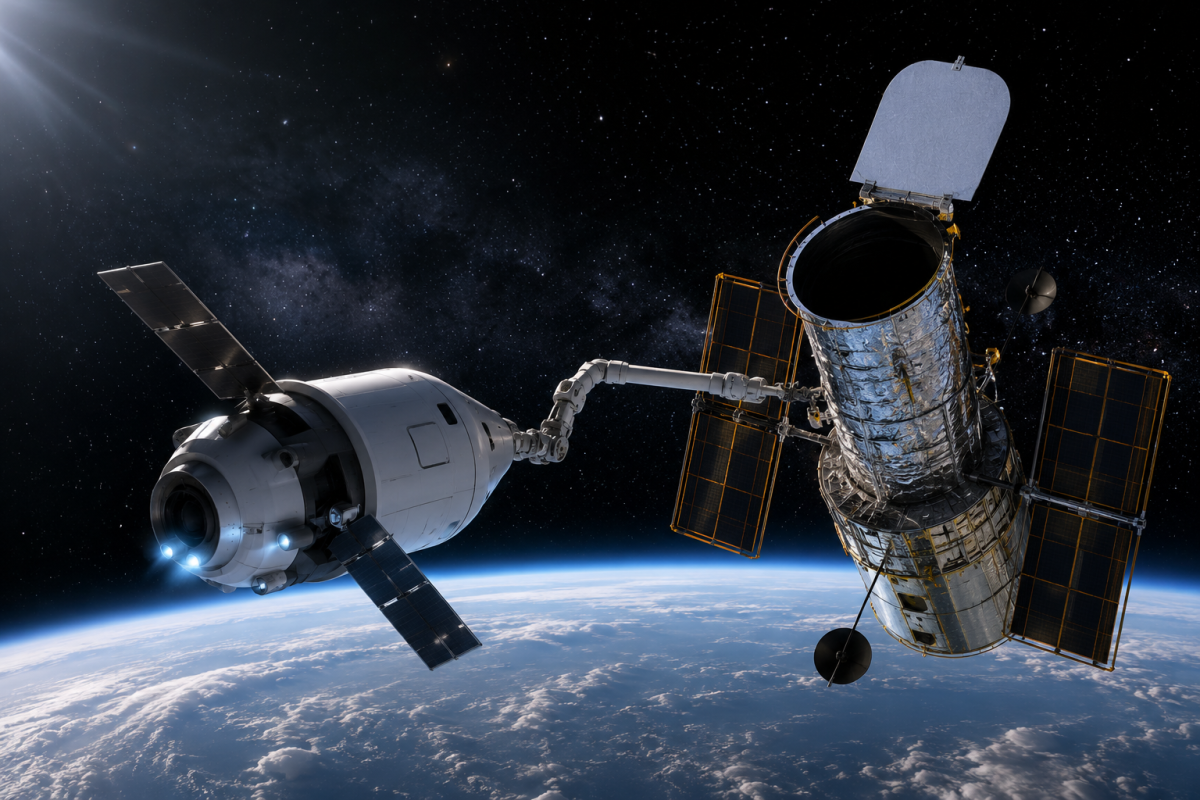
NASA and Arizona-based space startup Katalyst have launched an ambitious satellite servicing mission aimed at extending the life of one of NASA’s most valuable space observatories. The mission centers on **LINK**, a robotic spacecraft designed to rescue the aging **Neil Gehrels Swift Observatory**, which has spent more than two decades studying black holes, neutron stars, gamma-ray bursts, and distant galaxies.
The LINK spacecraft was launched aboard a **Northrop Grumman Pegasus rocket**, which was released from a **Lockheed L-1011 TriStar aircraft** over the Pacific Ocean before igniting its engines and carrying the mission into low-Earth orbit. After weather-related delays, the launch was successfully completed, marking a major milestone for commercial satellite servicing technology.
Built in just nine months under a **$30 million NASA contract**, LINK represents one of the fastest spacecraft development programs of its kind. Unlike traditional satellites, LINK was specifically engineered to rendezvous with aging spacecraft that no longer have propulsion systems, allowing them to continue operating instead of becoming space debris.
Over the coming weeks, LINK will gradually approach the **Neil Gehrels Swift Observatory**, which has been orbiting Earth since its launch in 2004. The observatory currently faces an increasing risk of atmospheric drag and could naturally re-enter Earth's atmosphere later this year because it lacks onboard engines to maintain its orbit.
Once LINK reaches the observatory, the robotic vehicle will carefully dock with the satellite before towing it to a higher orbit approximately **600 kilometers above Earth**. Engineers expect the orbital transfer to take around two months, potentially extending the observatory's scientific mission by several more years while avoiding an uncontrolled re-entry.
The mission is being closely watched across the global space industry as satellite servicing is increasingly viewed as a critical capability for reducing space debris, lowering mission costs, and protecting valuable orbital infrastructure. Experts believe similar robotic servicing missions could eventually refuel, repair, or reposition hundreds of satellites already operating in space.
Katalyst officials say the technology could also support future national security objectives as governments seek more sustainable ways to manage satellites in increasingly congested orbital environments. If successful, LINK could establish a new model for maintaining aging spacecraft and open a rapidly growing commercial market for on-orbit servicing.
The LINK spacecraft was launched aboard a **Northrop Grumman Pegasus rocket**, which was released from a **Lockheed L-1011 TriStar aircraft** over the Pacific Ocean before igniting its engines and carrying the mission into low-Earth orbit. After weather-related delays, the launch was successfully completed, marking a major milestone for commercial satellite servicing technology.
Built in just nine months under a **$30 million NASA contract**, LINK represents one of the fastest spacecraft development programs of its kind. Unlike traditional satellites, LINK was specifically engineered to rendezvous with aging spacecraft that no longer have propulsion systems, allowing them to continue operating instead of becoming space debris.
Over the coming weeks, LINK will gradually approach the **Neil Gehrels Swift Observatory**, which has been orbiting Earth since its launch in 2004. The observatory currently faces an increasing risk of atmospheric drag and could naturally re-enter Earth's atmosphere later this year because it lacks onboard engines to maintain its orbit.
Once LINK reaches the observatory, the robotic vehicle will carefully dock with the satellite before towing it to a higher orbit approximately **600 kilometers above Earth**. Engineers expect the orbital transfer to take around two months, potentially extending the observatory's scientific mission by several more years while avoiding an uncontrolled re-entry.
The mission is being closely watched across the global space industry as satellite servicing is increasingly viewed as a critical capability for reducing space debris, lowering mission costs, and protecting valuable orbital infrastructure. Experts believe similar robotic servicing missions could eventually refuel, repair, or reposition hundreds of satellites already operating in space.
Katalyst officials say the technology could also support future national security objectives as governments seek more sustainable ways to manage satellites in increasingly congested orbital environments. If successful, LINK could establish a new model for maintaining aging spacecraft and open a rapidly growing commercial market for on-orbit servicing.
Tags
news
Comments (0)
Login to post comments
No comments yet
Be the first to share your thoughts about this post.